Eco Friendly Floor Care: 7 Easy Tips for Safe Cleaning
Eco friendly floor care sounds like a big project, but it mostly means changing a few habits and a few products. You don’t need fancy gear or a chemistry degree. Most homes already have what it takes: a broom, a bucket, some soap, and a bit of patience. Floors collect dust, grit, spills, and pet hair every day, and many of us fight back with strong chemicals that linger in the air and go down the drain. This guide walks through seven easy tips for tile, wood, and rugs, so you can clean well without harming your home or the planet.
Tip 1: Build an Eco Friendly Floor Care Routine Around Dry Cleaning
The greenest way to clean a floor is to use less of everything, and that starts with dry cleaning. Sweep or vacuum before you ever pick up a mop. Grit works like sandpaper under your feet, so removing it protects wood, tile, and rugs from scratches and early wear. Put a doormat at each entrance and keep a basket for shoes by the door. Both cut down the dirt you carry inside. Wipe spills right away, too, because a fresh spill needs only a damp cloth, while a dried one needs scrubbing and stronger products. With this routine, eco friendly floor care becomes a quick daily habit instead of a weekend chore. If you want to dig deeper, our guide on Kid- and Pet-Safe House Cleaning: Non-Toxic Products for Floors, Furniture, and Toys covers this in more detail.
Tip 2: Swap Disposable Wipes for Reusable Mop Pads
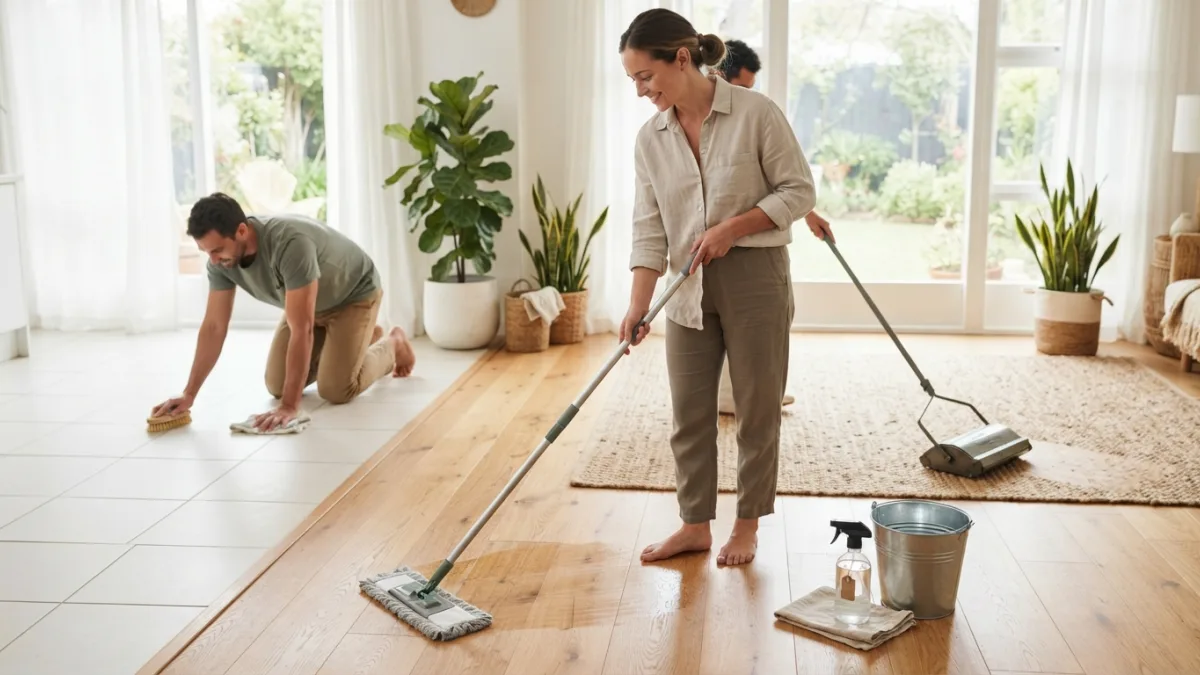
Disposable wet wipes and single-use sweeper sheets are convenient, but they create a steady stream of trash. Reusable mop pads do the same job and go straight into the washing machine. Look for pads made of cotton or other natural fibers, or choose microfiber if you want something that traps fine dust well. Keep in mind that microfiber is made from plastic-based fibers, so washing it in a laundry bag can help catch loose strands. Wash the pads in cool or warm water, skip fabric softener because it can make them less absorbent, and let them air-dry. A small set of pads will last for years.
Tip 3: Mix a Simple DIY Floor Cleaning Solution
A DIY floor cleaning solution is cheap, quick, and easy to adjust for each surface. For most sealed floors, this basic mix works well:
- One gallon (about four liters) of warm water
- A few drops of mild dish soap
- Optional: a small splash of white vinegar, for sealed tile or vinyl only
Stir it gently, then mop with a well-wrung pad so the floor ends up barely damp. Never mix vinegar with bleach, because the combination can release harmful fumes. Good airflow also matters, since cleaning products of any kind can affect the air inside your home. The U.S. Environmental Protection Agency’s indoor air quality pages explain why. Open a window while you work, and you’ll make your simple, eco friendly floor care even better. This connects closely with another common issue — see DIY Natural Cleaning Products That Actually Work for more on that.
Tip 4: Clean Tile Floors Naturally, Grout Included
You can clean tile floors naturally with warm water and a small amount of soap. Mop in sections, change the water when it turns gray, and dry the floor with a clean cloth to avoid streaks. Be careful with natural stone such as marble or travertine. Acids like vinegar can dull or etch it, so use plain water with a stone-safe soap instead.
A natural grout cleaner can be as simple as baking soda mixed with a little water to form a thick paste. Spread it along the grout lines, let it sit for about 15 minutes, then scrub with a soft brush and rinse well. For stubborn stains, try hydrogen peroxide on a hidden patch first. Always test a small spot before you treat the whole floor.
Tip 5: Use a Natural Wood Floor Cleaner and Go Easy on Water
A natural wood floor cleaner should be gentle and barely damp. Wood and water do not get along, because too much moisture can seep into seams and cause swelling or dull patches over time. Check your flooring manufacturer’s care guide first, since finishes differ. In many cases, a microfiber pad dampened with a light mix of water and a drop or two of mild soap does the job. Wipe up any wet areas right away and let the floor dry fully. Skip steam mops unless the manufacturer says they are safe for your floor, and use felt pads under furniture to prevent scratches. You might also find our article on Sustainable Cleaning Routine: 7 Easy Steps to Reset Weekly helpful here.
Vinegar on wood floors is a popular tip, but it is also a debated one. Some manufacturers warn that acid can dull certain finishes over time. If you want to try it, dilute it heavily, test it in a hidden corner, and use it sparingly. When in doubt, plain water and mild soap are the safer choice for this type of eco friendly floor care.
Tip 6: Try Eco Friendly Rug Cleaning Methods That Save Water
Eco friendly rug cleaning starts with regular vacuuming, which removes the dirt that grinds into fibers and shortens a rug’s life. Shake out small rugs outdoors when you can. For odors, sprinkle baking soda over the surface, wait a few hours, and vacuum it up. For spots, blot, never rub, using a cloth with lukewarm water and a tiny amount of mild soap. Work from the outside of the stain toward the center so it does not spread. Check the care label first, because wool, silk, and antique rugs need extra gentleness. Let the rug dry completely, and keep it out of harsh direct sun, which can fade colors.
Tip 7: Pick Non Toxic Floor Cleaners When You Need to Buy
Sometimes a store-bought product makes sense, especially for heavy buildup or special finishes. When you shop for non toxic floor cleaners, don’t trust front-label words like “natural” or “green” on their own, since they can be vague. Read the ingredient list instead, and look for recognized third-party labels. The EPA Safer Choice program reviews product ingredients, and Green Seal is another independent certifier. Buy concentrates or refills to cut down on plastic bottles, and use only the amount the label recommends. More product does not mean a cleaner floor. It usually means more residue, which attracts dirt faster. For a related walkthrough, check out How to Switch to Reusable Cleaning Cloths and Brushes Without Feeling Less “Clean”.
Final Thoughts: Small Changes, Cleaner Floors
You don’t have to change everything at once. Start with the habits that cost nothing: sweep more, mop less, and keep shoes at the door. Then add washable pads, a simple homemade cleaner, and gentle methods for each surface. Over a few weeks, eco friendly floor care stops feeling like extra effort and becomes simply the way you clean. Your floors will last longer, your home will smell fresher, and you will spend less on products you don’t really need. Whenever you are unsure, choose the gentler option and test it in a small, hidden spot first.
FAQ: Eco Friendly Floor Care
Is vinegar safe for all floors?
No. It can harm natural stone such as marble, and some manufacturers advise against using it on wood. It is generally fine, diluted, on sealed tile or vinyl. Always test a hidden spot first.
How often should I clean my floors the eco-friendly way?
Sweep or vacuum high-traffic areas often, even daily. Damp mop once a week or when needed. Clean spills right away, which keeps deep cleaning to a minimum.
Can I use the same cleaner on tile, wood, and rugs?
Not usually. Tile can handle more water, wood needs a barely damp pad, and rugs need fiber-friendly spot cleaning. Warm water with a drop of mild soap is the safest starting point for all three.
Are reusable mop pads really better for the environment?
They create far less waste than disposable sheets because you wash and reuse them for years. Wash them in a laundry bag if they are microfiber, and air-dry them to extend their life.
What does eco friendly floor care cost compared with regular cleaning?
It is often cheaper. Water, baking soda, mild soap, and washable pads cost little and replace many single-use products. You may spend a bit more up front on quality pads or refills.