How to Switch to Reusable Cleaning Cloths and Brushes Without Feeling Less “Clean”
There’s a moment every reusable-cloth skeptic hits: you wipe down a countertop, look at the damp cloth in your hand, and wonder if you just spread germs around instead of removing them. That hesitation is exactly why so many people stick with paper towels even when they want to cut waste. Switching to reusable cleaning cloths doesn’t have to mean lowering your standards for hygiene. With the right materials, a simple washing routine, and a bit of know-how, you can ditch disposables and still feel like your kitchen and bathroom are genuinely clean, not just wiped.
Why We Associate Disposable With Clean
Paper towels feel clean partly because of marketing and partly because of habit. You use one, toss it, and never think about it again. That “single use, then gone” cycle creates a psychological sense of freshness, even though a paper towel doesn’t actually kill more bacteria than a properly washed cloth. Decades of advertising have trained us to equate disposability with hygiene, when in reality it’s more about perception than performance. Reusable materials carry an unfair reputation for being grimy simply because we can see them being used more than once. Once you understand that cleanliness comes from proper washing and drying, not from throwing something away, the switch starts to feel a lot less risky. If you want to dig deeper, our guide on Small-Space Storage Ideas for Bulk Cleaning Ingredients (Vinegar, Soda, Soap Bars) covers this in more detail.
The Real Difference Between Disposable and Reusable Cleaning
Bacteria don’t care whether a cloth is disposable or reusable. What matters is moisture, how long a cloth sits before it’s washed, and whether it actually gets cleaned between uses. A soggy paper towel left in a sink overnight can harbor just as much bacteria as a neglected cloth. The difference is that people rarely leave paper towels lying around because they get thrown out immediately. Reusable cleaning cloths simply require you to build in that same discipline: rinse, wring, hang to dry, and wash regularly. Once that habit is in place, reusable cloths perform just as well for everyday cleaning tasks, and in many cases they absorb more and scrub better than a thin sheet of paper.
How to Switch to Reusable Cleaning Cloths Without Feeling Less Clean
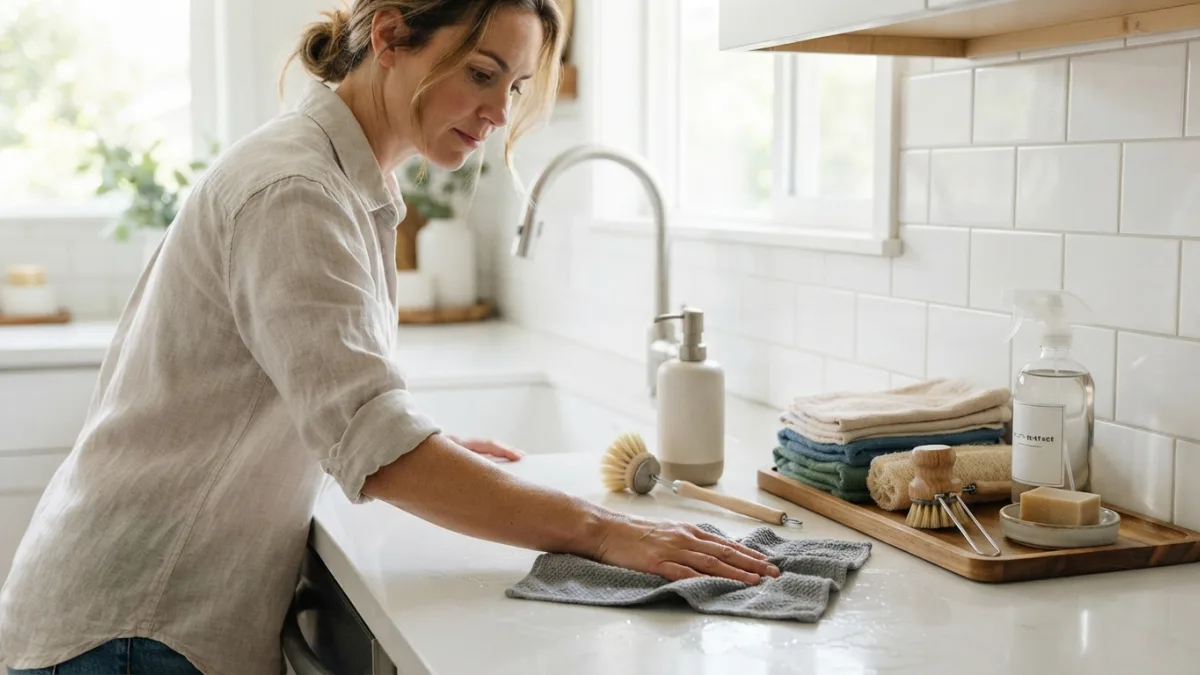
The key to a smooth transition is treating reusable cleaning cloths like tools with a job, not like rags you forget about. Assign specific cloths to specific tasks so you’re not using the same one on raw chicken juice and then your dining table. Color-coding is a simple trick: one color for kitchen counters, another for bathrooms, another for glass and mirrors. This keeps cross-contamination worries out of the picture and mirrors the same logic professional cleaners use with color-coded systems. Keep a small stack in each room so a clean one is always within reach. When you set up the system this way, you’re not compromising on hygiene, you’re just organizing it differently than you did with paper towels.
Choosing the Right Reusable Cleaning Cloths and Brushes
Not all materials work the same way, so picking the right ones matters. Microfiber cloths trap dust and grime effectively and dry quickly, which reduces the musty smell that puts people off reusables. Cotton cloths and old T-shirts work well for general wiping and are easy to bleach when needed. For dishes and scrubbing, reusable cleaning brushes with wooden or bamboo handles and swappable heads are a popular paper towel alternative because you replace just the bristle head instead of the whole tool. Look for: This connects closely with another common issue — see Kid- and Pet-Safe House Cleaning: Non-Toxic Products for Floors, Furniture, and Toys for more on that.
- Microfiber cloths for dusting, glass, and countertops
- Cotton or linen cloths for spills and general wiping
- Silicone or natural-bristle brushes for dishes and grout
- Coconut fiber scrub pads for pots and pans
Building a Simple Washing Routine
A washing routine is what actually keeps reusable cloths hygienic, so it deserves real attention. Wash kitchen cloths every two to three days on a hot cycle, and wash bathroom cloths separately from anything used near food. Adding white vinegar or a bit of oxygen-based bleach to the load helps break down grease and odor-causing bacteria without harsh chemicals. Always let cloths dry completely between uses instead of leaving them balled up in a damp pile, since trapped moisture is what causes that sour smell people associate with dirty rags. A hanging rack near the sink or a small hook on a cabinet door makes air-drying effortless. Once this rhythm becomes routine, it takes no more effort than remembering to restock a paper towel roll.
Reusable Cleaning Brushes for Every Task
Cloths handle wiping, but brushes cover the scrubbing side of a sustainable cleaning routine. A dedicated dish brush replaces the sponge that often gets slimy within days, and a stiff-bristled brush works well for grout, tile, and bathroom fixtures. Bottle brushes with long, narrow heads reach inside cups and jars that cloths can’t clean properly. Many reusable cleaning brushes now come with compostable bamboo handles and replaceable heads made from plant fibers, which cuts down on plastic waste while still giving you a firm scrubbing tool. Keeping brushes upright to dry, rather than lying flat in a wet dish, prevents bacterial buildup at the base of the bristles. Rotating between two or three brushes for different jobs also stops any single one from wearing out or smelling musty too quickly.
Disposable vs. Reusable: A Quick Comparison
| Feature | Paper Towels | Reusable Cleaning Cloths |
|---|---|---|
| Cost over time | Ongoing, adds up monthly | One-time purchase, lasts years |
| Waste produced | High, goes to landfill | Minimal, washable and reused |
| Absorbency | Moderate, tears when wet | High, especially microfiber |
| Hygiene | Good if used once and discarded | Good if washed and dried regularly |
| Storage | Requires bulky rolls | Compact, stackable |
Common Mistakes That Make Reusables Feel Gross
Most complaints about reusable cleaning cloths trace back to a handful of avoidable habits. Leaving a wet cloth balled up under the sink for days is the biggest culprit, since damp fabric left without airflow breeds odor fast. Using the same cloth for weeks without washing it is another common mistake that has nothing to do with the material and everything to do with routine. Overloading a small stack of cloths so they never fully dry between uses also causes problems, especially in humid bathrooms. Skipping hot water washes because you’re trying to save energy can leave bacteria behind too. None of these issues are unique to reusable products; they’re just habits that need slight adjusting when you move away from single-use items. You might also find our article on DIY Natural Cleaning Products That Actually Work helpful here.
Easing Into a Sustainable Cleaning Routine
You don’t need to overhaul your entire cleaning cabinet overnight. Start with one room, like the kitchen, and replace paper towels with a small stack of cloths and a couple of reusable cleaning brushes. Once that feels natural, extend the same swaps to the bathroom and any glass or window cleaning tasks. Keeping a few paper towels on hand for genuinely messy jobs, like cleaning up broken glass, is perfectly reasonable and doesn’t undo your progress. Gradual eco-friendly cleaning swaps tend to stick better than trying to eliminate every disposable product at once, because they give you time to build the washing habits that keep everything sanitary. Within a few weeks, reaching for a cloth instead of a paper towel becomes automatic rather than something you have to think about.
Making this shift is less about giving something up and more about updating a system that’s been on autopilot for years. Reusable cleaning cloths and brushes, paired with a consistent washing routine, can match or beat the hygiene of disposable products while cutting down on household waste and long-term costs. The transition asks for a little more attention upfront, mostly around drying and laundering, but it doesn’t ask you to sacrifice a clean home. Once the new habits settle in, most people find they don’t miss the paper towel roll at all, and the switch starts to feel like common sense rather than a compromise.
Frequently Asked Questions
Are reusable cleaning cloths actually as hygienic as paper towels?
Yes, as long as they’re washed and dried properly between uses. Hygiene depends on your routine, not on whether the material is disposable or reusable. For a related walkthrough, check out Sustainable Dishwashing: How to Ditch Sponges and Reduce Waste at the Sink.
How often should I wash reusable cleaning cloths?
Kitchen cloths should be washed every two to three days, and bathroom cloths on a similar schedule, ideally in hot water with a small amount of vinegar or oxygen-based bleach.
What’s the best material for reusable cleaning cloths?
Microfiber works well for dusting and glass because it dries fast and traps particles, while cotton cloths are great for general wiping and spills.
Can reusable cleaning brushes replace sponges for dishes?
Yes, dish brushes are actually a better paper towel and sponge alternative in many cases, since they dry faster than sponges and are less likely to harbor bacteria when stored upright.
Do I need to give up paper towels completely?
Not necessarily. Many people keep a small roll on hand for extreme messes while using reusable cloths and brushes for everyday cleaning, which still significantly reduces waste.