
Sustainable Cleaning Routine: 7 Easy Steps to Reset Weekly
Saturday mornings used to mean dragging out a bucket of bleach-scented spray and hoping for the best. These days, more people are swapping that routine for something gentler on both their homes and the planet. A sustainable cleaning routine doesn’t have to take all weekend or cost a fortune in specialty products. In fact, with the right plan, you can reset your entire home in about two hours, using ingredients you probably already have in your kitchen cabinet. This guide breaks the process into seven manageable steps, designed to fit into a single weekend session and repeat easily every week.
The idea behind a green home reset isn’t just about avoiding harsh chemicals. It’s about building a rhythm that keeps your living space fresh without generating a mountain of plastic waste or exposing your family to unnecessary toxins. According to the EPA’s Safer Choice program, many conventional cleaning products contain ingredients that can affect indoor air quality and human health over time. Switching to natural cleaning solutions doesn’t mean sacrificing effectiveness. It just means being a little more intentional about what goes into your spray bottles and how you organize your time. If you want to dig deeper, our guide on Bathroom Cleaning Routine: 7 Easy Zero-Waste Refill Swaps covers this in more detail.
Step 1: Set Up Your Green Cleaning Station Before You Start
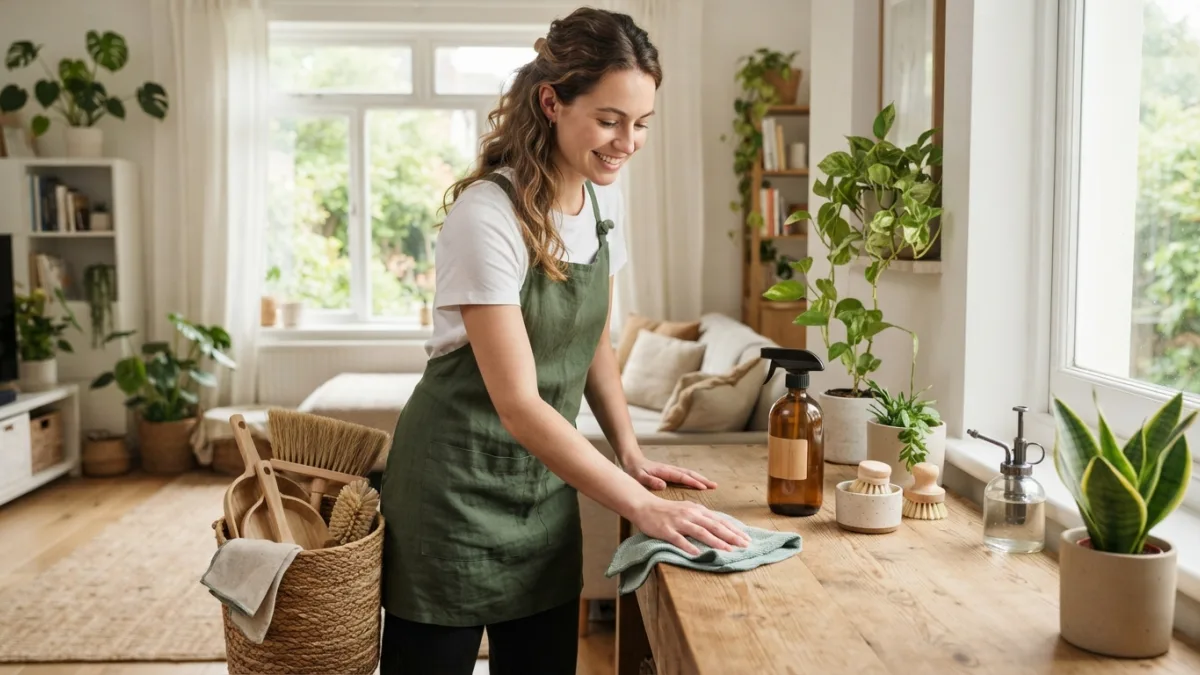
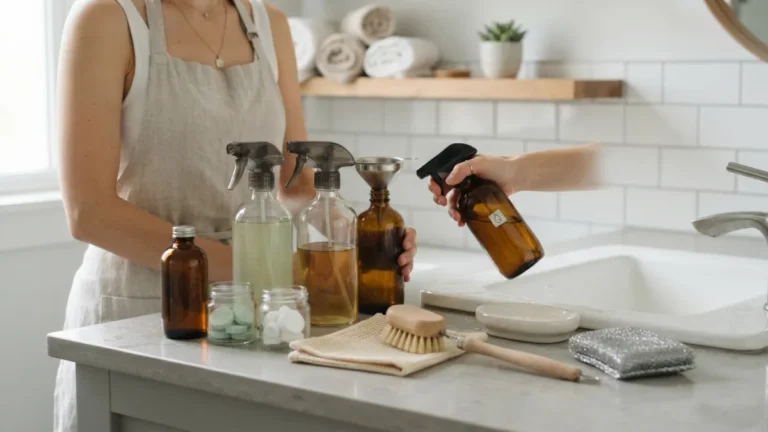
Before you touch a single surface, spend ten minutes gathering your supplies in one spot. This small step saves you from running back and forth across the house, which is where most weekend cleaning sessions lose momentum. Stock a caddy with white vinegar, baking soda, castile soap, microfiber cloths, and a couple of empty spray bottles. These non-toxic cleaning supplies handle the vast majority of household messes, from countertops to windows. If you like, add a few drops of essential oil to your vinegar solution to cut the smell, since plain vinegar can be a bit sharp for some noses.
Having everything within reach also helps you stay consistent week after week. A weekly cleaning schedule only works if the setup doesn’t feel like a chore in itself. Keep your caddy in a central location, like under the kitchen sink or in a hallway closet, so it’s ready to grab the moment you start your two-hour block. Consistency matters more than intensity when it comes to keeping a home genuinely clean over time.
Step 2: Declutter for Fifteen Minutes Before Cleaning Anything
Cleaning around clutter wastes both time and effort. Before you start scrubbing, walk through each room with a basket and collect anything that doesn’t belong there. Mail piling up on the counter, shoes by the door, cups left on the coffee table. This fifteen-minute sweep makes every surface easier to reach and often reveals dust or grime you’d otherwise clean around instead of actually removing. It also reduces the temptation to buy more storage bins or organizational products, since you’re working with what you already own.
Decluttering regularly ties directly into sustainability, too. When you handle your belongings weekly, you’re less likely to accumulate items you’ll eventually throw away. Donate what you no longer need, recycle what you can, and toss what’s genuinely broken. This habit keeps your home lighter and makes the actual cleaning portion of your weekend reset faster and far less frustrating.
Step 3: Tackle the Kitchen With Natural Cleaning Solutions
The kitchen usually needs the most attention, so it makes sense to handle it early while your energy is high. Wipe down counters with a vinegar-water mix, scrub the sink with baking soda for a gentle abrasive action, and clean the stovetop with the same combination for grease that’s built up during the week. For the microwave, heat a bowl of water with lemon slices for a couple of minutes, then wipe away loosened food splatters with almost no effort. These green cleaning products cost pennies compared to store-bought equivalents and skip the packaging waste entirely. This connects closely with another common issue — see Kid- and Pet-Safe House Cleaning: Non-Toxic Products for Floors, Furniture, and Toys for more on that.
Don’t forget the small details that get overlooked, like the inside of the refrigerator handle, the toaster crumb tray, and the top of the oven where grease tends to settle. Spending an extra five minutes on these spots keeps your kitchen looking cared for rather than just superficially wiped down. This step usually takes around twenty-five minutes if you stay focused and move room by room instead of jumping around.
Step 4: Refresh Bathrooms Without Harsh Chemicals
Bathrooms benefit enormously from a consistent sustainable cleaning routine because soap scum and mineral deposits build up fast in humid environments. Baking soda works well on tubs and sinks, while a vinegar spray left on tile grout for a few minutes before scrubbing helps loosen stubborn buildup without needing bleach. For toilets, a mix of baking soda and a splash of vinegar creates a natural fizzing action that helps break down grime before you scrub with a brush. Ventilate the room while you work, since airflow speeds up drying and prevents mildew from creeping back in.
Mirrors and glass shower doors respond well to a simple vinegar-water solution wiped with a microfiber cloth instead of paper towels, cutting down on both streaks and waste. This bathroom refresh typically takes fifteen to twenty minutes once you’ve got your rhythm down, and it’s one of the easiest places to notice the difference between chemical-heavy products and gentler alternatives.
Step 5: Handle Floors and Dust With Reusable Tools
Floors and dust make up a huge portion of any home’s overall cleanliness, and this is where reusable tools really shine. Skip disposable dusting wipes and reach for a microfiber cloth instead, since it traps dust rather than just pushing it around. Vacuum carpets and rugs first, then mop hard floors with a mild soap solution, working from the farthest corner toward the door so you’re not walking over what you just cleaned. If you have pets, this step matters even more, since fur and dander accumulate quickly between cleanings.
Reusable mop pads and washable cloths cut down significantly on the plastic waste generated by single-use wipes. Over a year, this switch adds up to a noticeable reduction in what your household sends to landfill, all while giving you the same clean result. Budget around twenty minutes for this step, depending on the size of your home and how many rooms have hard flooring versus carpet. You might also find our article on DIY Natural Cleaning Products That Actually Work helpful here.
Step 6: Freshen Fabrics and Soft Surfaces
Curtains, cushions, and throw blankets absorb odors and dust just like every other surface in your home, yet they often get skipped during a quick cleaning session. Take ten minutes to shake out cushions outside, run a lint roller or brush attachment over upholstery, and spot-clean any visible stains with a gentle soap solution rather than reaching for commercial stain removers loaded with synthetic fragrance. If your washing machine schedule allows it, toss in a load of kitchen towels or bath mats using a plant-based detergent, which tends to be gentler on both fabric and skin over repeated washes.
This step is easy to overlook, but soft surfaces hold onto smells and allergens longer than hard ones do. A few minutes of attention here makes the whole home feel noticeably fresher, even in rooms you didn’t technically deep clean that day.
Step 7: Finish With a Final Walkthrough and Air Out the Home
Once the major tasks are done, spend your last ten minutes doing a final walkthrough. Open windows for cross-ventilation, even in cooler weather, since fresh air genuinely improves how a cleaned space feels and helps clear out any lingering odors from your natural cleaning solutions. Check that everything got put back in its place after the decluttering step, empty the trash bins throughout the house, and take a moment to notice what worked well this week versus what took longer than expected. This is also the point where many people find that eco-friendly cleaning tips work best when they’re adjusted slightly to fit their own home’s layout and habits rather than followed rigidly.
Ending with fresh air and a quick review turns this from a one-time deep clean into a repeatable weekly cleaning schedule. Over time, you’ll likely find certain steps go faster as you get familiar with your space, leaving room to add extras like polishing wood furniture with a beeswax-based product or deep-cleaning one appliance on rotation. The World Health Organization’s guidance on indoor air quality notes that ventilation plays a real role in maintaining healthier indoor environments, which makes this final step more than just a nice finishing touch.
Why This Routine Works Better Than a Once-a-Month Deep Clean
Spreading cleaning tasks across a consistent two-hour weekly session, rather than saving everything for one exhausting monthly deep clean, keeps grime from building up to the point where it requires harsher products to remove. Light, regular maintenance actually reduces the need for strong chemical cleaners because you’re never dealing with months of accumulated buildup. It also means your home stays presentable year-round instead of swinging between spotless and cluttered. Many people who’ve tried both approaches say the weekly method feels far less overwhelming, since two hours is a manageable chunk of a Saturday or Sunday rather than an entire day lost to scrubbing. For a related walkthrough, check out How to Switch to Reusable Cleaning Cloths and Brushes Without Feeling Less “Clean”.
This approach also makes it easier to stick with green cleaning products long term. Buying smaller quantities of vinegar, baking soda, and castile soap regularly is more sustainable than stockpiling specialty cleaners you might not finish before they expire. Over months, this routine becomes less about following a checklist and more about a natural part of how you care for your space.
Frequently Asked Questions
How long does a sustainable cleaning routine really take each week?
Most people can complete all seven steps in about two hours once they’ve built a rhythm. The first couple of attempts might run a bit longer as you get your supplies organized and figure out which tasks take priority in your specific home.
Are natural cleaning solutions as effective as commercial products?
For most everyday messes, yes. Vinegar, baking soda, and castile soap handle grease, soap scum, and general grime well. For heavily soiled areas or specific stains, you may occasionally need a stronger product, but that shouldn’t be your default approach.
What are the best non-toxic cleaning supplies to start with?
White vinegar, baking soda, castile soap, and microfiber cloths cover almost every cleaning task in a typical home. These basics are inexpensive, widely available, and generate far less packaging waste than a cabinet full of single-purpose cleaners.
Can I adjust this weekly cleaning schedule if I have kids or pets?
Absolutely. Households with kids or pets often need a bit more time on floors and soft surfaces due to extra mess and fur. Simply shift a few minutes from a lighter step, like fabric freshening, toward the areas that need more attention in your home.
Is it cheaper to switch to green cleaning products?
Generally, yes. Staples like vinegar and baking soda cost far less per use than specialty commercial cleaners, and buying in bulk stretches your budget even further while cutting down on plastic packaging waste over time.


Really practical routine! The 15-minute declutter first and the simple vinegar, baking soda, and castile soap caddy are my takeaways.
This 2-hour weekend framework is brilliant! Breaking down the process into focused steps like setting up a caddy and doing a quick 15-minute declutter first makes sustainable cleaning feel completely manageable rather than daunting. The microwave trick with lemon slices is such a great time-saver, too. Thanks for showing that keeping a home fresh and non-toxic doesn’t have to be complicated or expensive!