eco friendly pest control: 7 proven ways to keep home safe
You notice a trail of ants marching across the kitchen counter, a couple of small moths fluttering out of the closet, and that familiar high-pitched whine of mosquitoes at sunset. You want a pest-free home, but you hesitate to reach for a strong chemical spray, especially if you have children, pets, or allergies in the house. That is why many families now choose eco friendly pest control, a practical approach that keeps bugs away without filling your home with harsh residues. It focuses on prevention, smart habits, and natural deterrents that ants, moths, and mosquitoes dislike. You do not need a perfect house or expensive products to get started. Small, consistent changes often work better than a one-time chemical blitz, and they are safer for the air you breathe every day.
Traditional sprays can kill insects quickly, but they also leave behind chemicals that linger on surfaces, in the air, and near food. For households with toddlers who touch everything or pets that lick floors, that residue is a real concern. Harsh products can also harm helpful insects like bees and pollute indoor air quality. Choosing eco friendly pest control does not mean you tolerate pests. It means you use a smarter mix of prevention, physical barriers, and low-toxicity options first. This approach, often called integrated pest management from the U.S. Environmental Protection Agency, helps you target the cause instead of just the symptom. You save money, reduce waste, and protect your family’s health while still keeping ants, moths, and mosquitoes under control. It takes a little more attention at first, but the results last longer. If you want to dig deeper, our guide on Eco-Friendly Laundry Room Setup: Line Drying, Detergent Sheets, and Laundry Stripping covers this in more detail.
7 Proven Ways to Keep Your Home Safe with eco friendly pest control
1. Seal Cracks and Cut Off Food Sources
Ants and other pests enter for two reasons: food and shelter. If you block both, most problems shrink fast. Start by inspecting windows, doors, baseboards, and where pipes enter walls. Seal small gaps with caulk and add door sweeps where you see light coming through. In the kitchen, wipe counters every night, sweep crumbs from under the toaster, and store sugar, flour, and cereals in airtight glass or sturdy plastic containers. Do not leave pet food out overnight, and rinse recyclables before putting them in the bin. Take trash out regularly and keep bins with tight lids. These habits alone form a strong base for chemical free pest solutions, because even the best natural ant repellent will not help if crumbs and open packages keep inviting ants back inside.
- Check window frames, door thresholds, and utility entry points for gaps
- Store dry foods in sealed jars and clean up crumbs and spills daily
- Empty trash often and keep compost bins closed and away from doors
2. Try a Natural Ant Repellent Before You Spray
When ants do find their way inside, you can often steer them away without a chemical spray. A simple natural ant repellent can disrupt the scent trails they follow. Many people wipe entry points and trails with a mix of equal parts white vinegar and water, which erases the pheromone path and encourages ants to turn back. Lemon juice, peppermint oil diluted in water, and ground cinnamon sprinkled near doorways are other common deterrents ants tend to avoid. For cracks and hidden corners, food-grade diatomaceous earth can help. It is a fine powder made from fossilized algae that dehydrates insects when they crawl through it, but you should apply it lightly and keep it away from faces to avoid breathing it in. This is a gentle example of eco friendly pest control that works without harsh sprays. Always test essential oils in a small area first, and keep them out of reach of pets and children.
3. Focus on Moth Prevention in Closets and Pantries
Clothes moths and pantry moths cause different headaches, but both thrive when you give them dark, undisturbed places and food. For moth prevention in closets, wash or dry-clean clothes before storing them, since moths are attracted to body oils and food stains. Vacuum closet floors, corners, and wool rugs often, then empty the vacuum outside. Store off-season wool, silk, and cashmere in breathable garment bags or sealed containers, and add cedar blocks or dried lavender sachets as a gentle deterrent. Refresh the cedar by lightly sanding it once a year. In the kitchen, pantry moths love open grains, nuts, and dried fruit. Move these foods into airtight jars, check expiration dates, and wipe shelves with soapy water. If you find webbing or tiny larvae, throw away infested items in an outdoor bin and clean the area thoroughly. This connects closely with another common issue — see How to Switch to Reusable Cleaning Cloths and Brushes Without Feeling Less “Clean” for more on that.
4. Practice Mosquito Control Naturally Around Your Home
Mosquitoes need very little standing water to breed, so the best mosquito control naturally starts outside your door. Walk around your yard once a week and empty anything that holds water — plant saucers, buckets, old tires, and clogged gutters. Change birdbath water every few days and keep rain barrels tightly covered with fine mesh. If you have a pond, consider adding a small pump to keep water moving, since mosquitoes prefer still water. Keep grass trimmed and bushes thinned so adults have fewer shady resting spots. For patios, a simple fan can make a big difference because mosquitoes are weak fliers. The CDC guidance on mosquito prevention also stresses removing standing water as the most effective step. This kind of eco friendly pest control protects your family without fogging the yard with chemicals.
- Empty and scrub any container that collects rainwater at least once a week
- Cover rain barrels and water tanks with tight fine mesh
- Use outdoor fans on patios and keep gutters clear and flowing
5. Use Plants and Essential Oils the Right Way
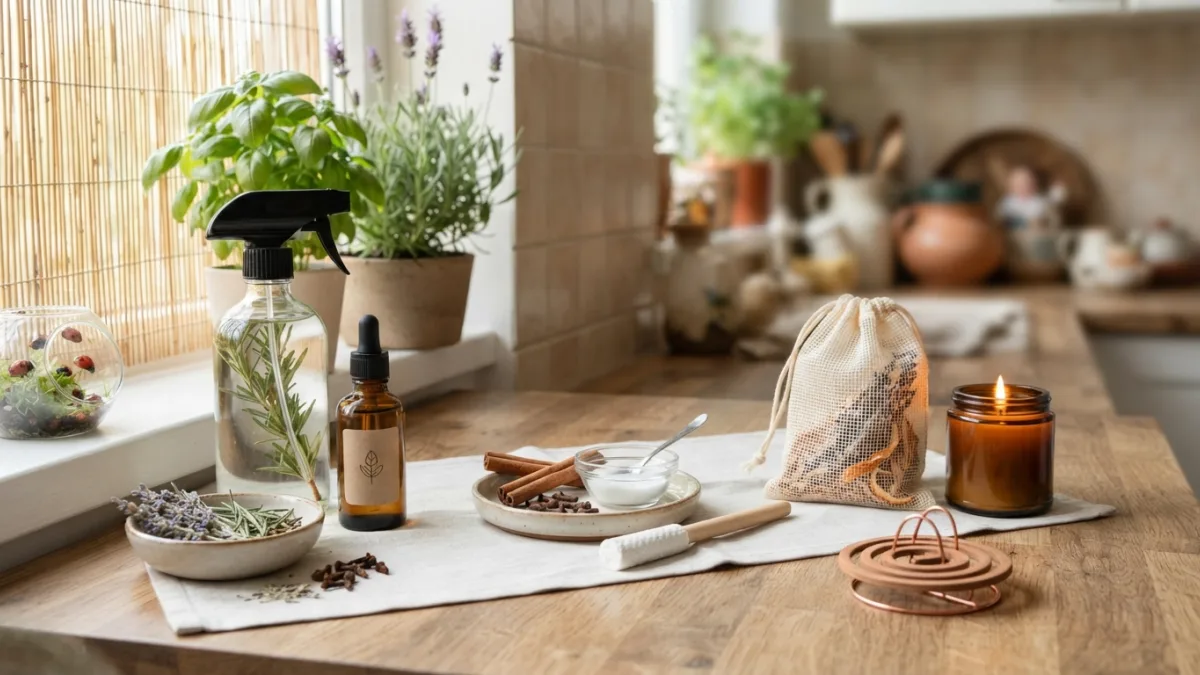
Certain plants and plant-based oils can make your home less inviting to pests when you use them correctly. Basil, rosemary, and mint on a sunny windowsill or near an entryway give off scents that mosquitoes and some ants dislike, and they double as fresh kitchen herbs. Outdoors, citronella grass and lavender add fragrance and color while helping to mask the human scents that attract biting insects. Indoors, a few drops of peppermint, eucalyptus, or cedarwood oil diluted in water can freshen a room and deter pests, but more is not better. Use a light spray on window frames or cotton balls placed out of reach, and never apply undiluted oils directly on skin, especially for children. Ventilate rooms well and store oils safely. Combined with cleaning and sealing, these botanical helpers support non toxic pest control and show how eco friendly pest control can be gentle without overwhelming your senses.
6. Rely on Screens, Nets, and Simple Traps
Physical barriers are one of the oldest and most reliable forms of eco friendly pest control, and they still work beautifully. Check window screens for small tears and patch them with a repair kit, and make sure doors close tightly without gaps. A bed net or screened porch lets you enjoy fresh air on warm nights without inviting mosquitoes inside. For ants, a line of double-sided tape near an entry point can reveal where they travel so you can seal that spot. For moths, simple pheromone traps that use a sticky pad and a scent lure help you monitor activity in closets or pantries; they do not eliminate an infestation alone, but they tell you where to clean and store items better. Keep traps away from food prep areas and replace them as directed. These low-tech tools reduce the need for sprays while giving you clear feedback on what is working. You might also find our article on Kid- and Pet-Safe House Cleaning: Non-Toxic Products for Floors, Furniture, and Toys helpful here.
7. Create a Simple Routine for Chemical Free Pest Solutions
One-time fixes rarely keep pests away for good. A short weekly routine turns chemical free pest solutions into a habit that actually lasts. Pick a day to do a ten-minute check: wipe kitchen surfaces, look under sinks for leaks, vacuum entryways, and scan pantry jars for signs of moths. Once a month, walk the outside of your home to clear leaves from gutters, trim plants away from walls, and check that vents are covered with fine mesh. Keep a small kit together — caulk, airtight containers, cedar blocks, a vinegar spray bottle, and screen patches — so you can act quickly when you spot a problem. Write down what you see and what you tried; that note helps you spot patterns. This steady attention is at the heart of eco friendly pest control, because pests lose the food, water, and shelter they need to settle in.
Making Non Toxic Pest Control Part of Everyday Life
Living with fewer chemicals does not mean you ignore safety altogether. Even natural options need careful handling. Keep essential oils, diatomaceous earth, and any store-bought non toxic pest control products in their original labeled containers and out of reach of children and pets. Follow label directions exactly, use gloves when needed, and avoid spraying anything near food, toys, or pet bowls. If someone in your home has asthma or allergies, choose fragrance-free methods like sealing, screening, and airtight storage first. Talk to your pediatrician or veterinarian if you are unsure about a product. For reliable background reading, the Wikipedia overview of integrated pest management explains how prevention and monitoring reduce the need for pesticides. When you combine common sense with gentle tools, you protect both your home and the people who live in it, which is the real goal of eco friendly pest control.
You do not have to choose between a comfortable home and a healthy one. By sealing entry points, storing food properly, and using simple deterrents, you address the root reasons ants, moths, and mosquitoes show up in the first place. The seven steps above work best together: clean and seal, use a natural ant repellent where needed, stay on top of moth prevention, handle mosquito control naturally, add plants and oils with care, lean on screens and traps, and keep a steady routine. Start with the easiest change today — perhaps airtight containers or emptying standing water — and add another next week. If a problem grows despite your efforts, consider contacting a local extension service or pest professional who specializes in eco friendly pest control. With patience and consistency, you can enjoy a calmer, cleaner home without relying on harsh chemicals. For a related walkthrough, check out DIY Natural Cleaning Products That Actually Work.
Frequently Asked Questions
What is eco friendly pest control and does it really work?
It is an approach that prioritizes prevention, sealing, cleaning, and low-toxicity deterrents before chemicals. When you remove food, water, and entry points and use barriers and natural repellents consistently, it can keep common pests like ants, moths, and mosquitoes under control for the long term.
What is the safest natural ant repellent for homes with pets and kids?
A vinegar and water solution to wipe trails, plus good sanitation and sealing, is generally low risk. If you use peppermint oil or diatomaceous earth, use only small, diluted amounts, keep them out of reach, avoid breathing in dust, and stop use if pets or children show irritation.
How can I get the best results with moth prevention?
Wash clothes before storage, vacuum closets and pantry shelves regularly, and store wool, silk, grains, and dried foods in airtight containers. Cedar and lavender can help deter moths, but they work best together with cleaning and proper storage, not on their own.
How do I do mosquito control naturally in my yard?
Empty all standing water weekly, cover rain barrels, clear gutters, and trim dense plants where mosquitoes rest. Use fans on patios and keep window screens in good repair. These steps remove breeding sites and resting places without chemicals.
When should I call a professional for non toxic pest control?
Call if you see a large or recurring infestation, signs of damage, or bites that do not improve after a few weeks of prevention. Look for a professional who practices integrated pest management and offers chemical free pest solutions and clear prevention advice.