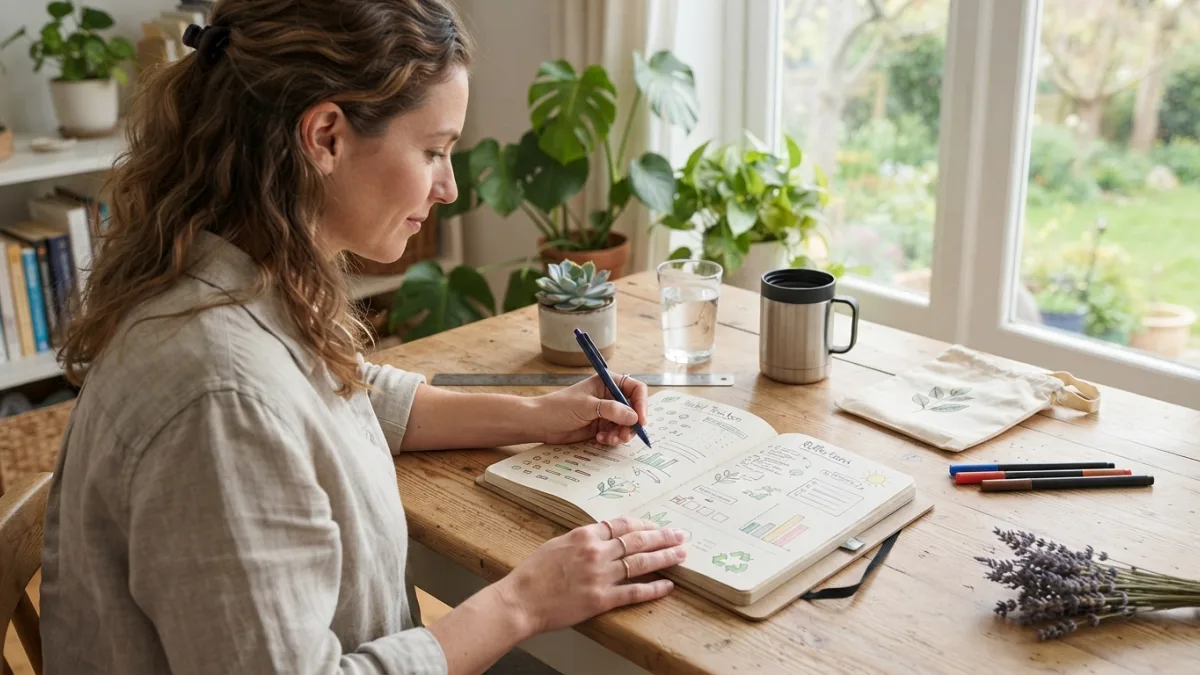
Personal Sustainability Journal: 7 Easy Steps to Start
Most of us have tried to live a little greener at some point, only to lose track of what we were actually doing. A personal sustainability journal fixes that by giving your eco efforts a home: one place to record what you changed, what worked, and what you still want to try. It doesn’t need to be fancy. A cheap notebook or a simple notes app will do the job, as long as you keep coming back to it. Over time, those quick entries add up to something useful, a clear picture of how your daily choices are shifting.
The idea is simple, but the effect can be surprisingly strong. When you write your habits down, patterns start to appear. You notice that you always forget your reusable bag on busy Mondays, or that takeout containers pile up whenever work gets stressful. Those small discoveries are hard to see when everything lives only in your head. This guide walks you through seven easy steps, from choosing a format to building trackers and prompts that keep you curious. Whether you’re brand new to sustainability or you’ve been composting for years, a journal turns scattered good intentions into a story of real progress. If you want to dig deeper, our guide on Greener Smartphone Use: Digital Declutter, Charging Habits, and Device Lifespan covers this in more detail.
Why a Personal Sustainability Journal Actually Works
Good intentions fade fast. You might promise yourself to stop buying bottled water, then forget all about it by Thursday. Writing things down creates a record you can’t easily ignore, and it makes small wins visible. Seeing a full week of packed lunches on paper feels good, and that feeling helps you keep going. A personal sustainability journal also gives your ideas a place to land. Instead of losing that clever tip a friend mentioned, you jot it down and test it later. In short, the journal works as a tracker, a planner, and a thinking space all at once.
7 Easy Steps to Start Your Journal
Step 1: Pick a Format, From Paper Notebooks to Digital Journal Apps
Your first decision is where the journal will live. Some people love the feel of pen on paper, and a secondhand or half-used notebook fits the spirit of the project perfectly. Others prefer working on a phone, especially if they want reminders or quick photos of receipts and packaging. There’s no wrong answer. The best format is the one you’ll actually open on a tired Tuesday night. If you can’t decide, start with whatever is already in your drawer or on your phone, and switch later once you know your style. Here’s a quick look at the most common options:
| Format | Best For | Possible Downsides |
|---|---|---|
| Paper notebook | People who enjoy writing by hand and want fewer screen distractions | Harder to search old entries; easy to leave at home |
| Printable templates | Anyone who likes ready-made structure without designing pages | Uses printer paper and ink; less flexible |
| Notes or journaling app | Busy people who want reminders, photos, and search | Notifications can be ignored; depends on battery and device |
Step 2: Write Down Your Sustainable Living Goals
Before you track anything, decide what you’re working toward. Your sustainable living goals should be specific enough that you can tell whether you met them. “Be greener” is too vague. “Bring my own cup to the coffee shop at least four days a week” is something you can measure. Start with two or three goals rather than ten, because trying to change everything at once usually leads to changing nothing. Write each goal at the front of your personal sustainability journal so you see it every time you open it. A few examples to get you started:
- Cook at home five nights a week to cut food packaging
- Walk or cycle for any trip under a set distance
- Buy nothing new in one category, like clothing, for a month
- Learn to repair one item instead of replacing it
Step 3: Set Up a Zero Waste Habit Tracker
A zero waste habit tracker is one of the easiest pages to build and one of the most satisfying to fill in. Draw a simple grid with the days of the month across the top and your habits down the side. Each time you refuse a plastic straw, carry a tote bag, or skip single-use cutlery, you color in a square. That’s it. The goal isn’t a perfect month. It’s noticing which habits stick and which keep slipping. If you need ideas for habits worth tracking, the EPA’s guide to reducing, reusing, and recycling offers practical starting points for cutting household waste. This connects closely with another common issue — see Teaching Kids Sustainability: 7 Simple Ways to Make It Fun for more on that.
Step 4: Track Carbon Footprint Choices Without Getting Overwhelmed
Trying to track carbon footprint numbers precisely can feel like a full-time job, so keep it simple. You don’t need exact figures to make useful notes. Instead, log the choices that matter most in your own life: how you got to work, how many meat-free meals you ate, whether you line-dried laundry, or how often you took a flight. If you want a deeper understanding of what the term covers, this overview of the carbon footprint concept explains the basics. Many online calculators can give you a rough estimate as a starting point. Recording that estimate in your personal sustainability journal, then checking again a few months later, gives you a helpful before-and-after comparison.
Step 5: Experiment With Bullet Journal Layouts
If you enjoy a bit of creativity, bullet journal layouts can make your pages both useful and fun to look at. The bullet journal method, created by designer Ryder Carroll, relies on short notes, simple symbols, and flexible pages you design yourself. That flexibility suits sustainability well, because everyone’s priorities are different. You don’t need artistic skill, either. A ruler and a single pen are enough. Try a few of these spreads and keep the ones you return to:
- Monthly overview: goals, key dates, and a short reflection box
- No-buy calendar: mark each day you avoid impulse purchases
- Repair log: list items you fixed, mended, or gave a second life
- Food waste page: note what got thrown out and why
Step 6: Use Eco Journal Prompts When You Feel Stuck
Some days you’ll open your journal and have no idea what to write. That’s where eco journal prompts come in. A good prompt nudges you to think beyond simple checkboxes and look at the reasons behind your habits. Keep a short list on the inside cover so you can grab one whenever your mind goes blank. Here are some to try:
- What did I throw away this week that I could have avoided?
- Which green habit feels easiest right now, and why?
- What stopped me from making a better choice today?
- Who in my life inspires me to live more sustainably?
- What is one small swap I can test over the next seven days?
Answering just one prompt a few times a week can turn your personal sustainability journal from a to-do list into a genuine thinking tool. You might also find our article on Low-Waste Commuting: Walking, Cycling, Public Transport, and Carpooling Tips helpful here.
Step 7: Save a Page for Green Lifestyle Ideas
The final step is to create a running list of green lifestyle ideas you want to explore. Think of it as a wish list for future experiments. Maybe you heard about a neighborhood swap event, read about refill shops, or want to try growing herbs on a windowsill. Write it down the moment it crosses your mind, even if you’re not ready to act on it yet. When your current goals start to feel routine, flip to this page and pick something new. Keeping ideas separate from your trackers stops the journal from feeling cluttered, and it gives you a steady supply of fresh motivation.
Reflective Journaling Tips to Keep the Habit Going
Starting a journal is easy. Keeping it going is the real challenge, so a few reflective journaling tips can help. Set a regular check-in, such as Sunday evening, to read back over the week. Ask yourself what went well, what didn’t, and what you’d like to change. Keep these reviews short, around ten minutes, so they never feel like homework. Once a month, do a slightly longer review where you compare your progress with the goals you wrote in step two. Adjust them honestly. If a goal turned out to be unrealistic, rewrite it rather than abandoning the whole project.
Just as important, be kind to yourself on the page. A personal sustainability journal shouldn’t become a list of failures that makes you feel guilty every time you open it. Everyone forgets their bags sometimes, and modern life makes perfect choices almost impossible. Write down the slip, note what got in the way, and move on. That kind of honest, gentle tone makes you far more likely to stick with the habit long term. Celebrate progress too, even if it seems small. Switching to a reusable water bottle for a whole month is worth a proud little star in the margin.
Make Your Personal Sustainability Journal Your Own
There’s no single correct way to do this. Your journal might be colorful and full of drawings, or it might be a plain list on your phone. What matters is that it reflects your life, your goals, and your pace. Start with the seven steps above, keep what works, and drop what doesn’t. In a few months, you’ll have something valuable: a clear, personal record of how your everyday choices have changed. Flip back to the first page now and then. Seeing how far you’ve come is often the best reason to keep going. For a related walkthrough, check out Sustainable Living on a Budget: Where to Start.
Frequently Asked Questions
How much time does a personal sustainability journal take each day?
Most people spend just two to five minutes a day filling in trackers or jotting a quick note. A slightly longer weekly review of about ten minutes helps you spot patterns without making the habit feel like a chore.
Do I need a special notebook to get started?
No. Any notebook works, and reusing one you already own fits the spirit of the project. You can also start on your phone with a free notes app and move to paper later if you prefer.
What should I write on the first page?
Start with two or three specific goals, such as cutting food waste or walking for short trips. Having those goals at the front keeps you focused every time you open the journal.
Is a digital journal better than a paper one?
Neither is better for everyone. Digital journal apps offer reminders, photos, and easy search, while paper can feel calmer and more personal. Choose the format you’re most likely to use consistently.
What if I miss several days of journaling?
Simply pick up where you left off. Missing days is normal, and there’s no need to fill in the gaps or feel guilty. Consistency over months matters far more than a perfect daily streak.