Comparing Eco-Friendly Cat Litter Brands: Dust, Odor Control, and Packaging
Cat owners who care about the planet face a surprisingly tricky question every time the litter box runs low: which eco-friendly cat litter actually delivers on its promises? Walk down any pet store aisle and you’ll find bags made from corn, wheat, walnut shells, pine, and recycled paper, all claiming to be gentler on the environment than traditional clay. But not every green-labeled product performs the same way when it comes to dust, odor control, and clumping. Some create a cloud every time you pour them, while others leave your home smelling less than fresh after a day. This article breaks down how popular natural and biodegradable options stack up against each other, so you can make a choice that’s good for your cat, your lungs, and the environment without sacrificing performance.
Why Traditional Clay Litter Is Losing Favor
Clumping clay litter has dominated the market for decades because it’s cheap and effective at trapping moisture. The problem is how it’s made. Most clay litter comes from strip-mined bentonite, a process that disrupts land and doesn’t break down once it reaches a landfill. It can sit there for hundreds of years. Clay litter also tends to produce fine dust that settles on floors, furniture, and inside your cat’s lungs over time. Veterinarians have raised concerns about long-term dust exposure in cats with respiratory sensitivities. As awareness of these issues grows, more pet owners are switching to plant-based alternatives that decompose naturally and skip the mining process altogether. This shift has pushed brands to compete harder on the very features that matter most: how much mess they create and how well they mask odor. If you want to dig deeper, our guide on Honest Review of Popular Zero-Waste Starter Kits: What You’ll Actually Use covers this in more detail.
What Makes a Cat Litter Truly Eco-Friendly
Not every product marketed as “natural” deserves the label. A genuinely sustainable litter should be made from renewable materials like corn, wheat, walnut shells, or recycled paper rather than mined minerals. It should also biodegrade within a reasonable timeframe instead of lingering in landfills for generations. Packaging matters too, since a plant-based litter shipped in heavy plastic packaging undercuts its own environmental message. Look for brands that use recyclable or compostable bags, and check whether the company discloses its sourcing practices. Some manufacturers also avoid synthetic fragrances and chemical clumping agents, relying instead on natural enzymes or plant starches to control odor. When you’re comparing bags on the shelf, these details separate a genuinely sustainable pet product from one that simply uses green marketing to charge a premium price.
Comparing Dust Levels Across Popular Brands
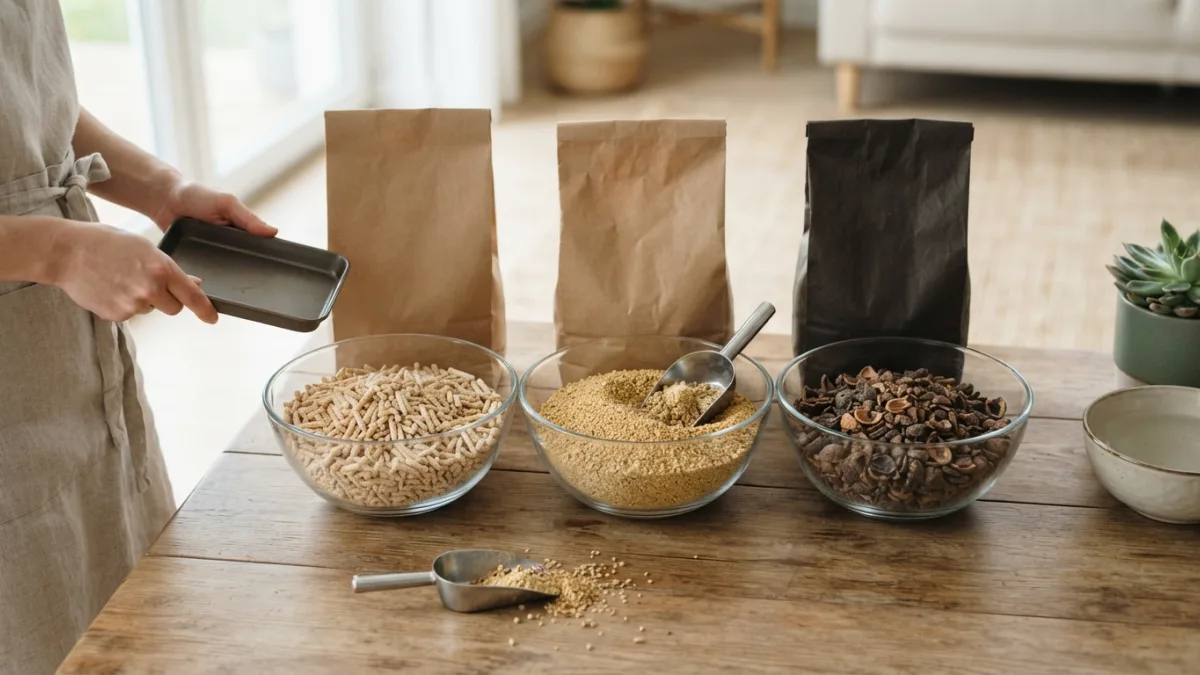
Dust is often the first thing people notice when they switch litters, and it varies enormously between materials. Walnut shell litter tends to produce a moderate amount of fine dust because of how the shells are ground, which can be an issue for households with asthma or allergies. Corn-based litters generally rank lower on dust output, though they can create a slightly starchy smell when wet. Wheat litter sits somewhere in the middle, offering decent clumping with manageable dust levels. Recycled paper pellets are usually the lowest dust option on the market, making them a favorite recommendation from veterinarians for kittens and cats recovering from surgery. If reducing airborne particles is your top priority, a low dust cat litter made from paper or wood tends to outperform grain-based options, though it may sacrifice some clumping strength in return.
Odor Control: Where the Real Differences Show Up
Dust matters, but odor control is usually the deciding factor for most households. Walnut shell litters have a reputation for strong natural odor absorption thanks to the density of the material, which traps ammonia smells better than lighter substrates. Corn litter performs reasonably well for a day or two but can start to smell sour if not scooped regularly, since the starches interact with moisture over time. Wheat litter uses natural enzymes that break down waste and neutralize smell fairly effectively, making it a solid middle-ground choice. Pine litter, often sold in pellet form, releases a natural woodsy scent when it breaks down that many owners find helps mask odor without added fragrance. Paper-based litters tend to be the weakest performers here, absorbing liquid well but doing less to neutralize smell unless the brand adds baking soda or other odor-fighting ingredients. This connects closely with another common issue — see Reviewing Reusable Alternatives to Paper Towels: Swedish Cloths, Bamboo Towels, and Rags for more on that.
Clumping Ability and Ease of Cleanup
Beyond dust and smell, how a litter clumps affects your daily routine more than most people expect. Firm, tight clumps make scooping quick and prevent waste from breaking apart and sticking to the bottom of the box. Walnut and corn litters generally clump well, rivaling traditional clay in this respect, which is part of why they’ve become popular replacements. Wheat litter clumps decently but can sometimes crumble if the box isn’t scooped often enough. Pine and paper litters usually don’t clump in the traditional sense; instead, pine pellets break down into sawdust when wet, and paper litter absorbs liquid without forming solid clumps at all. This means the cleaning method differs entirely, often requiring a full litter change rather than daily scooping, which some owners find less convenient despite the environmental upside.
A Side-by-Side Look at the Materials
Seeing the differences laid out together makes it easier to match a litter to your household’s priorities, whether that’s minimizing dust for a sensitive cat or maximizing odor control in a small apartment. The table below summarizes general tendencies based on the material itself, though individual brands can perform slightly better or worse depending on their exact formula and quality control.
| Material | Dust Level | Odor Control | Clumping | Biodegradability |
|---|---|---|---|---|
| Walnut Shell | Moderate | Strong | Strong | Good |
| Corn | Low | Moderate | Strong | Good |
| Wheat | Low to Moderate | Good | Moderate | Good |
| Pine Pellets | Low | Good | Minimal | Excellent |
| Recycled Paper | Very Low | Weak to Moderate | Minimal | Excellent |
Packaging: The Overlooked Piece of the Sustainability Puzzle
It’s easy to focus on what’s inside the bag and forget about the bag itself, but packaging plays a real role in how eco-friendly a product actually is. Many litter brands still use multi-layer plastic packaging that isn’t recyclable through standard curbside programs, which contradicts the sustainable image they’re selling. A growing number of companies have switched to paper packaging with minimal plastic lining, or they use bags made from post-consumer recycled materials. Some brands have started offering bulk packaging or refill options specifically to cut down on packaging waste per pound of litter purchased. When comparing options, it’s worth checking the bag itself for recycling symbols or compostability claims, since a company that’s serious about sustainable pet products usually addresses packaging alongside the litter formula rather than treating it as an afterthought. You might also find our article on Top Reusable Coffee Filters for Drip Machines, French Press, and Espresso Makers helpful here.
How to Choose Based on Your Cat’s Needs
The best litter for the environment isn’t always the best litter for your specific cat, and that tension is worth acknowledging honestly. Cats with respiratory issues or allergies will benefit most from a low dust cat litter, even if it means sacrificing some odor control. Multi-cat households often need stronger odor management and reliable clumping, which points toward walnut or corn-based options. Cats that are picky about texture may reject pellet-style litters like pine, since the larger granules feel different underfoot compared to finer clay substitutes. It’s also worth introducing any new litter gradually, mixing it with the old brand over a week or two, since cats can be sensitive to sudden changes and may avoid the box entirely if the switch happens too fast.
Making the Switch Without the Guesswork
Transitioning to a biodegradable cat litter doesn’t have to be complicated if you approach it with a bit of patience. Start by researching two or three brands that match your priorities, whether that’s odor control, low dust, or plastic-free packaging, and buy small bags before committing to bulk purchases. Pay attention to how your cat reacts during the first week, since litter box avoidance is often the clearest sign that a product isn’t working. Keep scooping on the same schedule you always have, because even the best odor control litter needs regular maintenance to perform well. If you notice tracking outside the box, a litter mat can help contain stray granules without requiring you to switch products again. Small adjustments like these often solve problems that seem, at first, like a reason to abandon the eco-friendly route altogether.
Choosing an eco-friendly cat litter ultimately comes down to balancing your cat’s comfort with your own priorities around dust, smell, and waste. No single material wins in every category, which is why so many brands now blend ingredients, mixing corn with wheat or adding pine elements to paper pellets to cover more bases at once. The good news is that the market has matured enough that pet owners no longer have to choose between sustainability and performance the way they might have a decade ago. Reading labels carefully, checking packaging claims, and paying attention to how your own cat responds will get you further than chasing the latest trending brand. With a little trial and error, it’s entirely possible to find a natural cat litter that keeps your home smelling clean, your cat happy, and your environmental footprint smaller than before. For a related walkthrough, check out Best Plastic-Free Dishwashing Kits: Solid Dish Soap, Brushes, and Cloths Compared.
Frequently Asked Questions
Is eco-friendly cat litter as effective as clay litter at controlling odor?
It depends on the material. Walnut shell and wheat-based litters often match or come close to clay in odor control, while paper-based options tend to lag behind unless they include added odor-fighting ingredients like baking soda.
Which eco-friendly litter produces the least dust?
Recycled paper litter typically produces the least dust of all the natural options, making it a common recommendation for kittens, senior cats, and households with respiratory sensitivities.
Can I flush biodegradable cat litter down the toilet?
Most brands, including plant-based ones, advise against flushing due to the risk of plumbing clogs and the potential presence of parasites in cat waste that can affect water systems. Check the specific brand’s packaging for disposal instructions.
Does eco-friendly litter cost more than traditional clay litter?
Generally, yes, natural litters tend to carry a higher price per pound than clay, though buying in bulk or choosing brands with minimal packaging can help offset the difference over time.
How do I get my cat to accept a new eco-friendly litter?
Introduce it gradually by mixing it with your cat’s current litter over a week or two, slowly increasing the ratio. Watch for signs of avoidance and slow the transition down if your cat seems reluctant to use the box.