Best Plastic-Free Dishwashing Kits: Solid Dish Soap, Brushes, and Cloths Compared
Every year, millions of plastic scrub brushes, sponges, and detergent bottles end up in landfills, shedding microplastics long before they ever break down completely. That’s why more households are turning to plastic-free dishwashing kits as a simple swap that cuts down on waste without sacrificing cleaning power. These kits usually combine a solid dish soap bar, a wooden or plant-fiber brush, and a biodegradable cloth, replacing three separate plastic products with tools that last longer and compost at the end of their life. The idea isn’t new, but it’s gaining traction fast as people look for small, doable changes that add up. If you’ve been curious about ditching the squeeze bottle and rubber gloves for something greener, this comparison breaks down what actually works, what doesn’t, and how to pick a kit that fits your kitchen routine.
Why Plastic-Free Dishwashing Kits Are Gaining Popularity
Dish soap bottles and synthetic sponges are some of the most overlooked sources of household plastic waste. A single sponge might get replaced every few weeks, and most end up in the trash since they’re rarely recyclable. Solid dish soap bars, on the other hand, come in cardboard or compostable packaging and tend to last far longer than liquid soap because you use less per wash. Wooden brushes with replaceable heads mean you’re not throwing away the entire tool once the bristles wear down, just the part that actually needs replacing. Cloths made from cotton, hemp, or bamboo fiber break down naturally instead of shedding microplastic fibers into wastewater every time you rinse them. Together, these swaps make a noticeable dent in kitchen waste, and many people find they actually clean just as well, sometimes better, than their plastic counterparts. If you want to dig deeper, our guide on Best Refillable Cleaning Product Brands, Reviewed covers this in more detail.
What’s Inside a Typical Plastic-Free Dishwashing Kit
Most kits on the market follow a similar formula, though the quality and materials vary quite a bit between brands. Understanding what each piece does helps you judge whether a kit is genuinely useful or just marketed as “eco-friendly” without much substance behind it.
Solid Dish Soap Bars
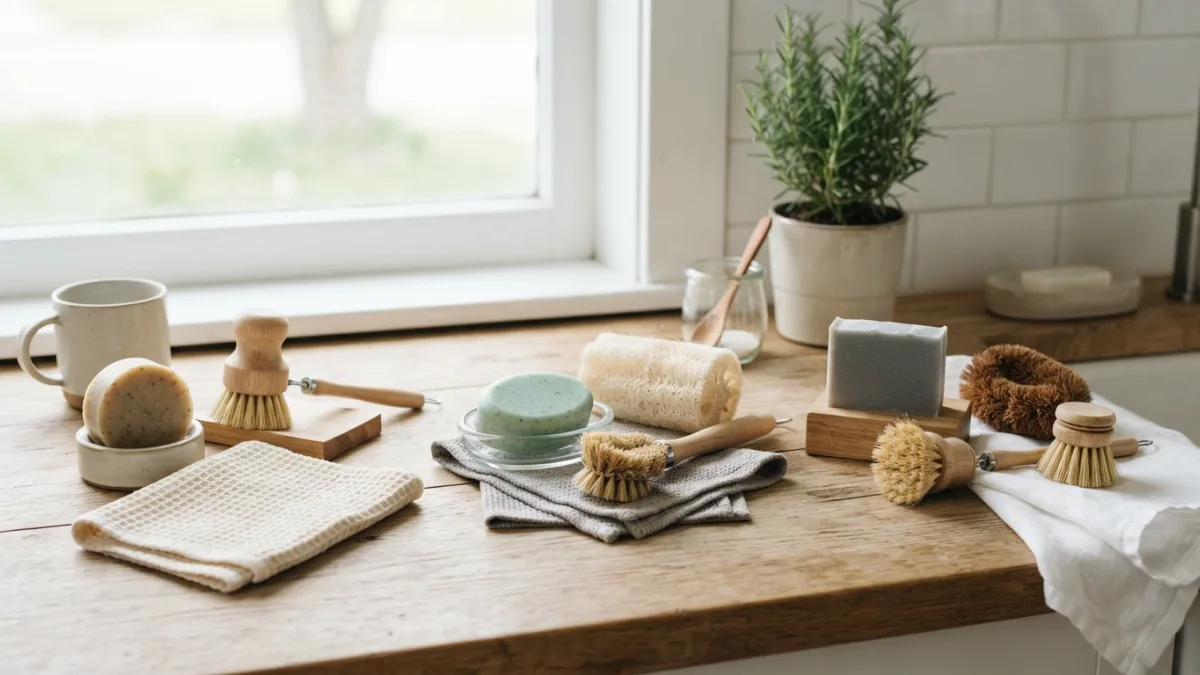
Solid dish soap bars are concentrated blocks of cleaning agent, usually made with plant-based oils, washing soda, and sometimes citrus or eucalyptus oil for scent and grease-cutting power. You rub a wet brush or cloth directly on the bar to work up suds, which means there’s no watery runoff and no plastic pump bottle involved. Good bars last a surprisingly long time, often several months of daily use, because you’re only picking up a small amount of soap at a time rather than pouring out more than you need. The best ones cut through grease on pots and pans without leaving a filmy residue, though some cheaper bars can feel a bit weak on baked-on food. Reading reviews or trying a small bar first is worth it before committing to a large one.
Eco-Friendly Dish Brushes
Eco-friendly dish brushes typically use a beechwood or bamboo handle paired with bristles made from sisal, coconut fiber, or plant-based nylon substitutes. The handle is designed to last for years, while the brush head screws or pops off so you can replace just that piece when the bristles flatten out or start smelling. This design cuts down dramatically on waste compared to tossing a whole plastic brush every couple of months. Stiffer bristle brushes work well on cast iron and stuck-on food, while softer ones are gentler on nonstick pans and glassware. A few brands also sell dish brushes with a small stand, which helps the wood dry out fully between uses and extends its lifespan considerably. This connects closely with another common issue — see Best Reusable Food Storage Alternatives to Plastic Wrap for more on that.
Biodegradable Cleaning Cloths
Biodegradable cleaning cloths, often made from cellulose, cotton, or bamboo fibers, are meant to replace synthetic sponges and microfiber cloths that shed tiny plastic particles into the water supply. Many of these cloths are surprisingly absorbent and can be tossed in the washing machine or even boiled to sanitize them, which extends their usable life far beyond a typical sponge. Some brands make compostable versions that break down in a home compost bin within a few months once they’re worn out. They tend to dry faster than sponges too, which cuts down on the musty smell that builds up in a damp kitchen sponge left in a dish rack.
Comparing Popular Plastic-Free Dishwashing Kits
Prices, materials, and included pieces vary a lot between brands, so it helps to see a few side by side. The table below covers general categories rather than specific brand names, since pricing and availability shift often, but it gives a realistic sense of what to expect when shopping around.
| Kit Type | Soap Bar Material | Brush Style | Cloth Material | Approximate Lifespan |
|---|---|---|---|---|
| Budget Starter Kit | Basic plant-oil soap | Bamboo handle, fixed bristles | Cotton cloth | 2–3 months |
| Mid-Range Kit | Concentrated soap with essential oils | Beechwood, replaceable head | Bamboo fiber cloth | 4–6 months |
| Premium Kit | Handmade artisan soap bar | Wooden brush with stand | Compostable cellulose cloth set | 6–12 months |
How to Choose the Right Plastic-Free Dishwashing Kit for Your Home
Not every kit fits every household, so it helps to think about your actual dishwashing habits before buying. If you cook daily and deal with heavy grease, look for a soap bar formulated with stronger degreasing ingredients and a stiffer-bristled brush that can handle scrubbing without wearing down too fast. Smaller households or people who mostly hand-wash light dishes might get more value from a gentler, scented bar and a soft cloth instead. Pay attention to packaging too, since some “eco” kits still wrap individual pieces in plastic film despite marketing themselves as sustainable. Checking customer reviews for how long the soap bar actually lasts, rather than trusting marketing claims alone, gives a more honest picture. It’s also worth considering whether replacement parts, like brush heads or refill soap bars, are sold separately, since that affects the long-term cost and convenience of sticking with the kit. You might also find our article on Bamboo vs. Plastic Toothbrushes: Is the Switch Worth It? helpful here.
Making the Switch to Sustainable Dishwashing Alternatives
Switching over doesn’t have to happen all at once. Many people start by replacing just the sponge with a wooden brush, then move on to solid soap once they’ve used up their current bottle of liquid detergent. This gradual approach also helps you figure out which products actually work well in your kitchen before investing in a full kit. Storage matters more than people expect too. Soap bars need a dish or tray that lets water drain away, otherwise they turn mushy and disappear faster than they should. Brushes last longest when they’re allowed to air dry fully between uses rather than sitting in a wet sink. Small habits like these make a real difference in how long each piece lasts, which ultimately affects both the cost and the environmental benefit of switching to plastic-free dishwashing kits in the first place.
Are Plastic-Free Kits Worth the Cost?
At first glance, a wooden brush or a bar of soap can look more expensive than a bag of sponges from the grocery store. But the math changes once you account for how long each item lasts. A single solid soap bar can replace several bottles of liquid dish soap over its lifetime, and a brush with replaceable heads means you’re not buying a whole new tool every time the bristles wear out. Over a year, many households find the total cost is similar or even lower than constantly restocking plastic versions, especially once you factor in less frequent shopping trips. There’s also the less measurable benefit of using fewer resources overall and sending less waste to landfill, which matters to a lot of people even when the price tag is roughly the same.
Common Mistakes to Avoid
A few small missteps can shorten the life of your plastic-free dishwashing kit and leave you disappointed with the switch. Leaving a soap bar sitting in standing water is probably the most common one, since it causes the bar to soften and dissolve much faster than normal use would. Using a wooden brush on extremely hot pans or leaving it soaking in the sink can cause the wood to crack or warp over time. Cloths that stay damp and bunched up in a corner of the sink can develop odors, so wringing them out and letting them hang to dry helps a lot. Buying the cheapest kit available without checking reviews is another pitfall, since quality varies widely and some bargain options fall apart or lose their cleaning power within just a few weeks of regular use. For a related walkthrough, check out Reusable vs. Disposable: What's Actually Worth Buying.
Frequently Asked Questions
Do solid dish soap bars clean as well as liquid soap?
Yes, most well-made bars cut through grease just as effectively as liquid detergent. The main difference is how you use them, since you rub a wet brush or cloth on the bar instead of squeezing soap from a bottle.
How long does a typical solid dish soap bar last?
It depends on household size and how often you wash dishes, but many bars last between two and six months with regular daily use, which is often longer than a comparable bottle of liquid soap.
Are wooden dish brushes sanitary for everyday use?
Yes, as long as you let them air dry fully between uses. Wood naturally resists bacteria buildup better than people expect, and replacing the brush head periodically keeps things fresh.
Can biodegradable cleaning cloths go in the washing machine?
Most can, though it’s worth checking the specific material since some cellulose-based cloths do better with hand washing or boiling rather than a full machine cycle.
Are plastic-free dishwashing kits more expensive in the long run?
Generally not. While the upfront cost can be slightly higher, the longer lifespan of each item usually balances out the price over a year of regular use.