Reusable Snack Containers: 7 Best Picks for Kids in 2026
Snack time sounds simple until you see the crushed crackers, the leaked yogurt, and the pile of wrappers in the bin. Reusable snack containers fix most of that, but the choices can feel endless. Bento boxes, squeezy pouches, and little jars all promise easier days, and each one fits a different child, a different snack, and a different bag. We sorted the main types into seven practical picks, with honest notes on where each one shines and where it falls short.
What to Look For in Reusable Snack Containers
Good bpa free food storage starts with the label, so check it before you buy anything that will hold your child’s food. Many makers now say clearly which materials they use, and that makes shopping easier. If you want background on the chemical itself, Wikipedia’s overview of bisphenol A explains where it appears and why people avoid it. Beyond materials, think about how your child will use the container. Can small hands open it alone? Will it survive a drop? Can you wash it quickly on a busy morning? If you want to dig deeper, our guide on Best Reusable Food Storage Alternatives to Plastic Wrap covers this in more detail.
- Easy opening: Lids should be simple for your child, but not so loose that they pop off in a backpack.
- Easy cleaning: Wide openings and few tiny crevices save time and prevent smells.
- Right size: A container that is too big invites food to slide around and get crushed.
- Durability: School bags get thrown, dropped, and sat on. Look for sturdy builds.
The 7 Best Reusable Snack Containers for Kids
Pick 1: Compartment Bento Boxes
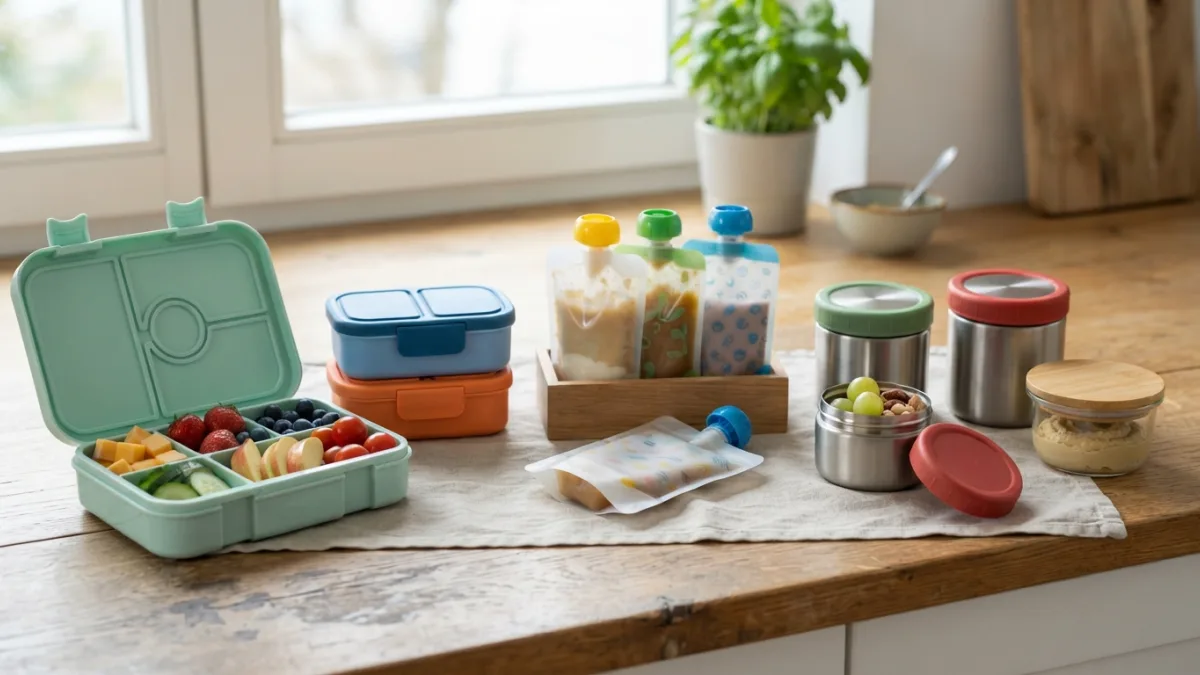
Kids bento boxes are the most flexible choice on this list, because they let you pack several small items without mixing them. The idea comes from the Japanese lunch box tradition, which you can read about in this overview of bento. Divided sections keep crackers dry and fruit separate, and the variety often tempts picky eaters to try something new. Look for a lid that clicks firmly shut and compartments sized for real snacks, not tiny decorations. These boxes work best for dry or semi-dry foods, and they are among the most useful reusable snack containers for school days.
Pick 2: Stainless Steel Snack Boxes
A plastic free school lunch is easier than it sounds, and stainless steel is the simplest place to start. These boxes are tough, they do not hold onto smells the way some plastics can, and they often last through years of drops and scrapes. Parents also like how easy they are to wipe clean. The trade-offs are weight and price, since steel usually costs more than plastic. You also cannot see inside, so your child must open the box to find out what’s in it. Check the lid material, because some steel boxes still use plastic or silicone seals.
Pick 3: Silicone Reusable Snack Pouches
Reusable snack pouches suit the foods that bento boxes handle badly: dry cereal, trail mix, sliced fruit, and sandwich halves. Most are soft, flexible, and flat when empty, so they fit into tight bag corners. A zipper or pinch seal keeps food fresh, and the material folds away neatly after lunch. They are not ideal for very wet foods unless the maker says so, and the seals need a careful rinse. For families who want to cut down on single-use bags without buying bulky boxes, this is often the easiest swap. This connects closely with another common issue — see Reusable Grocery Bag Materials: 3 Best Picks Compared for more on that.
Pick 4: Refillable Squeeze Pouches
Clean reusable food pouches are only useful if you can really get them clean, so look for a wide opening before anything else. Refillable squeeze pouches let you fill them with homemade purée, yogurt, or smoothie, then send them off for a quick snack on the go. A narrow spout can trap residue, so a pouch that opens fully or comes with a cleaning tool saves frustration. Always rinse right after use. Some pouches are made for the dishwasher and some are not, so follow the maker’s instructions closely to keep them hygienic.
Pick 5: Glass Snack Jars
Glass snack jars are a smart pick for foods that tend to stain or smell, like berries, hummus, and pickles. Glass does not absorb flavors, you can see the contents at a glance, and it feels clean in a way many parents appreciate. Choose small sizes with a tight lid, and think carefully about age. Glass is heavier and can break, so it suits older kids better than preschoolers. A silicone sleeve adds grip and a bit of protection. These jars also work well at home in the fridge, which makes them useful beyond lunchtime.
Pick 6: Spill-Resistant Snack Cups
Toddler snack containers have a different job from school lunch boxes: they must survive tiny, determined hands. The best ones have a soft, flexible opening that lets a child grab a few pieces at a time, which helps stop snacks from landing on the floor of the car seat. Look for a wide base so the cup does not tip, and a lid that stays on when it gets thrown. They are perfect for puffs, cereal, and soft fruit. Parents should still supervise snacking, especially with small, hard foods that can be a choking risk. You might also find our article on Reusable water bottles: 7 best picks for hot and cold drinks helpful here.
Pick 7: Leakproof Snack Containers
Leakproof lunch containers earn their place when snacks are wet, saucy, or creamy. Think yogurt with fruit, dips, or cut melon that releases juice. A good one has a silicone gasket in the lid and clips or a firm seal that holds under pressure. Test it at home first by filling it with water and shaking it over the sink. If it drips, return it. Keep perishable food cold with an ice pack, and the guidance at FoodSafety.gov is a helpful reference for safe handling. These containers cost a bit more but save backpacks from messy disasters.
Reusable Snack Containers Compared at a Glance
Here is a quick side-by-side view of all seven picks. Use it to match the container type to your child’s age, the snacks you pack most often, and how much washing you are willing to do. Details vary by brand, so treat the table as a general guide and read each product’s care instructions before you buy.
| Type | Best For | Main Strength | Watch Out For |
|---|---|---|---|
| Compartment bento box | School-age kids, mixed snacks | Variety and separation | Not great for liquids |
| Stainless steel box | Daily lunches, long use | Durability | Heavier, higher price |
| Silicone pouch | Dry snacks, sandwiches | Flat, light, flexible | Seals need careful rinsing |
| Refillable squeeze pouch | Purées, yogurt, smoothies | Mess-free eating on the go | Can be hard to clean |
| Glass jar | Berries, dips, fridge storage | No stains or odors | Heavy and breakable |
| Spill-resistant cup | Toddlers, car rides | Easy grabbing, stable base | Needs adult supervision |
| Leakproof container | Wet or saucy snacks | Tight, secure seal | Test before first use |
How to Choose the Right Set for Your Family
Start with what your child actually eats, not with what looks best on a shelf. If snacks are mostly dry and varied, a bento box and a couple of pouches will cover almost everything. If your child loves yogurt and fruit, add a leakproof option. Younger kids need simple lids and unbreakable materials, while older kids can handle glass and steel. Buying two or three types, rather than a huge set, usually works better. The right reusable snack containers are the ones that come home empty, get washed easily, and go back into the bag the next morning. For a related walkthrough, check out Best Plastic-Free Dishwashing Kits: Solid Dish Soap, Brushes, and Cloths Compared.
Frequently Asked Questions
Are reusable snack containers really better than disposable bags?
For most families, yes. You buy them once and use them for months or years, so you throw away less. They also protect food better than thin bags. The benefit only holds if you actually wash and reuse them, so choose designs that fit your routine.
What is the safest material for kids’ snack containers?
No single material wins for every child. Stainless steel, glass, and silicone are popular choices, and many plastics are also made without BPA. Read the label, follow the care instructions, and avoid using containers that are cracked, warped, or badly scratched.
How do I stop snack containers from smelling?
Wash them soon after use rather than leaving them in the bag overnight. Let them dry fully with the lid off. Steel and glass tend to hold odors less than some plastics, and a rinse with warm water and mild soap usually handles the rest.
What age can kids use glass jars?
There is no fixed age. Many parents wait until a child is old enough to handle items carefully, often in the school years. A silicone sleeve can add grip, but glass remains breakable, so use your own judgment based on your child.
Can I put hot or frozen food in these containers?
It depends on the product. Some containers are safe for the freezer, microwave, or dishwasher, and others are not. Always check the maker’s instructions before heating, freezing, or washing a container, and let hot food cool before sealing it.