Water Saving Cleaning Habits: 10 Easy Ways to Cut Waste
Most of us think about saving water in the shower or the garden, but the cleaning closet hides a surprising amount of waste. Building a few water saving cleaning habits can shrink that waste without making your home any less clean. It shows up in small moments: the mop bucket dumped out half-full, the tap left running while you scrub a pan, the washing machine spinning through a half-empty load. Over a week, a month, and a year, those moments add up. The good news is that none of the fixes require expensive gear or a big lifestyle change. Most come down to timing, tools, and a little attention. Below are ten practical changes for the three chores that use the most water at home: mopping, dishwashing, and laundry.
Why Water Saving Cleaning Habits Matter More Than You Think
Clean tap water doesn’t just appear. It has to be treated, pumped, and often heated before it reaches your sink, and every step uses energy. Many regions now face droughts and water restrictions more often, and utility bills keep climbing. Hot water is where the savings get interesting. When you cut back on hot water for dishes or laundry, you also cut the energy your water heater burns. That means water saving cleaning habits help both your water bill and your energy bill. The U.S. Environmental Protection Agency’s WaterSense program offers plenty of practical guidance on using water wisely at home. Still, you don’t need to read a government report to get started. You just need to look at your routine with fresh eyes. If you want to dig deeper, our guide on How to Switch to Reusable Cleaning Cloths and Brushes Without Feeling Less “Clean” covers this in more detail.
10 Easy Water Saving Cleaning Habits to Start Today
The habits below are grouped by chore, so you can jump straight to the one that bothers you most. Pick one or two to try this week. Once they feel automatic, add another.
1. Mop With Less Water Using the Spray-and-Wipe Method
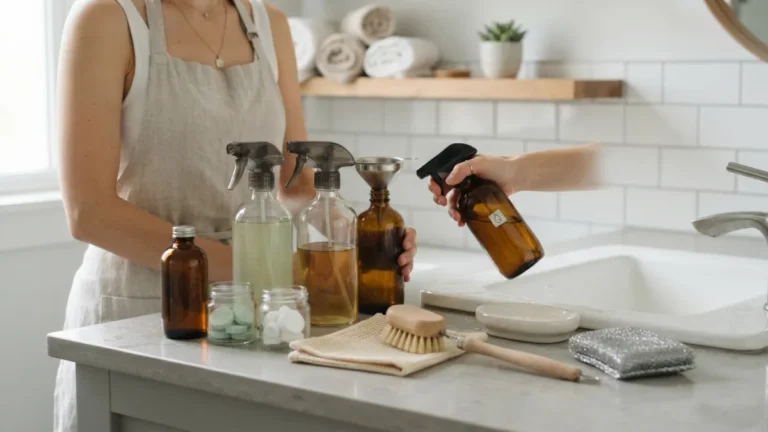
If you want to mop with less water, stop filling a full bucket. The classic bucket-and-mop routine often pushes dirty water around the floor and then sends most of it down the drain. Try the spray-and-wipe method instead. Fill a spray bottle with water and a small amount of floor cleaner, mist one section at a time, and wipe with a damp flat mop. You use only what the floor actually needs. For sticky spots, spray a little extra and let it sit for a minute before wiping. Floors also dry faster this way, which is good news for wood and laminate, since neither handles standing water well. A few extra tips help:
- Sweep or vacuum first so your mop isn’t just moving grit around.
- Work from the far corner toward the door so you never walk over wet floor.
- Rinse the mop head in a small basin, not under a running tap.
2. Swap Old Rags for Microfiber Cleaning Cloths
Microfiber cleaning cloths grab dust, grease, and grime with very little water, which makes them a natural fit for anyone trying to cut waste. Their fine fibers trap dirt instead of smearing it, so a light dampening is often enough for counters, mirrors, and appliance fronts. For dusting, you can usually skip water entirely. A cotton rag, by contrast, often needs rinsing again and again. Keep a small stack nearby and grab a fresh cloth when the first one gets dirty, rather than rinsing under the tap between wipes. When they need washing, add them to a regular laundry load instead of running a separate cycle. Skip fabric softener, because it can coat the fibers and make them less effective. If you’re concerned about synthetic fibers shedding in the wash, a laundry filter bag is one option to consider.
3. Scrape Plates Instead of Pre-Rinsing Them
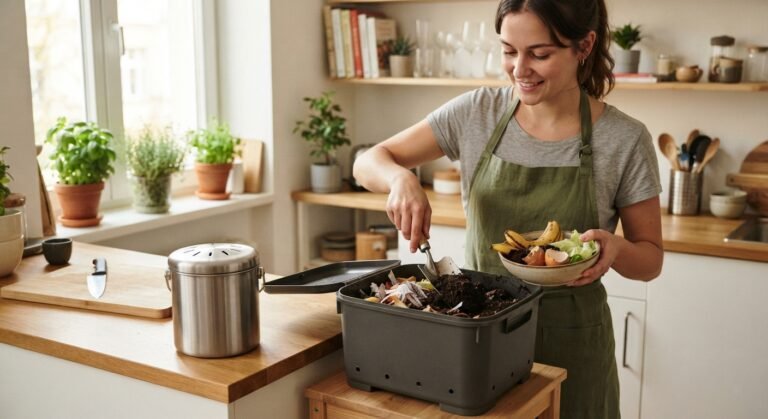
The easiest way to save water washing dishes starts before the plates reach the sink: scrape, don’t rinse. Plenty of people rinse every dish under a running tap before loading the dishwasher, yet modern machines are generally built to deal with food residue. Check your dishwasher’s manual to see what the manufacturer recommends. Use a rubber spatula or a used napkin to push leftovers into the compost bin or trash. For dried-on food, a short soak in a bowl of water does more than blasting it under the faucet. Of all the water saving cleaning habits in the kitchen, this one may be the hardest to break, simply because pre-rinsing feels so normal. Give it a week, though, and you’ll likely notice you’re saving time as well as water. This connects closely with another common issue — see Allergy Friendly Green Cleaning: 7 Easy Tips for Home for more on that.
4. Settle the Dishwasher vs Hand Washing Debate in Your Home
For most households, the dishwasher vs hand washing question has a fairly clear answer. A modern, efficient dishwasher run with a full load usually uses less water than washing the same dishes by hand under a running tap. Machines with the ENERGY STAR label are designed to use less energy and water than standard models. The key word is “full.” Running a half-empty dishwasher throws away much of that advantage. Hand washing can still make sense for small households, delicate items, or kitchens without a dishwasher, as long as you do it the smart way (more on that in the next habit). Here’s a simple side-by-side look:
| Factor | Efficient Dishwasher (Full Load) | Hand Washing, Running Tap | Hand Washing, Basin Method |
|---|---|---|---|
| Water use | Generally low | Often high | Moderate to low |
| Hot water and energy | Efficient cycles heat only what’s needed | Depends on how long the hot tap runs | Water is heated once, then reused |
| Best for | Families and daily loads | Rarely the best choice | Small households and delicate items |
5. Use the Two-Basin Method When Washing by Hand
When you wash dishes by hand, the biggest waste comes from leaving the tap running. The fix is simple: fill one basin, or one side of a double sink, with hot soapy water and the other with clean rinse water. If you only have one sink, a plastic tub works fine as the second basin. For people who wash by hand, this is one of the most useful water saving cleaning habits to learn. Order matters too, because it keeps your wash water cleaner for longer:
- Glasses and cups first, while the water is cleanest.
- Cutlery next.
- Plates and bowls after that.
- Pots and pans last, since they’re usually the greasiest.
If the wash water gets too dirty halfway through, drain part of it and top it up rather than starting completely fresh.
6. Follow These Full Load Laundry Tips
Washing machines use a large share of household water, so these full load laundry tips can make a real difference. Most machines use a similar amount of water whether the drum is packed or half-empty, unless they have a load-sensing feature. Waiting until you have a full load is the single easiest change. Just don’t cram the drum too tight, because overloaded clothes come out poorly cleaned and end up needing another wash. You might also find our article on Sustainable Dishwashing: How to Ditch Sponges and Reduce Waste at the Sink helpful here.
- Fill the drum loosely, leaving roughly a hand’s width of space at the top.
- Use the load-size setting if your machine has one and you truly need a small wash.
- Sort by how dirty clothes are, not only by color, so lightly worn items can go on a shorter cycle.
- Mix large and small items so clothes move freely and clean evenly.
7. Wash Clothes Less Often and Choose Smarter Cycles
Another way to reduce laundry water use is to simply wash things less often. Not every item needs a wash after one wear. Jeans, sweaters, and jackets can usually go several wears, and bath towels last longer if you hang them to dry fully between uses. Airing clothes out overnight and spot-cleaning small stains with a damp cloth both extend the time between washes. When you do run the machine, pick an eco or quick cycle for lightly worn clothes, and save heavy-duty settings for truly dirty loads. Skip the extra rinse unless you need it for sensitive skin or allergies. Measure detergent carefully, too, because using too much can leave a residue that seems to need more rinsing. Small water saving cleaning habits like these also help your clothes last longer.
8. Reuse Greywater at Home Safely
If you want to reuse greywater at home, start small and stay careful. Greywater is lightly used water from sinks, showers, and washing machines, not water from toilets. Some simple ideas are easy to try:
- Catch the cold water that runs while you wait for the tap to warm up. Strictly speaking, it’s clean water, but it’s perfect for filling a mop bucket or watering plants.
- Save the water from rinsing fruit and vegetables for houseplants.
- Reuse the final, lightly soapy rinse water from hand-washed dishes for a first pass on outdoor surfaces like patios or bins.
Some people take it further and divert washing machine water to the garden. Rules on that vary widely by location, so check your local regulations first. A few safety basics apply everywhere: don’t store greywater for long, since it can grow bacteria and start to smell; avoid water containing bleach or harsh chemicals; and keep it away from the edible parts of food crops.
9. Upgrade to Water Efficient Appliances When It’s Time
When your washing machine or dishwasher reaches the end of its life, choosing water efficient appliances is one of the longest-lasting changes you can make. Look for efficiency labels and compare the water use figures listed on product specifications before you buy. Front-loading washers generally use less water than traditional top-loaders with a central agitator, though high-efficiency top-loaders have narrowed that gap. Small upgrades count as well. A low-flow faucet aerator in the kitchen cuts the amount of water you use for quick rinses, and products with the WaterSense label are independently certified for efficiency. One caution: don’t replace a working machine just to save water. Making a new appliance has its own environmental cost, so it usually makes more sense to upgrade when the old one truly needs replacing. For a related walkthrough, check out Sustainable Spring Cleaning: 7 Easy Steps for Your Home.
10. Spot-Clean Early and Fix Small Leaks
Not every mess calls for a full cleaning session. Wiping up spills right away, before they dry and harden, means you need far less water to remove them later. A good doormat at each entrance traps much of the dirt that would otherwise end up on your floors, which means fewer mopping days. In the bathroom, a quick squeegee of the shower glass after each use prevents the soap scum that later demands heavy scrubbing and lots of rinsing. Keep an eye out for drips, too. A leaky kitchen faucet or a washing machine hose that seeps slowly wastes water around the clock, even when you’re not cleaning at all. These preventive water saving cleaning habits don’t feel dramatic, but they reduce the work and the water every other chore needs.
How to Make These Habits Stick
Changing routines is harder than learning new facts. The trick is to start with the chore you do most often. If you run the dishwasher daily, begin there. If laundry piles up all week, focus on full loads first. Put reminders where you’ll see them: a spray bottle next to the mop, a plastic tub under the sink, a small note on the washing machine. Involve everyone in the household, because one person scraping plates while another pre-rinses everything cancels out the savings. Kids often enjoy jobs like watering plants with saved tap water. Most of all, don’t aim for perfection. Water saving cleaning habits work because they’re small and repeatable. A home that follows half of these tips consistently will save more than one that tries all ten for a week and then gives up.
Frequently Asked Questions
What are the easiest water saving cleaning habits for beginners?
Start with three simple changes: scrape dishes instead of rinsing them, only run full loads in the dishwasher and washing machine, and use a spray bottle instead of a full mop bucket. They take almost no extra effort and work in nearly any home.
Is it really better to use a dishwasher than to wash by hand?
In most cases, yes, if the dishwasher is modern, efficient, and fully loaded. Hand washing with the tap running usually uses more water. If you prefer washing by hand, the two-basin method narrows the gap significantly.
How can I mop floors without wasting water?
Sweep or vacuum first, then mist small sections with a spray bottle and wipe with a damp flat mop. This avoids dumping out buckets of barely used water and helps floors dry faster.
Is it safe to use greywater on plants?
It can be, with care. Use it quickly instead of storing it, avoid water containing bleach or harsh chemicals, and keep it away from the edible parts of food crops. Check local rules before setting up any larger system.
Do eco or quick wash cycles clean clothes properly?
For lightly worn clothes, they usually do a good job. Save longer, heavier cycles for heavily soiled items like work clothes or muddy sportswear, and follow the care labels on your garments.