Dishwashing Tools: 3 Best Eco-Friendly Options Compared
Your sink probably holds more plastic than you think. That bright yellow sponge, the synthetic scrubber, the plastic-handled brush: they all wear out and end up in the trash. If you want to cut waste without giving up a clean kitchen, the right dishwashing tools make a real difference. Three options keep coming up in eco-minded homes: scrub brushes, copper pads, and plant-based sponges. Each one cleans well, but each has its own quirks. Some last for years. Others need replacing every few weeks. This guide compares all three in plain terms, so you can pick what fits your habits, your pots, and your budget.
Scrub Brush vs Sponge: What Actually Changes in Your Routine
The scrub brush vs sponge question comes down to two things: how each tool holds water and how each one wears out. A brush has bristles that shed water fast, so it dries quickly between uses. A sponge soaks up soap and water, which feels gentle and handy for glasses and plates. But that soaked interior stays damp for hours. Brushes also reach into bottles and corners better, while sponges hug the curve of a bowl. Neither wins every round. Many households end up using one of each, and that works well. The real goal is simply less waste overall. If you want to dig deeper, our guide on Best Plastic-Free Dishwashing Kits: Solid Dish Soap, Brushes, and Cloths Compared covers this in more detail.
The 3 Best Eco-Friendly Dishwashing Tools
Here are the three options, with what each does best and where each falls short.
1. Scrub Brushes: Tough on Stuck-On Food
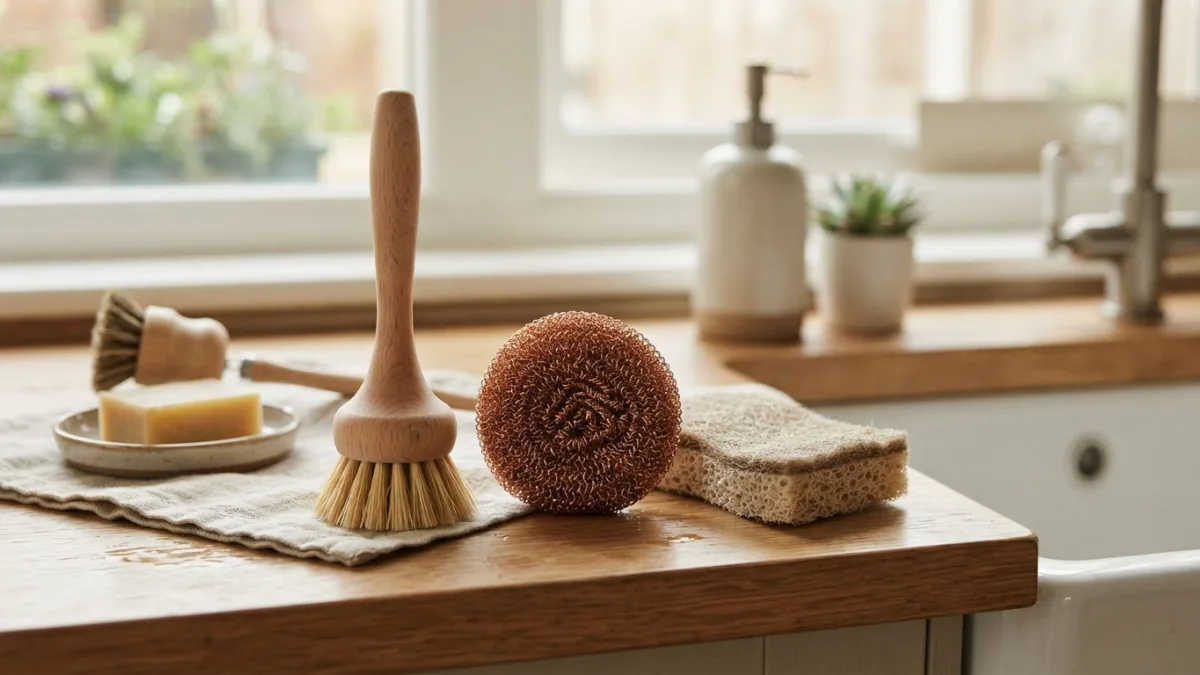
A good scrub brush handles burnt rice, baked-on cheese, and greasy pans with little effort. Stiff bristles lift food without needing much soap, and the handle keeps your hands away from hot water. Look for a brush with a replaceable head, because the bristles wear out long before the handle does. That small design choice saves material and money. Brushes suit cast iron, stainless steel, and ceramic. Go easy on nonstick pans, though, since hard bristles can scratch coatings over time. Hang the brush where air can circulate, and it will usually dry within a few hours. A dry brush stays fresher and lasts longer.
A wooden dish brush is the classic version, and it looks good on a counter. Most pair a wooden handle with plant-fiber bristles, which can make disposal easier once the head is worn out. Check the product description, though, because some brushes use nylon bristles or glued parts. Wood does not like sitting in water. Stand the brush upright or hang it up, and never leave it soaking overnight. Over time, wood can crack or darken if it stays wet. With basic care, a well-made brush can serve you for months before the bristles need replacing.
2. Copper Scrubber Pads: The Long-Lasting Scourer
Copper scrubber pads are made of fine copper mesh, and they shine on stubborn residue. They cut through baked-on grime on stainless steel and enameled cookware, and one pad can outlast several ordinary sponges. They do have limits. Skip them on nonstick pans, delicate glassware, and anything that scratches easily. If you are unsure, test a small, hidden spot first. Because the pad is metal, it may also be accepted by scrap metal recyclers when it finally wears out. Local rules differ, so check with your recycling service before you count on it. This connects closely with another common issue — see Reviewing Reusable Alternatives to Paper Towels: Swedish Cloths, Bamboo Towels, and Rags for more on that.
Knowing how to clean copper scrubbers keeps them useful for much longer. After each use, rinse the pad under hot running water and shake out any food bits. Squeeze out the extra water, then let it dry fully on a rack or small dish instead of leaving it in a wet puddle. Damp storage makes the pad look dull and fall apart faster. Pads can shed tiny bits of metal as they wear, so check your sink strainer now and then. When the mesh looks thin or frayed, replace it. A pad that crumbles will not clean well anyway.
3. Compostable Sponges: Soft, Familiar, and Plant-Based
Compostable dish sponges look and feel like the sponges you already know, but they use plant-based materials such as cellulose. They soak up soap, build a good lather, and glide over plates and glasses without scratching. The key word is “label.” Some sponges include a synthetic scrubbing layer that will not break down, so read the packaging before you toss one in the compost bin. Even a truly compostable sponge may need the right conditions, so this EPA guide to composting at home is a useful starting point. Rinse off food residue first, and cut the sponge into small pieces to help it break down.
Natural sponge alternatives go beyond cellulose. Loofah, which comes from the dried fibrous fruit of the luffa plant, makes a firm scrubber that softens once wet. You can find it sold as flat pads or slices. Other swaps include knitted cotton cloths and pads made from plant fibers. Cloths can go in the washing machine and come back ready for another round, which cuts waste fast. Each material has trade-offs. Loofah can feel rough on delicate dishes, and cloths need regular laundering. Try one or two and see which feels right in your hand. Among all dishwashing tools, softer ones usually suit glassware best.
Dish Sponge Bacteria: Why Drying and Replacing Matter
Dish sponge bacteria are the main reason many people rethink their kitchen routine. A damp sponge holds water and tiny food scraps, which gives germs a place to grow. That is true for any soft, wet material, eco-friendly or not. You do not need to panic, but good habits help. Rinse the sponge after each use, wring it out, and let it dry in open air. Replace it as soon as it smells off or looks worn. For general kitchen hygiene, foodsafety.gov offers trusted guidance. Brushes and copper pads tend to dry faster, which gives them a small edge here. You might also find our article on Bamboo vs. Plastic Toothbrushes: Is the Switch Worth It? helpful here.
Plastic Free Dish Cleaning: How to Make the Switch
Plastic free dish cleaning does not need a full kitchen makeover. Start with one swap, then add more as old items wear out. Use up your current sponge before buying a new tool, since throwing away something that still works creates waste too. Pair a brush with a bar of dish soap or a refillable liquid soap if you can find one nearby. Keep a copper pad for burnt pans and a compostable sponge for glasses. Buying fewer, better items usually beats stocking up on gadgets. The best dishwashing tools are the ones you will actually use and care for.
Side-by-Side Comparison of the Three Dishwashing Tools
This quick table sums up the main differences. Treat it as a general guide, since quality varies from brand to brand.
| Tool | Best for | Watch out for | Drying and care | End of life |
|---|---|---|---|---|
| Scrub brush | Pots, pans, bottles, stuck-on food | Scratching nonstick coatings | Dries fairly fast if hung up | Replace the head; check materials for composting |
| Copper pad | Baked-on grime on sturdy cookware | Scratching delicate surfaces | Rinse and dry fully after use | May be recyclable as scrap metal; check local rules |
| Compostable sponge | Plates, glasses, everyday washing | Staying damp; hidden synthetic layers | Wring out and air dry | Compost if the label confirms it |
Which Tool Should You Pick?
No single option wins for everyone. If you cook a lot and burn the occasional pan, a brush and a copper pad make a strong, long-lasting pair. If you mostly wash glasses, mugs, and light dishes, a compostable sponge or a cotton cloth may feel better. Whatever you choose, dry your tools well, replace them when they wear out, and check labels before composting or recycling. Small habits add up. Swap one item this month, see how it feels, and build from there. A greener sink is not about perfection. It is about choosing tools that last and waste less.
FAQ About Eco-Friendly Dishwashing Tools
Are eco-friendly dishwashing tools really better for the planet?
Often, yes, especially when they replace disposable plastic items and last longer. The benefit depends on how you use them. A durable tool that you keep for months does more good than a “green” product you replace quickly. For a related walkthrough, check out plastic free deodorant: 7 best tested brands for safe skin.
How often should I replace a kitchen sponge?
There is no perfect schedule. Replace it when it smells bad, falls apart, or stays slimy even after drying. Rinsing it well and letting it dry between uses helps it last longer and stay fresher.
Can I use a copper pad on nonstick pans?
No. Copper mesh can scratch nonstick coatings and delicate surfaces. Use a soft cloth or a gentle sponge on those items instead, and save the copper pad for sturdy cookware.
Are compostable dish sponges safe to put in a home compost bin?
Only if the label says so. Some sponges have synthetic layers that do not break down. Rinse off food and grease first, and check your local composting rules if you use a municipal service.
What is the easiest eco-friendly swap for beginners?
A brush with a replaceable head is a simple place to start. It is sturdy, easy to dry, and works on most pots and pans. Add a soft cloth or sponge for delicate dishes.