Bathroom Cleaning Routine: 7 Easy Zero-Waste Refill Swaps
Your bathroom probably holds more plastic than any other room in the house — tucked behind the toilet, under the sink, crammed onto a shower shelf. A low-waste bathroom cleaning routine chips away at that pile without asking you to scrub harder or spend a fortune. The idea is simple: buy the cleaning power, not the water and the bottle. Concentrates, tablets, powders, and sturdy refillable containers do the same job as the bright plastic sprays you already know, and they take up far less space in your cupboard. Below are seven swaps that make the switch easy, plus a realistic weekly schedule and answers to the questions people ask most. Start with one change. You can always build from there.
Why a Low-Waste Bathroom Cleaning Routine Actually Matters
Most all-purpose sprays are mainly water. You pay to ship that water across the country, then you toss the bottle a few weeks later. Switching to a refill-based bathroom cleaning routine cuts packaging, reduces shipping weight, and usually lowers your cost per bottle over time. There’s an indoor air angle too — heavy fragrance and aerosol sprays add to the mix of chemicals floating around a small, poorly ventilated room, and the EPA’s guidance on indoor air quality is a useful starting point if that concerns you. A plastic-free approach doesn’t mean giving up hygiene. It means choosing fewer, better products and reusing the hardware you already own. If you want to dig deeper, our guide on Kid- and Pet-Safe House Cleaning: Non-Toxic Products for Floors, Furniture, and Toys covers this in more detail.
7 Easy Zero-Waste Refill Swaps for Your Bathroom Cleaning Routine
1. Trade Plastic Sprays for Glass Spray Bottles
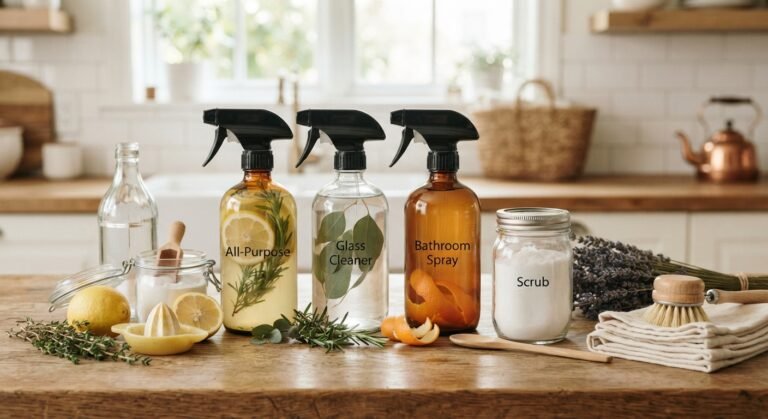
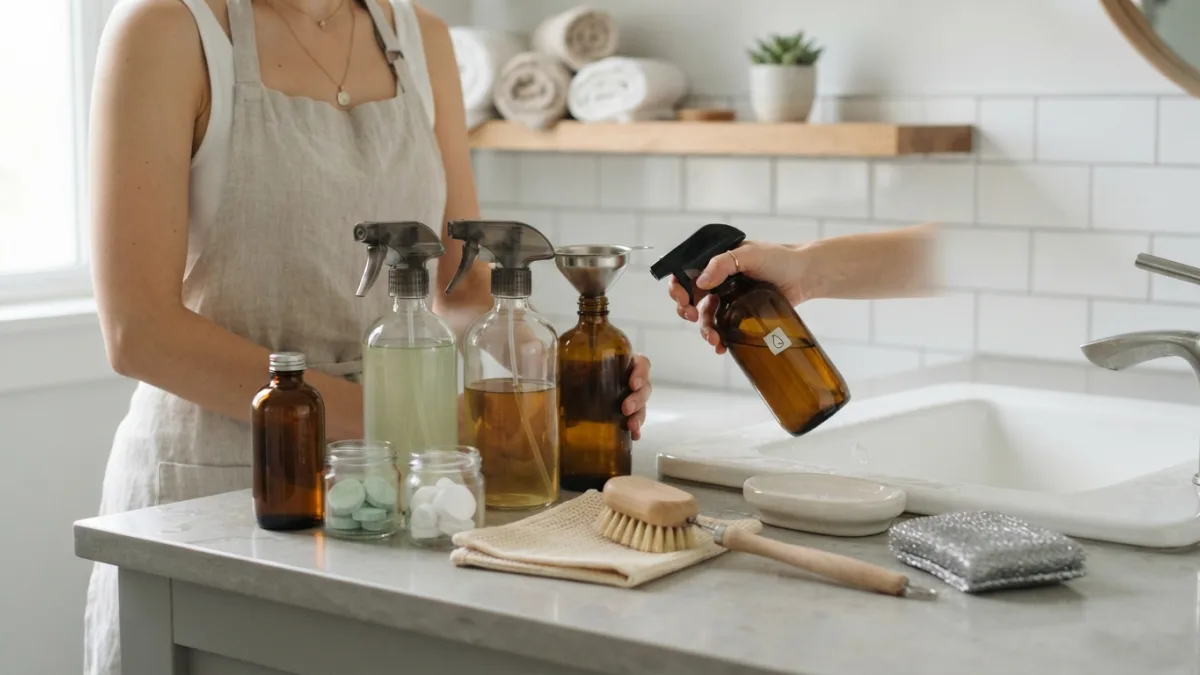
This is the foundation swap, and it’s the one people notice most. Glass spray bottles don’t stain, don’t hold onto old smells, and won’t cloud up after a year of citrus cleaner. Look for thick amber or clear glass with a silicone sleeve — that sleeve saves the bottle when it slips out of wet hands. Keep two on hand: one for a general surface spray and one for glass and mirrors. Label them with waterproof tape so nobody guesses. If you already have a favorite plastic trigger sprayer that works well, keep using it until it breaks, then move the trigger head onto glass. Reusing what you own beats buying new, every single time, and it makes the whole system cheaper to start.
2. Switch to Cleaning Concentrate Tablets
Cleaning concentrate tablets are the easiest entry point into a low-waste bathroom cleaning routine. You drop one into a bottle of warm water, wait a few minutes while it fizzes, and you have a full spray for pennies in packaging. Most brands ship them in small paper envelopes or cardboard, so a year of cleaner fits in an envelope instead of a shelf of jugs. Tablets travel well, they don’t leak, and they’re hard to mess up. Read the label carefully, though: some are formulated for glass, some for bathroom surfaces, and some are disinfectants with a required dwell time. Matching the tablet to the job matters more than buying the prettiest packaging.
3. Buy Liquid Concentrates in Bulk
Liquid concentrate is the old-school version of the same idea, and plenty of people prefer it. One small pouch or bottle makes several liters of finished cleaner, which means you shop a few times a year instead of monthly. Measure carefully — more concentrate does not mean cleaner tiles. Over-dosing leaves streaks and film, and it wastes the product you paid for. A cheap measuring spoon kept with the bottles solves that problem permanently. If a local refill shop sells bulk cleaner by weight, bring your empty glass container and fill it there. That’s the lowest-packaging option available, and refill shops have spread to most mid-sized cities over the past few years.
4. Replace Paper Towels With Washable Cloths
Paper towels disappear fast in a bathroom. Swap them for a small stack of cotton or microfiber cloths and assign colors by zone — one color for the toilet, another for sinks and counters, a third for mirrors. Color-coding sounds fussy, but it’s what professional cleaners do, and it prevents cross-contamination. Wash the cloths hot, skip fabric softener because it ruins absorbency, and hang them to dry between uses. One important note: microfiber sheds tiny plastic fibers in the wash, so if that bothers you, choose cotton terry or a washing bag designed to catch fibers. Either way, a dozen cloths will outlast hundreds of paper rolls in your bathroom cleaning routine. This connects closely with another common issue — see DIY Natural Cleaning Products That Actually Work for more on that.
5. Use Powder Scrub Instead of Cream Cleaner
Cream cleansers come in plastic bottles and are, again, mostly water. Powder scrubs in a cardboard tube or metal tin do the same work on tubs, grout, and sinks. Sprinkle, add a little water to make a paste, scrub, rinse. Baking soda works for light jobs; commercial powders with a mild abrasive and a surfactant handle soap scum better. Test on a small hidden patch first, especially on acrylic tubs and polished stone, which scratch more easily than ceramic. Store the tin somewhere dry — a steamy shower shelf will turn any powder into a brick. A single tin usually lasts months, which makes it one of the cheapest plastic-free cleaning supplies you can buy.
6. Choose Solid Toilet Bowl Cleaners and Refillable Brushes
Toilet cleaning generates a surprising amount of waste: thick plastic bottles, disposable wands, endless disposable pads. Solid options — fizzing bowl tablets, powdered bowl cleaner, or a citric-acid based descaler — arrive in cardboard and work while you do something else. Drop one in, leave it for the time the label specifies, then scrub with a brush that has a replaceable head. Wooden brushes with natural bristles exist, though they need to dry fully or they’ll rot. Whatever you choose, remember the safety rule that applies to every bathroom cleaning routine: never mix bleach with acidic cleaners, vinegar, or ammonia. The fumes are genuinely dangerous in a small, closed room.
7. Set Up a Refill Station Under the Sink
The last swap is organizational, not product-based, and it’s what makes the rest stick. Clear a shelf or a shallow bin under the sink and put everything in one place: your tablets or concentrate, a measuring spoon, a funnel, labeled glass bottles, and a folded stack of cloths. When refilling takes ninety seconds instead of a search through three cupboards, you actually do it. Keep a small note taped inside the cabinet door with dilution ratios — you’ll forget them, everyone does. Check that the station stays out of reach of children and pets, since concentrated products are stronger than the ready-to-use sprays people are used to. A tidy station turns refillable cleaning products into a habit rather than a project.
Comparing Refill Formats at a Glance
No single format wins on every measure, so choose based on how you shop and how much storage you have. Tablets are the most convenient. Bulk refills from a local shop create the least packaging. Powders cost the least. Here’s how the main options stack up for a typical household bathroom cleaning routine: You might also find our article on How to Switch to Reusable Cleaning Cloths and Brushes Without Feeling Less “Clean” helpful here.
| Format | Packaging waste | Effort to prepare | Best for |
|---|---|---|---|
| Concentrate tablets | Very low (paper or card) | Low — drop and wait | Beginners and small bathrooms |
| Liquid concentrate | Low (small pouch or bottle) | Medium — must measure | Households that clean often |
| Powder scrub | Low (tin or cardboard tube) | Medium — mix a paste | Tubs, grout and soap scum |
| Bulk store refill | Lowest — reuse your own container | Medium — requires a trip | People near a refill shop |
| Simple DIY (vinegar, baking soda) | Low | Low to medium | Light, routine upkeep |
A Realistic Weekly Schedule
A routine only works if it fits into real life. Try splitting the work instead of saving it all for one exhausting Saturday:
- Daily (60 seconds): wipe the sink and faucet with a damp cloth, squeegee the shower door.
- Twice a week: spray and wipe the toilet seat, lid and handle; refresh the mirror.
- Weekly: scrub the bowl with a solid cleaner, clean the tub or shower with powder scrub, mop the floor.
- Monthly: descale the showerhead, wash the bath mat, run all cloths through a hot wash.
- Quarterly: deep-clean grout, restock tablets and concentrates, check bottle labels.
Short, frequent passes mean you rarely need heavy-duty products at all. That’s the quiet secret of a zero waste bathroom: prevention beats rescue.
Reading Labels Without Getting Fooled
“Natural,” “eco,” and “green” have no fixed legal meaning on a cleaning label, so they tell you very little on their own. Third-party certification is more useful. The EPA’s Safer Choice program reviews ingredients against health and environmental criteria, and its label is one of the easier marks to recognize on a shelf. Check whether a product is a cleaner or a registered disinfectant, since those are different claims with different testing behind them. Also look at what the refill itself is made of — a tablet in a compostable wrapper beats a “refill pouch” that’s a multi-layer plastic laminate. Ask yourself one question before buying anything for your bathroom cleaning routine: what happens to this package when I’m done?
Common Mistakes People Make When Switching
The biggest one is throwing out everything at once. Finishing the products you already own is greener than binning them, and it spreads the cost of new bottles over several months. The second mistake is expecting concentrates to smell and foam like commercial sprays — suds are mostly for show, and a low-foam cleaner can work perfectly well. Some people also over-dilute, get disappointing results, and give up entirely. Follow the ratio on the label before you start experimenting. Finally, don’t skip ventilation just because a product is gentler; open a window or run the fan whenever you clean. Build the habit slowly and your bathroom cleaning routine will stay low-waste long after the novelty wears off. For a related walkthrough, check out Small-Space Storage Ideas for Bulk Cleaning Ingredients (Vinegar, Soda, Soap Bars).
Frequently Asked Questions
Do concentrate tablets clean as well as regular spray cleaners?
For everyday dirt, soap scum, and toothpaste splatter, yes. Once diluted correctly, a tablet-based cleaner contains the same kinds of surfactants as a bottled spray. The difference is you added the water at home. For disinfecting, check that the product is specifically sold as a disinfectant and follow the stated contact time.
Are glass spray bottles safe in a bathroom?
They’re safe if you handle them sensibly. Choose bottles with a silicone sleeve, keep them off high or slippery shelves, and store them in a cabinet rather than the shower. If you have young children or a very small, hard-tiled bathroom, a durable refillable aluminium or reused plastic bottle is a reasonable alternative.
Can I just use vinegar and baking soda for everything?
They cover a lot of ground, but not all of it. Vinegar helps with limescale and general grime, while baking soda works as a mild abrasive. Vinegar can damage natural stone and some finishes, and neither one is a disinfectant. Mixing them together mostly produces fizz and water, so use them separately for better results.
How much money does a refill system really save?
Savings vary by brand and country, so treat any exact figure with caution. The general pattern holds, though: after the one-time cost of durable bottles, you’re paying for active ingredients instead of water, packaging, and shipping weight. Bulk powders and store refills usually deliver the lowest cost per use.
What’s the easiest first step if I’m starting from zero?
Swap paper towels for washable cloths and buy one pack of concentrate tablets to use in a bottle you already own. Those two changes cost very little, require no new habits, and immediately cut the waste your bathroom produces. Add the powder scrub and solid toilet cleaner once the first swaps feel automatic.