
Teaching Kids Sustainability: 7 Simple Ways to Make It Fun
If your preschooler has ever insisted on carrying an empty bottle to the recycling bin like it is treasure, you have seen how eager kids are to help. teaching kids sustainability works best when you build on that natural curiosity instead of turning it into a lecture. You do not need a perfect zero-waste home or a science degree to get started. Children understand big ideas when they can see, touch, and try them in small, playful ways. A sorting game, a favorite picture book, or a simple job like watering plants can make caring for the planet feel normal and even fun. Start where you are, with what you already have at home.
Young children do not learn sustainability from charts or warnings. They learn by doing and by copying the adults around them. When you make eco-friendly choices visible and playful, you give them a role instead of a rule to follow. Play lets them experiment without pressure. Stories give them language for why it matters. Chores give them pride because they can see the result of their effort right away. This combination keeps the lesson light but memorable. It also fits easily into busy family life. You are not adding another subject to teach. You are weaving small habits into moments you already share, like tidying up, reading together, or playing on the floor. If you want to dig deeper, our guide on Greener Smartphone Use: Digital Declutter, Charging Habits, and Device Lifespan covers this in more detail.
Why Everyday Moments Teach More Than Lectures
Children between three and ten are building habits that can last for years. If caring for things, saving water, or reusing materials feels normal now, they are more likely to keep doing it later without being reminded. That is why teaching kids sustainability through daily life is more powerful than a one-time lesson. You do not need to explain the whole climate system. You can focus on care, respect, and responsibility in ways they understand. For example, fixing a toy teaches that objects have value. Turning off a light shows that energy is something we use. These small connections build an early sense of agency, which helps kids feel they can make a difference rather than feeling worried or helpless.
Teaching Kids Sustainability: 7 Simple Ways to Make It Fun
1. Turn Recycling Into a Sorting Game
Recycling activities for children work best when they feel like play, not homework. Set up two or three bins with clear pictures for paper, plastic, and general waste, and let your child be the sorter after snack time or craft time. Talk out loud as you decide together, asking simple questions like does this go in paper or plastic. Keep it hands-on and positive, and avoid making it a test. You can add a gentle challenge, like who can sort correctly before a song ends. For ideas on what can actually be recycled in your area, check the EPA recycling basics guide. When kids practice sorting often, teaching kids sustainability becomes a habit they can see and touch.
2. Try Eco Friendly Play Ideas With What You Already Have
Eco friendly play ideas do not require new toys. In fact, the most creative play often comes from reusing what you already have. Cardboard boxes become shops, rockets, or animal homes. Bottle caps turn into counting pieces, and fabric scraps become costumes. Try a no-buy challenge for one afternoon and see what your child invents with safe, clean reused materials. You can also take play outside. A nature scavenger hunt, building with sticks and stones, or watching ants carry leaves teaches respect for living things without a single worksheet. This kind of environmental education through play helps children link fun with care. They learn that resources have more than one life and that imagination is a great tool for reusing. This connects closely with another common issue — see How to Talk to Family About Living More Sustainably for more on that.
3. Share Sustainability Stories for Kids at Bedtime
Sustainability stories for kids give abstract ideas a human shape. A picture book about a child who saves seeds, a tale about a river that needs cleaning, or even a story you make up about a toy that gets fixed instead of thrown away can stay with a child for weeks. After reading, ask gentle, open questions like what would you do if you were that character. Let them draw a new ending or act it out with stuffed animals. You do not need a shelf full of new books. Libraries, classroom collections, and free resources like NASA Climate Kids offer engaging stories and visuals that explain the planet in child-friendly language. When teaching kids sustainability through stories, you build empathy along with knowledge, which makes action feel personal.
4. Assign Simple Green Chores They Can Own
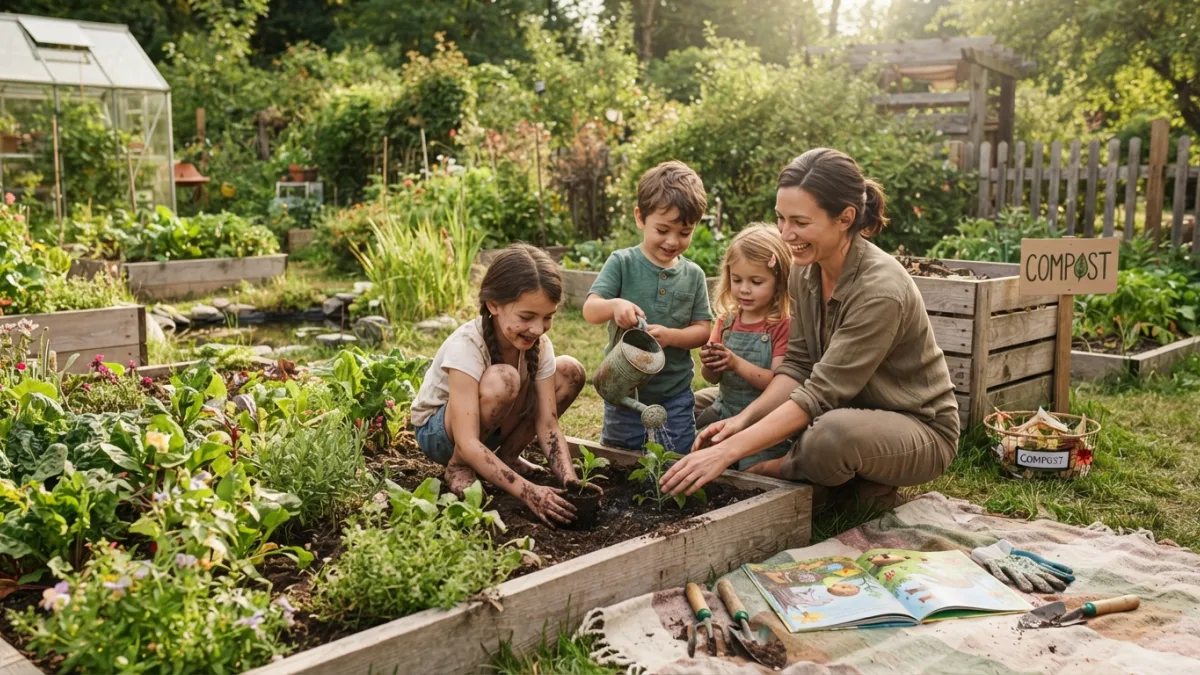
Simple green chores give kids a real job that matters. Start with one or two age-appropriate tasks and let them own it fully. A three-year-old can water a plant with a small cup. A five-year-old can help separate compost scraps. An eight-year-old can be in charge of turning off lights when leaving a room. Use a picture chart so they can mark what they did without needing reminders. Praise effort and consistency, not perfection. Teaching kids sustainability through chores works because children see the direct result of their care. The plant grows, the compost bin fills, the room stays tidy. That visible feedback builds confidence and shows that small actions add up over time.
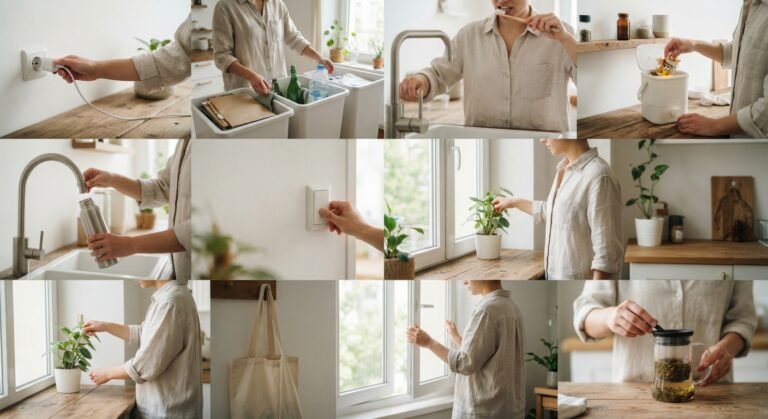
- Watering indoor plants with a small cup
- Putting paper and plastic in the right bins
- Carrying a reusable bag to the store
- Helping to pack lunch in reusable containers
- Turning off lights and closing the tap while brushing teeth
5. Grow Something Together, Even on a Windowsill
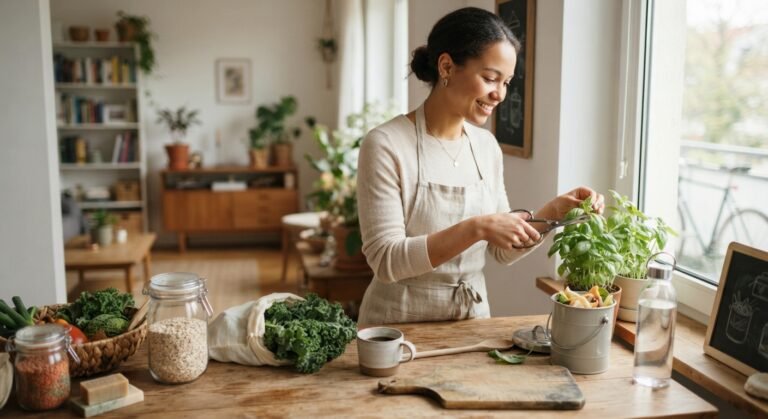
Growing food, even in a small pot, makes the cycle of waste and renewal easy to grasp. Plant herbs like basil or mint on a windowsill and let your child be the water manager. Talk about what plants need and what happens to peels and leaves when they go into compost. If you have space, try a small outdoor patch with fast-growing greens. Children love digging, and they quickly connect food scraps to soil to new food. You can also involve them in planning meals to reduce waste, like choosing what to cook with leftovers or packing a lunch with reusable containers. These hands-on moments teach patience and care. They also show that sustainability is not about doing without, but about paying attention to where things come from and where they go. You might also find our article on Minimalist Packing List: 10 Essential Eco-Travel Items helpful here.
6. Play Energy Detectives at Home
Turning off lights and saving water can feel abstract until you make it a game. Try playing energy detectives for ten minutes each evening. Give your child a flashlight or a sticker chart and ask them to spot lights left on, taps dripping, or chargers plugged in with no device attached. Celebrate what they find and fix it together. You can also make a simple chart to track how often you remember to bring reusable bags or refill water bottles instead of using new ones. Keep the tone playful, not shaming. When teaching kids sustainability this way, you help them notice invisible resources. They start to understand that energy and water are not endless, and that paying attention is a form of care for the home and the planet.
7. Make Art From Reused Materials
Creative reuse turns what might be trash into something valued. Keep a maker box filled with clean, safe reused items like cardboard tubes, egg cartons, jar lids, and scrap paper. When your child wants to build or craft, invite them to shop the box first before reaching for new supplies. Talk about the choice as you create, noting how you gave the material a second life. Display the art proudly and let them explain what each part used to be. This practice builds flexible thinking and reduces waste at the same time. It also shows that caring for the planet can be joyful and expressive, not just about rules. For more background on why reusing matters, you can explore the basic ideas on the Wikipedia sustainability overview.
Bringing It All Together With Play and Purpose
None of these ideas needs to be done perfectly or all at once. The goal is to make sustainable habits part of everyday family culture. Choose one playful activity, one story, and one chore to start this week and see how your child responds. Notice what sparks their interest and follow that lead. If they love sorting, add more recycling activities for children. If they love stories, visit the library for more books about oceans or forests. If they love being helpers, expand their simple green chores gradually. Teaching kids sustainability is a slow, steady process built on repetition and warmth. When you keep it light and consistent, children internalize the values without feeling pressured or overwhelmed. For a related walkthrough, check out Sustainable Self Care Rituals: 7 Easy Ways to Relax at Home.
You do not have to be an expert to raise a child who cares for the planet. You just need to create space for curiosity, play, and small responsibilities. Over time, those early games, stories, and chores add up to a mindset that respects resources and other living things. Your child will start to remind you to bring the reusable bag or to save the scrap paper for later. Those moments are worth celebrating. They show that learning has taken root. Keep the activities simple, keep the conversation kind, and keep showing up as an example. With patience and a sense of fun, teaching kids sustainability becomes less about instruction and more about living your values together, day by day.
Frequently Asked Questions
At what age can I start teaching kids sustainability?
You can start as early as age two or three with very simple actions. At that age, focus on caring habits like putting trash in the bin, watering plants, and reusing paper for drawing. As children get older, you can add more explanation and responsibility.
How do I make recycling activities for children fun and not messy?
Use clean, dry materials and clear picture labels on bins. Keep sorting sessions short, turn them into a timed game or song, and let kids handle only safe items like paper, cardboard, and rinsed plastic bottles with your help.
What are some simple green chores for young kids?
Good starter chores include watering plants, turning off lights when leaving a room, placing recyclables in the correct bin, carrying reusable bags, and helping pack snacks in reusable containers. Choose one task they can own completely.
Which sustainability stories for kids work best?
Look for picture books about nature, caring for animals, fixing things, or community gardens. Local libraries are a great free resource. You can also create your own short stories about a favorite toy being repaired or a character who learns to compost.
How can I teach sustainability without making my child anxious?
Keep the focus on positive action and care rather than fear. Use play and stories to show what we can do, celebrate small wins, and avoid heavy details. Emphasize that many people working together make a difference.


Such an encouraging and practical read! I love the focus on empowering kids through play and simple responsibilities rather than giving lectures. Framing recycling as a sorting game and using cardboard boxes for open-ended play are fantastic ways to show children that sustainability can be fun and creative. Thank you for reminding us that small, everyday habits build the strongest foundations for the future!