How to Reduce Plastic in Your Bathroom
Reduce plastic in bathroom trips up a lot of people, but it does not have to be complicated once you know the right steps.
Open any bathroom cabinet and you’ll likely find a small mountain of plastic: shampoo bottles, razor packaging, cotton swabs, toothbrushes, and countless little tubes that will outlive us all in a landfill somewhere. If you’ve been looking for a way to reduce plastic in your bathroom without turning your daily routine upside down, you’re not alone. More people are searching for simple, realistic ways to cut down on single-use plastic at home, and the bathroom is often the easiest place to start because so many eco-friendly alternatives already exist on store shelves and online.
The good news is that you don’t need to overhaul your entire routine overnight. Small, steady swaps add up faster than people expect, and many of them save money over time too. Bar soaps last longer than bottled body wash, refillable containers cut down on packaging waste, and reusable items replace things you’d otherwise toss every week. This article walks through practical, budget-friendly ways to build a more sustainable bathroom, one habit and one product at a time.
Why Bathroom Plastic Adds Up So Quickly
Bathrooms are packed with short-lived plastic items that get replaced constantly. Shampoo bottles, disposable razors, cotton swab sticks, and toothbrushes are used for weeks or months before being thrown away, and most of them aren’t recycled because they’re too small, too contaminated with product residue, or made from mixed materials that recycling facilities can’t process. A single household can go through dozens of these items in a year without really noticing, simply because replacing them feels routine and automatic.
This is exactly why the bathroom offers such a good opportunity for change. Unlike bigger lifestyle shifts that require major investment, most bathroom swaps are cheap, widely available, and easy to test out. You don’t have to commit to a fully zero waste bathroom on day one. Instead, you can replace items gradually as your current products run out, which makes the whole process feel manageable rather than overwhelming.
Simple Sustainable Bathroom Swaps to Start With
Swap Bottled Products for Bars
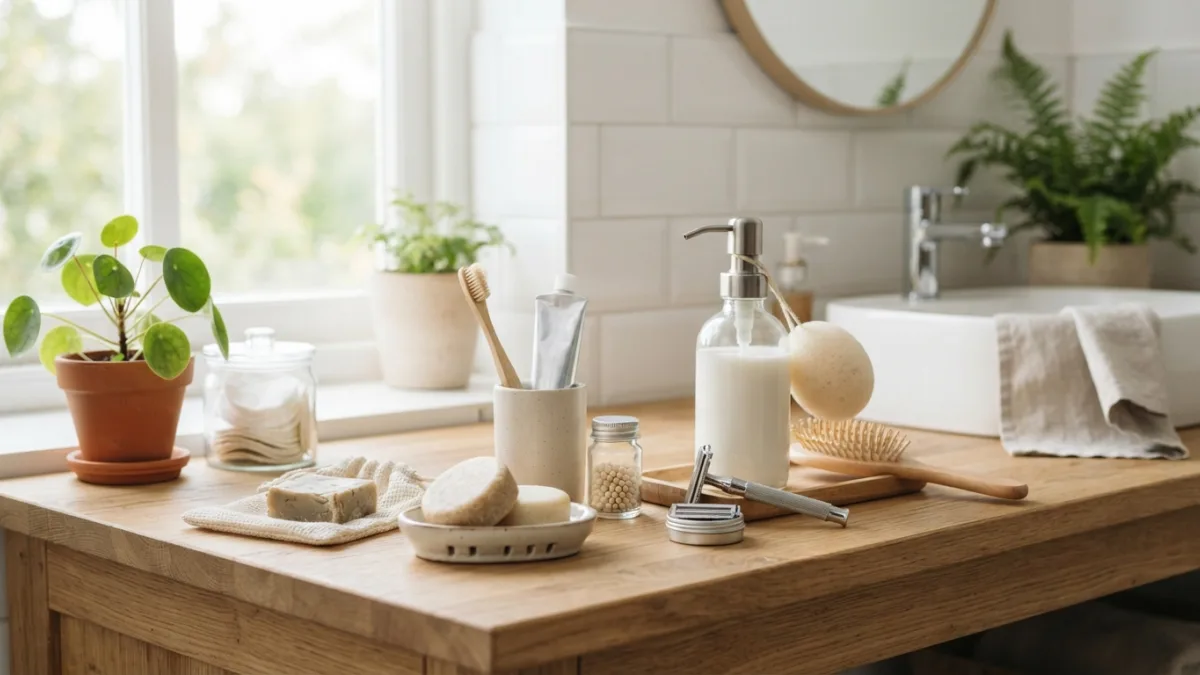
One of the easiest ways to reduce plastic in your bathroom is switching from liquid products in plastic bottles to solid bars. Shampoo bars, conditioner bars, and bar soap have grown a lot in quality over the past few years, and many brands now make versions suited for different hair and skin types. A single bar often lasts as long as two or three plastic bottles, which means less packaging waste and fewer trips to restock. They’re also lighter to pack when you travel, and you won’t have to worry about liquid restrictions at airport security.
Choose Refillable Containers
If you’re not ready to give up liquid soap, body wash, or hand soap entirely, look for refill stations at local shops or refill pouches sold online. Many brands now sell concentrated refills in cardboard or minimal packaging that you mix with water at home, or simple refill pouches that use far less plastic than a brand-new bottle each time. You keep the same pump bottle for years and just top it up, which cuts down on plastic waste dramatically without changing the product you already like using.
Rethink Your Toothbrush and Dental Care
Toothbrushes are replaced every few months, and most plastic ones end up in landfills since they’re rarely accepted by recycling programs. Bamboo toothbrushes with compostable handles are widely available now and cost about the same as a mid-range plastic brush. Toothpaste tablets or powders sold in glass jars or paper packaging are another easy swap, and floss is now available in refillable glass containers or compostable silk versions instead of the usual plastic dispenser.
Plastic-Free Toiletries Worth Trying
Beyond the basics, there are several plastic-free toiletries that can replace everyday items without sacrificing comfort or effectiveness. Safety razors with replaceable metal blades last for years and produce far less waste than disposable plastic razors, even though they take a little getting used to at first. Deodorant is another easy switch, with many brands now selling it in cardboard push-up tubes or reusable metal containers instead of plastic sticks. Reusable cotton rounds, which you can wash and use again and again, work just as well as disposable cotton pads for removing makeup or applying toner.
Menstrual products are also worth a second look. Reusable options like menstrual cups, period underwear, and washable pads have become much more mainstream, and many people find them more comfortable and cost-effective over time. Cotton swabs made with paper sticks instead of plastic are another small but meaningful change, since they break down far more easily if they end up in waterways or landfills. None of these swaps require a big lifestyle change, but together they cut out a surprising amount of everyday plastic waste.
Comparing Common Bathroom Products and Their Alternatives
Seeing the options side by side can make it easier to decide where to start. Here’s a quick comparison of common plastic bathroom items and their more sustainable alternatives.
| Plastic Item | Eco-Friendly Alternative | Why It Helps |
|---|---|---|
| Bottled shampoo/conditioner | Shampoo and conditioner bars | Lasts longer, minimal packaging |
| Plastic toothbrush | Bamboo toothbrush | Biodegradable handle |
| Disposable razor | Safety razor with metal blades | Reusable handle, less waste per shave |
| Plastic cotton swabs | Paper-stick cotton swabs | Breaks down more easily |
| Disposable cotton pads | Reusable cotton rounds | Washable, used hundreds of times |
| Plastic floss dispenser | Refillable glass floss container | Reduces single-use plastic packaging |
Building Habits That Make Sustainable Choices Stick
Swapping products is only half the equation. Building habits around how you shop and what you keep on hand makes a bigger difference in the long run. Try to buy in bulk when possible, since larger containers use less packaging per unit than several small ones. Keep a small list of the eco-friendly bathroom products you actually like, so you’re not tempted to grab whatever plastic option is easiest to find when you’re in a hurry at the store. Over time, these habits become second nature, and reaching for a bar of soap or a refill pouch feels just as automatic as reaching for a plastic bottle used to be.
It also helps to get other household members involved, especially kids, who often don’t think twice about tossing out plastic packaging. Explaining why you’re making these changes, even in simple terms, helps everyone stick to the new routine instead of quietly going back to old habits. Small conversations about reusable bathroom items and why they matter can turn a personal effort into a shared household goal.
Where to Shop for Plastic-Free Bathroom Products
Finding these products has become much easier over the past few years. Many grocery stores and pharmacies now stock bar soaps, bamboo toothbrushes, and paper-stick cotton swabs right next to their conventional counterparts, so you don’t need to search far. Zero waste shops, which have popped up in many cities, often sell refill stations for shampoo, conditioner, and hand soap, letting you bring your own container and pay only for what you need. Online retailers specializing in sustainable living also offer subscription boxes or one-time orders for things like deodorant, floss, and razors, often with recyclable or compostable shipping materials. Comparing a few options before committing helps you find products that fit both your budget and your daily routine.
Frequently Asked Questions
What is the easiest first step to reduce plastic in bathroom routines?
Start with whichever product runs out soonest, whether that’s shampoo, soap, or a toothbrush. Replacing it with a plastic-free version as soon as you need a refill is the simplest way to begin without wasting anything still usable.
Are plastic-free toiletries more expensive than regular products?
Some cost a bit more upfront, like safety razors or menstrual cups, but they usually save money over time since they last much longer than disposable versions. Bar soaps and shampoo bars are often priced similarly to bottled products.
Do bamboo toothbrushes work as well as plastic ones?
Yes, most bamboo toothbrushes use the same nylon bristles as plastic brushes, so the cleaning performance is nearly identical. The main difference is the handle material, which breaks down naturally instead of sitting in a landfill for centuries.
How can I make my bathroom more zero waste without buying everything new at once?
Use up what you already have first, then replace each item with a sustainable option as it runs out. This gradual approach avoids waste and spreads the cost out over time, making the switch to a zero waste bathroom much more manageable.
Can reusable bathroom items really make a noticeable difference?
Individually, small swaps seem minor, but added up across a year or a household, they cut out a surprising number of bottles, tubes, and disposable items. Consistent small changes tend to matter more than one big, hard-to-maintain overhaul.