DIY Natural Cleaning Products That Actually Work
Walk down any cleaning supply aisle and you’ll find dozens of bottles promising to disinfect, degrease, and deodorize every corner of your home. Most of them share a suspiciously similar list of ingredients, and many carry warnings about ventilation, skin contact, or keeping them away from kids and pets. It’s no wonder so many people are turning back to their kitchen cupboards for answers. Vinegar, baking soda, castile soap, and a few drops of essential oil can handle a surprising amount of household grime without the chemical cocktail. The trick is knowing which combinations actually work and which ones are just internet myths that sound nice but fall flat in practice. This article breaks down real, tested DIY cleaning recipes for the rooms and surfaces where they matter most, plus a few honest notes on where natural cleaners have limits. By the end, you’ll have a small arsenal of simple recipes that clean effectively, cost pennies per batch, and won’t leave your house smelling like a science lab.
Why Go Natural in the First Place
Cost is usually the first reason people experiment with homemade cleaners, and it’s a good one. A gallon of white vinegar costs a few dollars and can replace glass cleaner, all-purpose spray, and even some fabric softeners. Baking soda is even cheaper and handles scrubbing jobs that would otherwise require a specialty product. Beyond savings, many people simply want fewer synthetic fragrances and preservatives in the air they breathe at home, especially if they have young children, pets, or respiratory sensitivities. Store-bought cleaners often contain ingredients that aren’t fully disclosed on the label, which makes it hard to know exactly what you’re spraying on your countertops. Homemade versions put you in control of every ingredient. There’s also an environmental angle: fewer plastic bottles, less packaging waste, and ingredients that break down without harming waterways. None of this means natural cleaners are automatically superior in every situation, but for everyday maintenance cleaning, they hold up remarkably well when mixed correctly.
The Core Ingredients Worth Stocking
You don’t need a pantry full of exotic items to start cleaning naturally. A handful of basics will cover almost every task in your home, and most of them are already sitting in your kitchen right now.
- White vinegar: A natural acid that cuts through grease, dissolves mineral deposits, and works as a mild disinfectant against certain bacteria.
- Baking soda: A gentle abrasive that scrubs without scratching most surfaces, and it neutralizes odors rather than masking them.
- Castile soap: A plant-based liquid soap that cuts through dirt and grime while remaining gentle on skin and surfaces.
- Hydrogen peroxide: A mild bleaching and disinfecting agent, useful for stains and sanitizing.
- Essential oils: Lemon, tea tree, and lavender add pleasant scent and some oils, like tea tree, have mild antimicrobial properties.
- Rubbing alcohol: Helpful for streak-free glass cleaning and quick-drying surfaces.
Keep these on hand and you can mix up almost any cleaner this article covers within a few minutes.
An All-Purpose Spray That Handles Most Messes
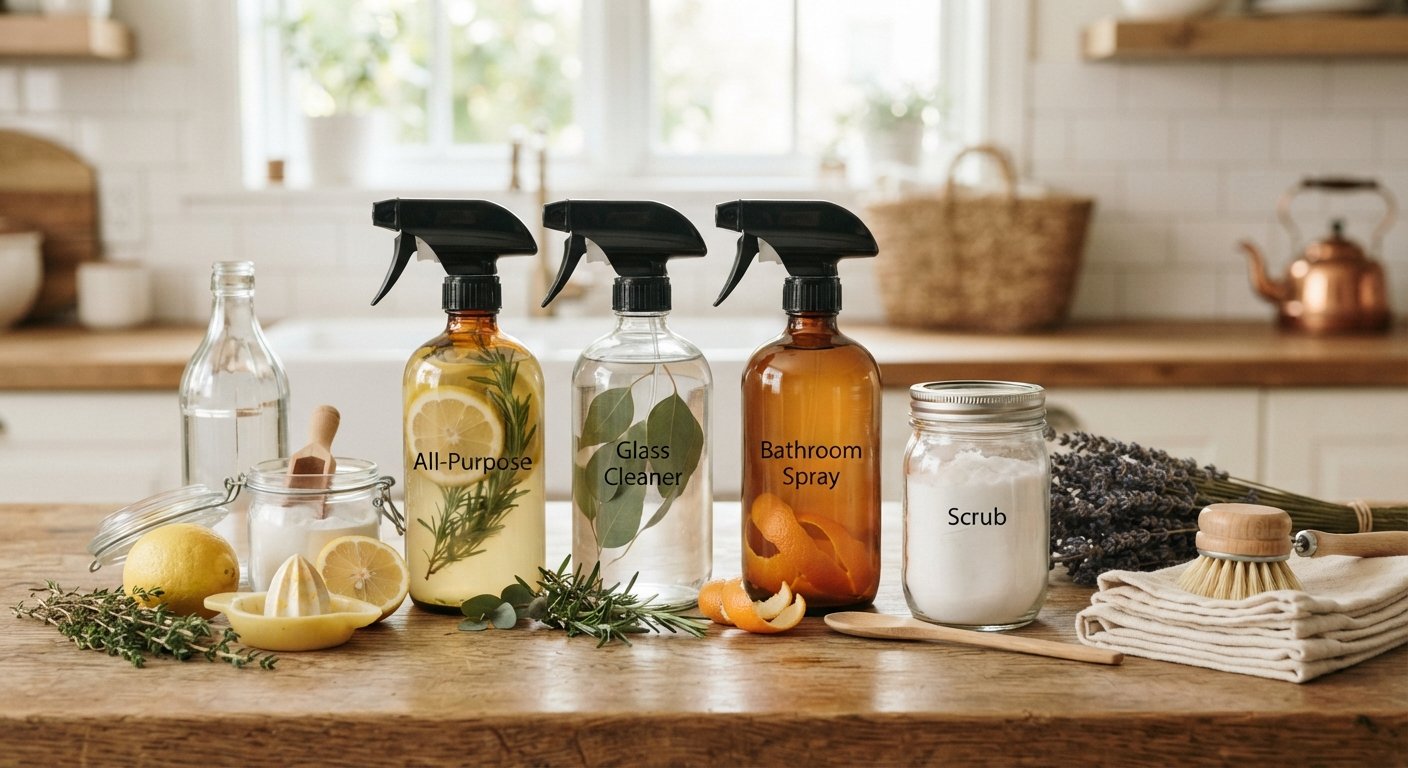
For everyday counters, appliance exteriors, and general wipe-downs, a simple vinegar-based spray does the heavy lifting. Combine equal parts white vinegar and water in a spray bottle, then add ten to fifteen drops of an essential oil like lemon or lavender to soften the smell. Vinegar’s acidity breaks down grease and light grime, making it a solid choice for kitchen counters, stovetops, and bathroom sinks. One important caveat: avoid using vinegar-based sprays on natural stone surfaces like marble or granite, since the acid can etch and dull the finish over time. For those surfaces, stick with a few drops of castile soap diluted in warm water instead. Shake the vinegar spray before each use, since the oils tend to separate, and store it in a cool spot away from direct sunlight to preserve the scent. This one recipe alone can replace several specialty sprays cluttering your cabinet, and it costs a fraction of what you’d pay for a name-brand equivalent.
Tackling the Bathroom Without Harsh Chemicals
Bathrooms present a tougher challenge because of soap scum, hard water stains, and mildew, but natural ingredients still hold their own here. For a scrubbing paste that lifts grime from tubs and sinks, mix baking soda with a small amount of water or castile soap until it forms a spreadable paste. Apply it to the surface, let it sit for a few minutes, then scrub with a sponge or brush and rinse thoroughly. For grout lines and mildew spots, a paste of baking soda and hydrogen peroxide works well, since the peroxide adds a mild bleaching effect without the fumes of chlorine bleach. Toilet bowls respond nicely to a half cup of baking soda followed by a cup of vinegar, left to fizz for fifteen minutes before scrubbing with a toilet brush. Mirrors and glass shower doors come clean with a simple mix of one part rubbing alcohol, one part water, and a splash of white vinegar, wiped dry with a microfiber cloth to avoid streaking. These combinations take a bit more elbow grease than commercial products sometimes require, but they get the job done without leaving behind harsh chemical residue in a small, poorly ventilated room.
Kitchen Cleaning That Cuts Through Grease
Kitchens deal with a different kind of mess: baked-on grease, food splatters, and lingering odors from cooking. For grease-heavy areas like stovetops and range hoods, mix warm water with a few tablespoons of castile soap and a splash of vinegar, then apply with a scrub brush for stubborn spots. Cutting boards benefit from a light dusting of coarse salt combined with half a lemon, rubbed directly onto the surface to lift stains and neutralize odors before rinsing. For the inside of a microwave, place a bowl of water with a few tablespoons of vinegar inside, run it on high for a few minutes, and let the steam loosen splattered food before wiping clean with a cloth. Garbage disposals often develop odors over time, and tossing in a few ice cubes mixed with citrus peels, then running cold water, helps clean the blades while leaving a fresh scent. Refrigerator interiors respond well to a simple wipe-down with equal parts water and vinegar, which won’t leave chemical smells near your food. These small habits add up to a kitchen that stays genuinely clean rather than just smelling like it is.
Laundry and Fabric Care Without Synthetic Additives
Laundry is one area where natural alternatives sometimes surprise people with how well they perform. Adding half a cup of white vinegar to the rinse cycle softens fabrics naturally and helps remove detergent residue that can build up over time. Baking soda, added directly to the wash alongside your regular detergent, boosts cleaning power and helps neutralize odors trapped in gym clothes or towels. For stubborn stains, a paste of baking soda and water applied directly to the fabric before washing can lift out grease, wine, or grass stains when given twenty minutes to sit. Wool dryer balls with a few drops of essential oil offer a reusable alternative to dryer sheets, reducing static while adding a light scent without synthetic fragrance chemicals. It’s worth mentioning that these methods work best on moderately soiled laundry; heavily stained or greasy workwear may still need a stronger stain remover or a pre-treatment step. Even so, for regular loads, this combination keeps clothes fresh and clean while cutting down on the plastic waste from dryer sheet boxes and fabric softener bottles.
Comparing Common Natural Ingredients
Since so many recipes rely on the same handful of ingredients, it helps to see how they stack up side by side for different cleaning tasks.
| Ingredient | Best For | Avoid Using On |
|---|---|---|
| White Vinegar | Glass, grease, mineral deposits, general surfaces | Natural stone, egg stains, cast iron |
| Baking Soda | Scrubbing, odor removal, mild stains | Aluminum surfaces, delicate finishes |
| Castile Soap | Gentle all-purpose cleaning, dishes, laundry | Hard water areas (can leave residue) |
| Hydrogen Peroxide | Stain removal, disinfecting, grout | Colored fabrics (can bleach) |
| Rubbing Alcohol | Glass, electronics, quick-drying surfaces | Painted or varnished wood |
Keeping this quick reference in mind saves you from accidentally damaging a surface while trying to clean it naturally.
Where Natural Cleaners Fall Short
Honesty matters here, because natural cleaning isn’t a magic fix for every situation. Vinegar and baking soda are not registered disinfectants in the same way bleach or EPA-approved products are, so during flu season or after illness in the home, a stronger disinfecting product may be the better choice for high-touch surfaces. Homemade cleaners also tend to require more scrubbing effort and more frequent reapplication compared to commercial formulas designed for tough, set-in stains. Mixing certain natural ingredients incorrectly can also cause problems: combining vinegar with hydrogen peroxide, for example, creates peracetic acid, which can be irritating in concentrated form, so it’s best to use these ingredients separately rather than together. Additionally, essential oils, while pleasant, aren’t always safe around pets, since some oils like tea tree can be toxic to cats and dogs if ingested or applied directly to their skin. Recognizing these limits doesn’t mean abandoning natural cleaning altogether; it just means being realistic about when a stronger, targeted product makes more sense for safety or effectiveness.
Simple Habits That Make Natural Cleaning Easier
Switching to homemade cleaners becomes much easier with a few small organizational habits. Label every spray bottle clearly with its contents and the date it was mixed, since natural cleaners don’t contain the preservatives that give store-bought products a long shelf life. Most vinegar and castile soap mixtures stay effective for a few weeks, but anything containing fresh citrus or oils should be used within a week or two for the best scent and cleaning power. Keep a small caddy of your core ingredients under the sink so mixing a fresh batch takes less than five minutes whenever you need it. Testing any new mixture on a small, hidden area of a surface before applying it broadly helps avoid unpleasant surprises on wood, stone, or painted finishes. Over time, many people find they naturally settle into two or three go-to recipes that cover ninety percent of their cleaning needs, which makes the whole process far less complicated than it might sound at first. Once the habit sticks, natural cleaning stops feeling like an extra chore and starts feeling like the obvious, simpler choice.
Frequently Asked Questions
Are DIY natural cleaners as effective as store-bought products?
For everyday cleaning like wiping counters, cutting grease, and removing light stains, homemade cleaners perform very well. For heavy disinfecting or tough, set-in grime, commercial products may still work faster and more thoroughly.
How long do homemade cleaning solutions last before going bad?
Most vinegar and water mixtures last several weeks if stored in a cool, dark place. Anything containing fresh ingredients like lemon or added oils is best used within one to two weeks for optimal freshness and effectiveness.
Can I mix vinegar and baking soda together for extra cleaning power?
You can, but the fizzing reaction neutralizes both ingredients into mostly salt water fairly quickly. It’s more effective to use baking soda as a scrub first, then follow with a vinegar rinse afterward rather than mixing them in the same container.
Are natural cleaning products safe for pets and children?
Generally yes, since they avoid many harsh chemicals found in commercial cleaners. However, keep essential oils away from cats especially, as several common oils can be toxic to them, and always store any cleaning mixture out of reach of small children.
What’s the best natural cleaner for disinfecting during cold and flu season?
Hydrogen peroxide offers the strongest disinfecting properties among common natural ingredients, but for guaranteed virus and bacteria elimination on high-touch surfaces, an EPA-registered disinfectant is still the more reliable option.