
Reusable Grocery Bag Materials: 3 Best Picks Compared
Stand at any checkout line and you’ll see them: canvas totes slung over shoulders, slick synthetic bags folded into pockets, chunky woven sacks that look like they belong on a farm. The boom in reusable grocery bag materials has been good news for the planet, but it has also left shoppers confused. Is cotton really the greenest choice? Does “recycled” automatically mean better? And what about jute, the rough, golden fiber that keeps showing up at farmers markets? The honest answer is that no single bag wins every category. Each material has a personality — strengths, weaknesses, and a footprint that depends heavily on how you use it.
Why the Material Matters More Than You Think
Every bag carries an environmental debt before it ever reaches your hands. Growing fiber, spinning yarn, weaving fabric, dyeing, printing, shipping — all of it takes water, energy, and land. Life cycle studies from European environment agencies have repeatedly found the same pattern: heavier, more resource-intensive bags need many more trips to the store before they “pay back” the impact of a thin plastic bag. That’s why the choice among reusable grocery bag materials isn’t only about what the bag is made of. It’s about durability, how often you actually carry it, and whether it ends up in a closet after three uses. A mediocre bag used 300 times beats a perfect bag used twice. If you want to dig deeper, our guide on Reusable water bottles: 7 best picks for hot and cold drinks covers this in more detail.
The 3 Best Reusable Grocery Bag Materials Compared
Below, I break down the three options that dominate the market today. Each gets a fair look at how it’s made, how it performs with real groceries, and where it falls short. If you want the short version: cotton is the comfort pick, recycled polyester is the practical pick, and jute is the rugged, biodegradable pick. The details, though, are where the interesting trade-offs live.
1. Organic Cotton: Soft, Washable, and Thirsty
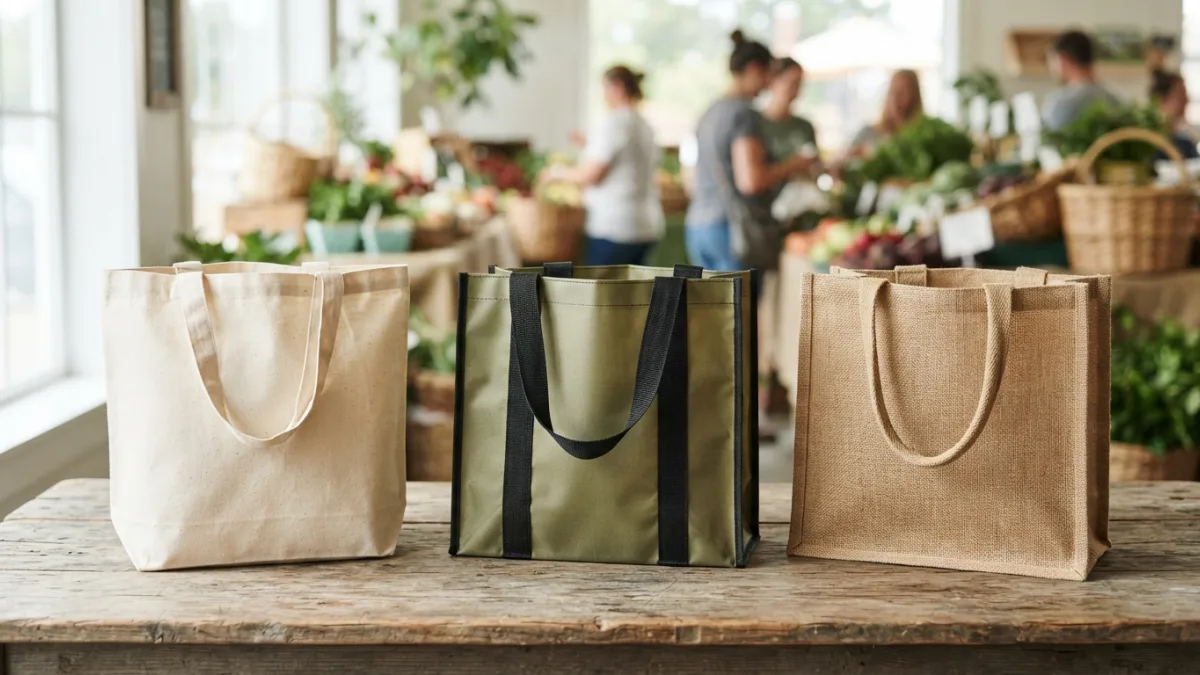
Organic cotton tote bags are the crowd favorite for a reason. They feel good, they print beautifully, and you can throw them in the washing machine when raw chicken juice leaks — a genuine food-safety advantage that harder materials can’t match. Certified organic cotton is grown without synthetic pesticides and genetically modified seed, and labels backed by the Global Organic Textile Standard also cover dyes, wastewater, and labor conditions. The catch is water. Cotton is a thirsty crop wherever it grows, organic or not, and a sturdy canvas tote uses a surprising amount of fiber. Among reusable grocery bag materials, cotton has one of the longest payback periods — so buy fewer, buy heavier, and use them for years.
2. Recycled Polyester: Lightweight, Strong, and Imperfect
Recycled polyester shopping bags are made from rPET — usually post-consumer plastic bottles that have been cleaned, shredded, and spun into new fiber. The performance is hard to argue with. These bags are feather-light, fold into a pouch the size of an apple, resist water, and shrug off weight that would strain cotton stitching. Because they reuse existing polyethylene terephthalate rather than new petroleum, their production footprint tends to be lower than virgin synthetics. The trade-offs are real, though: polyester sheds microfibers in the wash, it isn’t biodegradable, and recycling it again at end of life is still difficult in most towns. Of the three reusable grocery bag materials here, this one rewards long, hard use the most. This connects closely with another common issue — see Reviewing Reusable Alternatives to Paper Towels: Swedish Cloths, Bamboo Towels, and Rags for more on that.
3. Jute: Tough, Natural, and Beautifully Low-Tech
Jute burlap bags are the workhorses. Grown mostly in Bangladesh and India, jute is a fast-growing annual plant that needs relatively little irrigation or chemical input compared with cotton, and the fiber is naturally strong. A jute shopper holds its shape, stands open on the counter, and handles heavy cans and glass jars without complaint. It’s also one of the most genuinely biodegradable bag materials you can buy — an untreated jute bag will break down in a compost pile or garden bed. The downsides: jute is stiff, it sheds fuzz, and it hates moisture. Wet jute can mildew and weaken, so it can’t go through the washing machine. Keep it dry and it will last for years.
Side-by-Side: How the Three Materials Stack Up
| Feature | Organic Cotton | Recycled Polyester | Jute |
|---|---|---|---|
| Weight | Medium to heavy | Very light | Heavy |
| Strength for heavy loads | Good (depends on canvas weight) | Excellent | Excellent |
| Machine washable | Yes | Yes (cold, gentle) | No — spot clean only |
| Water resistance | Low | High | Low |
| Biodegradable | Yes, if undyed/untreated | No | Yes, if untreated |
| Packs down small | Somewhat | Yes, very | No |
| Best for | Produce, bakery, everyday carry | Backup bag, travel, big hauls | Bulk shopping, cans, bottles |
Choosing the Right Reusable Grocery Bag Materials for Your Routine
Match the bag to the way you actually shop. If you walk or bike to a small market a few times a week, a couple of organic cotton totes and one jute carrier will cover almost everything. If you do one big weekly run by car, jute bags that stand upright in the trunk save a lot of frustration. And if you’re the person who forgets bags constantly, keep a recycled polyester bag crushed into your work bag, glove box, or coat pocket — the best of all reusable grocery bag materials is the one you have with you. Many households end up with a small mix, and that’s fine.
Care, Hygiene, and Making Any Bag Last Longer
A reusable bag only earns its keep if it survives. Public health guidance on food safety is consistent here: wash or wipe bags regularly, and keep raw meat separated from produce, ideally in a dedicated bag. A few habits that stretch the life of eco friendly reusable bags: You might also find our article on Top Reusable Coffee Filters for Drip Machines, French Press, and Espresso Makers helpful here.
- Wash cotton and polyester on cold and air dry — heat weakens fibers and can warp printed designs.
- Never soak jute. Brush off dirt, spot clean, and let it dry fully before storing.
- Repair, don’t replace. A popped seam takes five minutes with a needle and thread.
- Don’t collect free totes. Every unused promotional bag is wasted resources.
- Retire them usefully — old totes make good shoe bags, plant liners, or rags.
The Bigger Picture Beyond the Checkout
It’s easy to overthink this. Bags are a small slice of household waste, and no material choice undoes the impact of food waste or overpackaged products. Still, the reasoning behind good reusable grocery bag materials — buy less, choose durable, use it until it falls apart — applies to nearly everything else in your home. The U.S. Environmental Protection Agency’s guidance on reducing, reusing, and recycling puts reduction and reuse ahead of recycling for exactly this reason. A bag you love and use hundreds of times quietly beats a shelf of better-marketed alternatives.
The Verdict
If I had to name one winner, I’d hand it to jute for pure grocery duty: strong, low-input, biodegradable, and cheap enough that most people can own two or three. Organic cotton takes second place for versatility and washability, especially for produce and bread. Recycled polyester earns its spot as the emergency backup that keeps you from grabbing plastic at the register. The smartest approach to reusable grocery bag materials isn’t loyalty to one fiber — it’s owning a small, deliberate set and using every one of them into the ground.
Frequently Asked Questions
Which reusable grocery bag material is the most eco-friendly overall?
There’s no universal winner. Jute generally needs fewer resources to grow than cotton and breaks down naturally, which gives it an edge on paper. But the number of uses matters more than the fiber. A recycled polyester bag used weekly for five years can easily outperform an organic cotton tote that sits unused in a drawer. For a related walkthrough, check out Reusable vs. Disposable: What's Actually Worth Buying.
How many times do I need to use a reusable bag for it to be worth it?
Life cycle research consistently shows heavier bags need many more uses than thin plastic ones before the environmental math turns positive — and cotton needs the most of all. The practical takeaway: plan to use each bag for years, not months, and avoid buying new ones you don’t need.
Can I wash jute burlap bags?
Not in a machine. Water weakens jute fibers and encourages mildew. Shake the bag out, brush away crumbs, and spot clean stains with a damp cloth and mild soap. Let it dry completely in open air before folding it away.
Are recycled polyester shopping bags safe for food?
Yes, for normal grocery use. Keep raw meat and fish in a separate bag or sealed container to prevent cross-contamination, and clean the bag regularly. Wash it on a cold, gentle cycle to limit microfiber shedding, and let it air dry.
What should I look for when buying an organic cotton tote?
Check the fabric weight — heavier canvas lasts far longer than thin muslin. Look for reinforced stitching at the handle joints, where bags usually fail first. Certification marks such as GOTS give real assurance about how the cotton was grown and processed, rather than vague “natural” or “green” claims on the tag.


Really helpful comparison, Ghani! I like that you don’t crown one perfect material and instead say that the number of uses matters more than the fiber. “A mediocre bag used 300 times beats a perfect bag used twice” is a great way to put it. The table makes the trade-offs easy to see: cotton is washable but thirsty, recycled polyester is light and strong but sheds microfibers, and jute is rugged but can’t get wet. Keeping a folded polyester bag in a coat pocket as a backup is a tip I’ll use, and I’m tempted to try jute for heavy cans and jars. Thanks for such a balanced, practical guide!