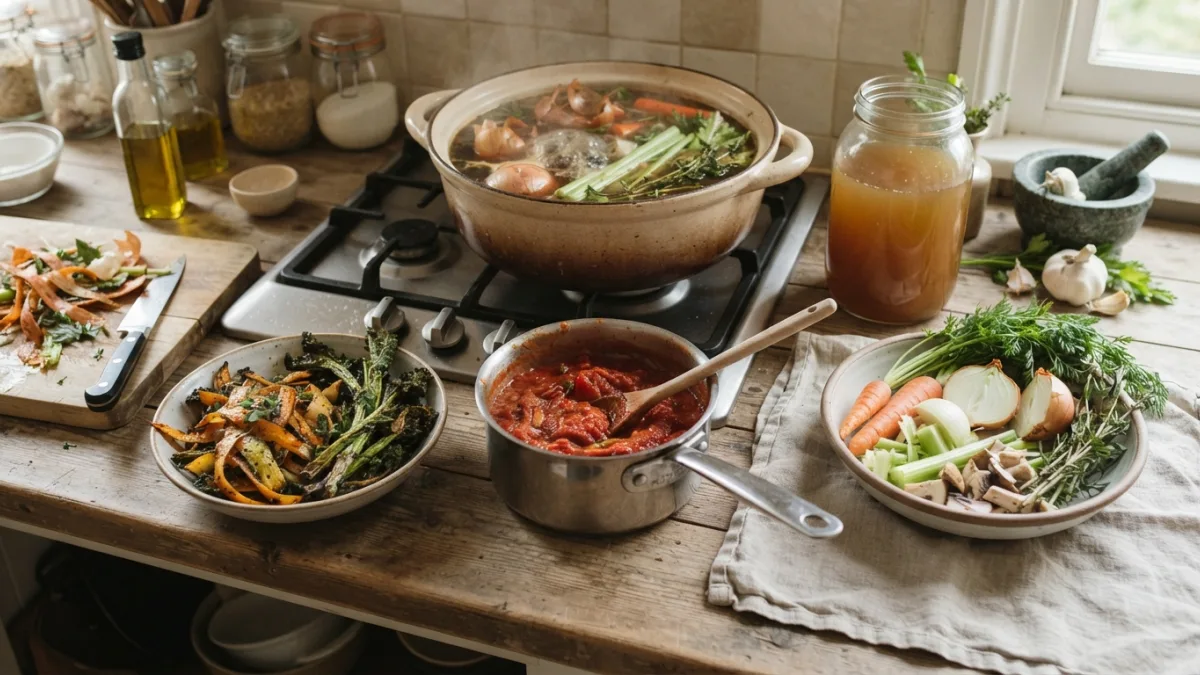
Vegetable Scraps: 7 Easy Ways for Amazing Broths and Snacks
You throw away more flavor than you realize. Every time you peel carrots, trim celery, or slice onions, you create a small pile of vegetable scraps that usually goes straight to the bin. Those ends, peels, and stems still hold aroma, color, and nutrients. With a simple change in habit, you can turn them into rich broths, smooth sauces, and crunchy snacks that save money and cut waste. You don’t need fancy tools or chef skills. Just a freezer bag, a little planning, and a few basic techniques will help you get more from the produce you already buy. Once you start saving them, you will see how quickly the bag fills up. That is the start of better cooking with less waste.
Learning to cook with what you have is the heart of zero waste cooking, and it is easier than it sounds. Instead of buying more ingredients, you use the full vegetable. Onion skins add deep color, carrot peels bring sweetness, and herb stems carry fresh, bright notes. This approach stretches your grocery budget and reduces the amount of food that ends up in the trash. Families who try it often notice they shop less and throw away less. You also gain more control over salt and flavor, since you season the broth or sauce yourself. It is a practical kitchen habit that fits any cooking style. If you want to dig deeper, our guide on Zero-Waste Baking: What to Do with Extra Dough, Egg Whites, and Kitchen “Scraps” covers this in more detail.
Before You Start: How to Collect and Store Scraps Safely
Start with a clean container. Keep a large zip-top bag or airtight container in your freezer and add to it during the week. Rinse vegetables well before you peel them, so the scraps are clean when you save them. Most vegetable scraps freeze well for two to three months, which gives you time to collect enough for a full pot of stock. Label the bag with the date so you use the oldest scraps first. For food safety, follow general guidance on storing fresh produce and leftovers from sources like the U.S. Department of Agriculture. Avoid scraps that are moldy, very bruised, or slimy.
- Great to save: onion ends and skins, carrot peels and tops, celery leaves and bases, leek greens, mushroom stems, corn cobs, herb stems, garlic skins, potato peels (in small amounts)
- Use sparingly: cabbage, broccoli, and cauliflower scraps can turn bitter if you use too much
- Avoid: rotten produce and scraps from vegetables that were already spoiled
7 Easy Ways to Turn Vegetable Scraps Into Something Amazing
1. Classic Scrap Stock Made from Vegetable Scraps
This is the simplest place to begin, and it creates a base you can use all week. Just cover your frozen mix with cold water in a large pot, bring it to a gentle simmer, and cook for 45 to 60 minutes. Do not boil hard, or the stock can turn cloudy and bitter. Strain it through a fine mesh sieve and season lightly with salt and pepper. You now have a light, clean scrap stock for soups, risotto, or cooking grains. Unlike boxed versions, you decide what goes in. Keep it in the fridge for four days or freeze it in jars, leaving room at the top for expansion. It is the foundation for countless meals.
2. Roasted Scrap Stock for a Deeper Vegetable Broth
If you want a darker, richer flavor, roast the scraps first. Spread carrot peels, onion skins, celery ends, and mushroom stems on a sheet pan, toss with a little oil, and roast at 425°F (220°C) until browned. This caramelization adds depth and a light smokiness that makes a wonderful vegetable broth for stews and gravies. Add the roasted scraps to a pot with water, a bay leaf, and a few peppercorns, then simmer as usual. The result tastes more complex than a quick stovetop stock. You can learn more about the basic technique and variations on stock and adjust the roasting time to control how dark you want it. This connects closely with another common issue — see Low Energy Cooking Methods: 3 Best Ways to Save Energy for more on that.
3. Bright Pestos and Blender Sauces
Soft greens and stems make excellent sauces without any cooking. Carrot tops, radish greens, beet greens, and parsley or cilantro stems blend beautifully with olive oil, nuts or seeds, garlic, and lemon juice. The texture stays vibrant and the flavor is fresh and slightly peppery. Use this pesto on pasta, as a spread for sandwiches, or as a spoonful over roasted vegetables. You can also blend celery leaves and wilty herbs with yogurt or white beans for a creamy, herby sauce. Taste as you go. Add a little water to thin it, and balance acidity with lemon. These sauces use up delicate scraps that would not work well in a long-simmered broth.
4. Crispy Vegetable Peel Chips
When you crave something salty and crunchy, try vegetable peel chips. Potato peels, carrot ribbons, and kale stems turn crisp in a hot oven with very little effort. Toss the peels with olive oil, salt, and your favorite spices, then spread them in a single layer on a baking sheet. Bake at 400°F (200°C) for 10 to 15 minutes, flipping once, until the edges curl and brown. Watch them closely so they do not burn. They make a fun snack on their own and a great topping for soups and salads. This is one of the most popular ways to enjoy vegetable scraps because the result is so immediate and satisfying. Kids often love them too.
5. Quick Stir-Fries and Fried Rice
Small, firm scraps add texture and flavor to fast, high-heat dishes. Broccoli stalks, cauliflower leaves, corn kernels cut from cobs, and thinly sliced celery bases all cook quickly and stay slightly crisp. Slice them thin so they cook evenly, then stir-fry with garlic, ginger, and soy sauce. They also work well in fried rice, where you can mix them with day-old rice, a beaten egg, and a splash of sesame oil. The key is to cut everything to a similar size. This method is forgiving. You can use whatever you have, and the hot pan brings out natural sweetness. It is a great way to clear out the freezer bag when you do not have enough for stock. You might also find our article on Beginner’s Guide to Cooking from Pantry Staples to Avoid Last-Minute Takeout helpful here.
6. Savory Homemade Sauces and Dressings
Scraps can add body and umami to homemade sauces without extra cost. Simmer onion ends, garlic skins, and mushroom stems with canned tomatoes to create a deeper pasta sauce. Blend softened leek greens or celery leaves into a vinaigrette with olive oil, vinegar, mustard, and honey for a fresh salad dressing. Even corn cobs can be simmered in cream or milk to make a sweet, silky base for chowder or a corn sauce for grilled chicken. Strain out the solids and you are left with pure flavor. These small additions make everyday meals taste like they took much longer to prepare, and they help you rely less on store-bought bottles.
7. Crunchy Powders, Crackers, and Toppings
For scraps that are too dry or tough for broth, drying is a smart option. Dehydrate herb stems, kale ribs, or onion skins in a low oven (around 200°F / 95°C) until completely dry, then grind them into a fine powder. This powder works as a natural seasoning for popcorn, roasted potatoes, or scrambled eggs. You can also mix finely chopped, dried vegetable scraps into cracker dough with flour, water, oil, and seeds, then bake until crisp. Another easy idea is to toast breadcrumbs with finely minced, dried celery leaves and lemon zest for a crunchy topping over pasta. These techniques stretch flavor even further and give you shelf-stable options.
How to Keep Flavors Balanced
Not every scrap should go into the same pot. Strong or bitter vegetables can overpower a broth if you use too many. Brassicas like cabbage, Brussels sprouts, and broccoli are healthy, but they can make stock taste sulfurous when simmered a long time. Use them in small amounts or save them for roasting and stir-fries instead. Beet peels will turn everything pink, which can be beautiful or distracting depending on the dish. Potato peels make stock cloudy and starchy, so use them lightly. Taste your broth halfway through cooking. If it feels too bitter or too sweet, add water to dilute it or balance with a splash of vinegar and a pinch of salt. For a related walkthrough, check out One-Pot Low-Waste Meals: Simple Recipes That Use Up Leftovers.
A Small Habit With Big Flavor
Once you build the habit, cooking with vegetable scraps feels automatic. You cook dinner, save what is left, and later transform it into something new. A freezer bag slowly becomes a pot of golden broth, a jar of bright green pesto, or a tray of salty peel chips. You spend less, waste less, and your food tastes better because it is seasoned by you from the start. Start small. Pick one idea from the list this week, like a simple scrap stock or a batch of chips, and see how it fits your routine. Over time, you will find your own favorite combinations and never look at peels and stems the same way again.
FAQ
How long can I keep vegetable scraps in the freezer?
Most clean, fresh scraps keep well for 2 to 3 months in an airtight bag or container. Try to remove as much air as possible and label the bag with the date. Use the oldest scraps first for the best flavor.
Which vegetable scraps should I avoid using for broth?
Avoid moldy or rotten scraps. Use strong-flavored vegetables like cabbage, broccoli, and cauliflower sparingly, since they can make broth bitter. Very starchy peels, like large amounts of potato peel, can make stock cloudy.
Do I need to wash scraps before saving them?
Yes. Wash produce well before peeling or trimming, so the scraps are clean when you freeze them. This removes dirt and reduces grit in your final broth, sauce, or snack.
Can I mix different vegetable scraps together?
Yes, mixing is fine and often creates the best flavor. A combination of onion, carrot, celery, mushroom stems, and herb stems is a classic base. Just keep strong flavors in smaller amounts so one vegetable does not dominate.
Are vegetable peel chips healthy?
They can be a lighter alternative to packaged chips because you control the oil and salt. Baking instead of frying keeps them crisp with less fat. Pair them with a balanced meal and enjoy them as an occasional crunchy snack or topping.