Zero-Waste Baking: What to Do with Extra Dough, Egg Whites, and Kitchen “Scraps”
Ever stared at a bowl of leftover egg whites or a ball of extra pie dough and wondered if tossing it is really your only option? You’re not alone, and the good news is that zero-waste baking has become one of the easiest ways to save money, reduce food waste, and stretch your ingredients further than you thought possible. Instead of scraping those bits into the trash, home bakers around the world are learning to turn scraps into second dishes, snacks, and even entire desserts. This shift isn’t just a trend for eco-conscious foodies; it’s a practical response to rising grocery prices and a growing awareness of how much perfectly good food ends up in landfills every year.
Why Zero-Waste Baking Matters
Food waste is a bigger problem than most people realize, and a surprising amount of it happens right in home kitchens, not just at grocery stores or restaurants. Baking in particular tends to generate small amounts of “waste” that add up over time: a spoonful of batter stuck to a bowl, a few tablespoons of frosting, or a handful of nuts left in the bag. Embracing food waste reduction in your baking routine doesn’t require a complete lifestyle overhaul. It simply means looking at these leftovers as ingredients waiting for their next job rather than garbage. Over weeks and months, these small choices can meaningfully cut your grocery bill and your environmental footprint, which is exactly why sustainable baking tips have become so popular among home cooks lately. If you want to dig deeper, our guide on One-Pot Low-Waste Meals: Simple Recipes That Use Up Leftovers covers this in more detail.
What to Do with Leftover Egg Whites
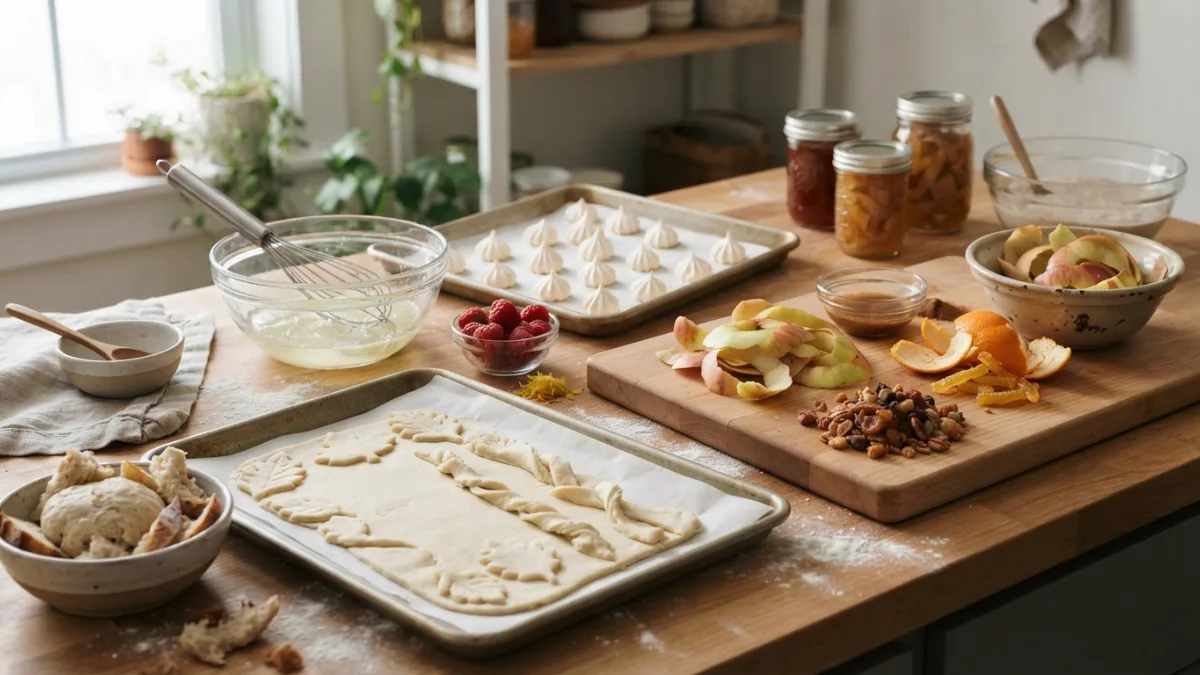
Recipes that call for only egg yolks, like custards or certain cookie doughs, often leave bakers with a container of leftover egg whites sitting in the fridge. Rather than pouring them down the drain, save them in an airtight container for up to four days, or freeze them in an ice cube tray for longer storage. Egg whites freeze surprisingly well and thaw quickly when you need them for a future recipe. Labeling the container with the date and the number of whites inside will save you guesswork later, especially since many recipes measure egg whites by the tablespoon rather than by the whole egg.
Simple Recipes for Leftover Egg Whites
- Meringues or pavlova: Whip whites with sugar until stiff peaks form, then bake low and slow for a crisp, chewy treat.
- Egg white omelets: A quick, protein-packed breakfast that uses up two or three whites at once.
- Angel food cake: This classic dessert relies almost entirely on whipped egg whites for its light texture.
- Macarons: A slightly more advanced option, but a delicious way to use precise amounts of egg white.
- Cocktail foams: Some drinks, like a classic whiskey sour, use egg white for a silky, frothy top.
Extra Dough Recipes That Actually Work
Whether you’re rolling out pie crust, biscuits, or pizza dough, there’s almost always a little extra left over once you’ve cut your shapes. Instead of balling it up and discarding it, gather the scraps and re-roll them once, gently, to avoid overworking the gluten. Pie dough scraps can become small jam tarts, cinnamon-sugar twists, or crackers baked with a sprinkle of salt. Leftover pizza dough turns into garlic knots or a small personal flatbread in under fifteen minutes. Biscuit or scone trimmings can be baked separately as “cook’s treats,” since slightly irregular shapes taste exactly the same as the perfect ones. These extra dough recipes are a great way to teach kids about the kitchen too, since kids often enjoy shaping their own mini creations from the odds and ends.
Turning Kitchen Scraps into New Recipes
Baking produces more than just dough and egg trimmings. Think about vanilla bean pods after the seeds are scraped out, citrus peels left from zesting a lemon, or the stale ends of a loaf of bread. All of these count as kitchen scraps recipes waiting to happen. Vanilla pods can be dried and buried in a jar of sugar to make vanilla sugar over a few weeks. Citrus peels can be candied, dried for zest, or infused into simple syrups for future baking projects. Stale bread becomes breadcrumbs, bread pudding, or French toast. Even the butter wrappers in your fridge can be saved and used to grease a pan, since they usually still carry a thin coating of butter that’s perfect for that job. This connects closely with another common issue — see How to Read Food Labels for Sustainable, Ethical Choices for more on that.
A Quick Comparison: Common Baking Scraps and Their Best Uses
Sometimes it helps to see your options side by side, especially when you’re standing in the kitchen trying to decide what to do with something before it goes bad. Here’s a simple breakdown of common leftovers and the easiest way to use each one.
| Kitchen Scrap | Storage Method | Best Use |
|---|---|---|
| Leftover egg whites | Fridge (4 days) or freezer (up to 3 months) | Meringue, angel food cake, omelets |
| Extra pie or biscuit dough | Refrigerate wrapped, use within 2 days | Mini tarts, crackers, twists |
| Stale bread | Room temperature bag, up to a week | Breadcrumbs, bread pudding, croutons |
| Citrus peels | Dry or freeze whole | Zest, candied peel, infused syrup |
| Vanilla pods | Dry at room temperature | Vanilla sugar or vanilla extract |
Sustainable Baking Tips for Everyday Cooking
Small habits make the biggest difference over time. Start by planning your baking so that recipes share overlapping ingredients, which reduces the chance of odd amounts going unused. Keep a “scrap jar” or a small container in your freezer specifically for baking bits like extra frosting, cookie dough ends, or fruit peels, and check it before you start a new recipe. Measuring ingredients carefully also helps prevent overbuying, which is one of the sneakiest sources of food waste in the first place. Another helpful trick is batch baking: if your oven is already on, use the extra heat to toast nuts, dry out bread for croutons, or bake a second smaller item using leftover batter. These sustainable baking tips don’t take extra time once they become part of your normal routine.
Storing Scraps the Right Way
Proper storage is what turns a good intention into an actual saved ingredient. Labeling containers with contents and dates prevents that awkward moment of finding a mystery bag in the freezer months later. Glass containers or reusable silicone bags work well for dough, since plastic wrap alone can dry it out. Egg whites should always go into airtight, freezer-safe containers, ideally with the exact quantity noted for easy recipe planning later. Fruit and vegetable scraps used for baking, like apple peels for infused syrups, should be kept in a sealed bag in the freezer until you have enough to use. A little bit of organization goes a long way toward making zero-waste baking feel effortless rather than like an extra chore. You might also find our article on How to Store Fresh Herbs and Greens So They Last Longer (Without Plastic Bags) helpful here.
Making Zero-Waste Baking a Habit
The easiest way to stick with this approach is to start small rather than trying to overhaul your entire kitchen routine overnight. Pick one habit, like saving egg whites or repurposing dough scraps, and practice it consistently for a few weeks before adding another. Over time, you’ll likely find that these small swaps become second nature, and you’ll naturally start noticing other places where scraps can be reused. Many bakers say the biggest shift isn’t in technique but in mindset: viewing leftovers as ingredients rather than trash changes how you shop, cook, and clean up. That mental shift is really the heart of zero-waste baking, and it tends to spread naturally into other areas of the kitchen once it clicks.
Frequently Asked Questions
What is zero-waste baking exactly?
Zero-waste baking is the practice of using as much of your baking ingredients as possible, including scraps like extra dough, leftover egg whites, and peels, instead of throwing them away. The goal is to minimize food waste while still creating tasty baked goods.
How long can I store leftover egg whites before using them?
Leftover egg whites stay fresh in the fridge for about four days in an airtight container. If you won’t use them that quickly, freeze them in an ice cube tray, then transfer the frozen cubes to a labeled bag for up to three months. For a related walkthrough, check out A Beginner's Guide to Reducing Meat Without Going Vegetarian.
Can I freeze extra dough for later use?
Yes, most doughs freeze well, including pie crust, cookie dough, and pizza dough. Wrap the dough tightly in plastic wrap or a reusable silicone bag, and label it with the date so you can track freshness.
What can I do with stale bread besides throwing it away?
Stale bread is great for breadcrumbs, croutons, bread pudding, or French toast. Simply toast or bake it slightly to dry it out further, then store it in an airtight container until you’re ready to use it.
Is zero-waste baking more time-consuming than regular baking?
Not really, once it becomes a habit. Small steps like saving scraps in a labeled container or re-rolling dough take only a minute or two, and they can save you money and reduce the amount of food you throw away each week.