

Reducing Food Waste: 7 Essential Tips for Shared Kitchens
Nothing kills roommate harmony faster than opening the fridge to find your labeled lunch missing or a mystery container growing something unidentifiable in the back corner. Shared kitchens, whether in college dorms, group houses, or coliving spaces, are breeding grounds for confusion, spoiled produce, and hurt feelings. Reducing food waste in these environments isn’t just about saving money, though that matters too. It’s about building trust with the people you live with and making sure the food you buy actually gets eaten instead of tossed. The good news is that a few practical systems, agreed on upfront, can turn a chaotic shared fridge into a smoothly run operation everyone appreciates.
The average household throws away a surprising amount of edible food each year, and shared living spaces tend to make the problem worse because nobody feels fully responsible for what’s inside the fridge. When five people each buy groceries without checking what’s already there, duplicate items pile up and older food gets pushed to the back and forgotten. According to the Environmental Protection Agency’s guidance on wasted food, most household waste comes from forgotten leftovers and produce that spoils before anyone gets around to using it. In a shared kitchen, that risk multiplies. Below are seven practical strategies that actually work when multiple people are cooking, storing, and eating out of the same space. If you want to dig deeper, our guide on Low-Waste Commuting: Walking, Cycling, Public Transport, and Carpooling Tips covers this in more detail.
1. Set Clear Food Storage Agreements From Day One
Before conflicts even start, sit down with your roommates or housemates and hash out some basic food storage agreements. Decide together which shelves belong to whom, whether shared staples like milk or eggs are communal or individually owned, and what happens to unlabeled food after a certain number of days. This doesn’t need to be a formal contract, but writing it down somewhere visible, like a note on the fridge door, helps everyone remember the rules during a busy week. Groups who skip this step often end up guessing what’s fair game, and guessing is exactly how good food gets thrown out or eaten by mistake. A five-minute conversation upfront saves weeks of awkward passive-aggressive sticky notes later.
What a Good Agreement Should Cover
- Which items are shared versus personal
- How long leftovers can sit before someone can toss them
- Who buys communal basics like condiments or cooking oil
- What to do if someone’s food is accidentally eaten
2. Create a Simple, Consistent Kitchen Labeling System
A reliable kitchen labeling system removes almost all the guesswork from a shared fridge. Masking tape and a permanent marker go a long way: write your name, the contents, and the date it was made or opened. This small habit helps everyone know at a glance what’s fresh, what’s about to expire, and what belongs to whom. Color-coded tape or stickers can even indicate ownership at a glance, which is especially useful in larger households with four or more people. Labeling isn’t just about politeness. It directly supports reducing food waste because people are far more likely to eat something they can clearly identify than something mysterious lurking in a container without a name or date on it.
3. Invest in Matching Meal Prep Containers
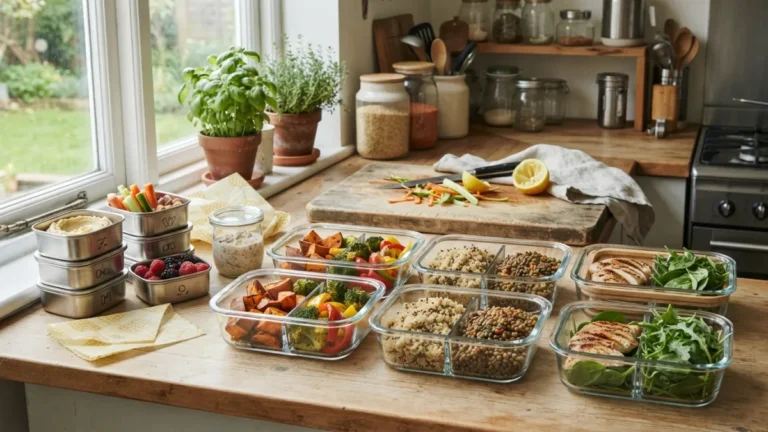
Random takeout tubs and mismatched jars make a shared fridge look chaotic and make it harder to spot what needs eating soon. Buying a set of matching, stackable meal prep containers, ideally clear ones, helps everyone see contents instantly and stacks more efficiently to save space. Clear containers also make it obvious when something is starting to look questionable, prompting a quicker decision to eat it or toss it before it becomes a bigger problem. Many households find that assigning a specific container color or size to each person cuts down on confusion about ownership. It’s a small investment that pays off quickly in organization, in reduced arguments, and in less food quietly going bad in the back of the fridge. This connects closely with another common issue — see Minimalist Packing List: 10 Essential Eco-Travel Items for more on that.
4. Establish a Weekly Fridge Clean-Out Ritual
Pick one day a week, maybe Sunday evening before the next round of grocery shopping, and make it the household’s official fridge check day. Everyone takes two minutes to look through their own shelf, toss anything past its prime, and make note of what needs to be used up soon. This ritual works best when it’s treated as routine rather than a punishment, so consider pairing it with something enjoyable, like cooking a quick meal together using items that are about to expire. Regular check-ins prevent the slow buildup of forgotten jars and containers that eventually turn into a smelly surprise. Consistency matters more than perfection here; even a rushed five-minute glance each week keeps the fridge far more manageable.
5. Practice Basic Shared Kitchen Etiquette
Good shared kitchen etiquette is less about strict rules and more about basic consideration. Clean up spills immediately, don’t let dishes pile up in the sink, and never assume an unlabeled item is fair game just because it looks abandoned. If you’re borrowing a housemate’s ingredient because you ran out mid-recipe, send a quick text or leave a note rather than staying silent. Respecting communal space also means not overcrowding shared shelves with excessive personal groceries, which can force other people’s food to get pushed aside and forgotten. These small courtesies build the kind of trust that makes people comfortable sharing space long term, and that trust directly reduces the kind of resentment that leads to wasted food and tense living situations.
6. Store Food the Right Way to Reduce Spoilage
Even with great labels and agreements, food still spoils faster than necessary if it’s stored incorrectly. Learning a few basics can dramatically extend shelf life and help reduce food spoilage across the whole household. Keep the fridge temperature at or below 40°F, as recommended by FoodSafety.gov, and store raw meat on the bottom shelf to avoid cross-contamination with other people’s food. Fresh herbs often last longer in a glass of water on the counter rather than wilting in a crisper drawer, and bread stays fresher longer in a cool, dry cabinet than in the fridge. Sharing this kind of knowledge with housemates, maybe through a shared note or group chat, helps everyone store their groceries more effectively instead of guessing. You might also find our article on Sustainable Self Care Rituals: 7 Easy Ways to Relax at Home helpful here.
Quick Storage Tips by Food Type
| Food Type | Best Storage Location | Typical Shelf Life |
|---|---|---|
| Leafy greens | Crisper drawer, wrapped in a slightly damp towel | 5 to 7 days |
| Cooked rice or grains | Airtight container, main fridge shelf | 4 to 6 days |
| Fresh berries | Fridge, unwashed until ready to eat | 3 to 5 days |
| Bread | Countertop or freezer, not the fridge | 3 to 5 days countertop |
7. Use a Shared Shopping and Meal Planning System
A lot of shared kitchen waste comes down to duplication: three people all buying the same jar of mustard because nobody checked first. Setting up a shared shopping list app or even a simple whiteboard on the fridge lets everyone add items as they run low and check before buying more. Taking it a step further, some households plan one communal meal per week using ingredients that are about to expire across everyone’s shelves, which turns potential waste into a shared dinner instead. This kind of coordination doesn’t require rigid planning or spreadsheets. It just needs a quick, visible system that everyone actually checks before heading to the store, which keeps the fridge from filling up with near-duplicate items nobody finishes.
None of these systems require a lot of money or effort, but they do require buy-in from everyone living in the space. The households that succeed at reducing food waste are usually the ones that treat it as a shared responsibility rather than something one person nags everyone else about. Start small: pick one or two ideas from this list, whether it’s a labeling system or a weekly clean-out ritual, and build from there once they become habit. Over time, these small changes add up to real savings, less friction between housemates, and a fridge that actually makes sense to open. For more general background on the scale of the problem, the Wikipedia overview of food waste offers useful context on how widespread the issue really is.
Frequently Asked Questions
What’s the easiest first step for reducing food waste in a shared kitchen?
Start with labeling. Simply writing your name and the date on containers takes seconds and immediately reduces confusion about what belongs to whom and what’s still fresh. For a related walkthrough, check out Greener Smartphone Use: Digital Declutter, Charging Habits, and Device Lifespan.
How do we handle someone who keeps eating other people’s food?
Address it directly but calmly, and revisit your household’s food storage agreements. Clear labeling combined with an honest conversation usually resolves this faster than passive-aggressive notes.
Should communal groceries be split evenly among everyone?
It depends on the household, but many groups find it easiest to rotate who buys shared staples each month or split the cost through a shared app so nobody feels shortchanged.
What’s the best way to organize a shared fridge with limited space?
Assign specific shelves or zones to each person, use matching meal prep containers to maximize stacking space, and do a quick weekly clean-out so old items don’t take up room needed for fresh groceries.
Do labeling systems really make a noticeable difference?
Yes. A consistent kitchen labeling system removes guesswork, helps people prioritize eating older food first, and makes it far less likely that something gets forgotten and thrown away later.





The point that reducing food waste in a shared kitchen is really about building trust with housemates is spot on. I especially like the idea of agreeing on storage rules on day one, since a five-minute talk up front beats weeks of passive-aggressive sticky notes. The weekly Sunday fridge check, paired with a communal meal made from items about to expire, is a fun way to make it feel like a habit and not a chore. Clear matching containers and dated labels are simple, cheap fixes that many shared houses overlook. Thanks for the practical tips!