
Low Energy Cooking Methods: 3 Best Ways to Save Energy
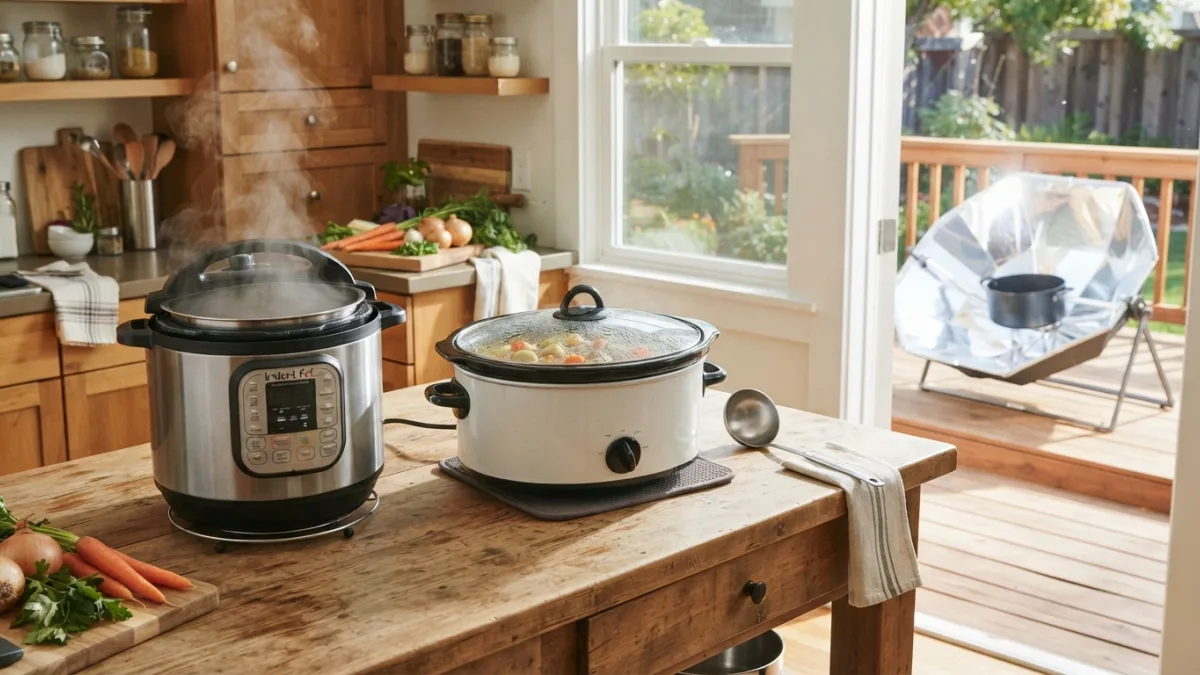
Your oven might be the hungriest appliance in your kitchen. It heats a big metal box for an hour just to roast a chicken, and most of that warmth escapes into the room instead of into your dinner. That’s exactly why low energy cooking methods have moved from crunchy-granola territory into ordinary homes, apartments, and dorm rooms. Pressure cookers, slow cookers, and solar ovens each attack the same problem from different angles: less wasted heat, less electricity or gas, and — in many cases — better food. You don’t need to renovate anything or buy a whole new stove. Three appliances, a little planning, and you can shave real money off your utility bill. Here’s how each one works, what it does best, and when it’s genuinely worth the counter space.
Why Low Energy Cooking Methods Matter Right Now
Energy prices swing, but the physics doesn’t. A conventional oven has to heat a large air space, plus the racks, plus the walls, before your food ever gets warm. Countertop appliances heat a much smaller sealed space, so more of the energy lands where you want it. The U.S. Department of Energy’s Energy Saver guide points out that small appliances generally use less energy than a full-size range for the same job — and they don’t warm up the whole kitchen, which matters if you’re also running air conditioning in summer. Choosing smarter low energy cooking methods also stretches your food budget, since these tools turn cheap, tough cuts and dried beans into something worth eating. Lower bills and better meals is a rare combination. If you want to dig deeper, our guide on Beginner’s Guide to Cooking from Pantry Staples to Avoid Last-Minute Takeout covers this in more detail.
1. Pressure Cookers: Speed Is the Whole Secret
A pressure cooker seals steam inside the pot, which raises the internal pressure and pushes the boiling point of water above 100°C (212°F). Hotter liquid means food cooks faster — often in a third or a quarter of the usual time. That time cut is where pressure cooker energy savings come from. The appliance may draw a lot of watts while it’s coming up to pressure, but it runs for a short burst, then coasts on very little power to hold that pressure. Compare that to a pot simmering on a burner for two hours with steam carrying heat straight into the air. Among low energy cooking methods, this one is the best choice for people who are short on time and refuse to plan dinner in the morning.
What Pressure Cookers Do Best
- Dried beans and chickpeas — no overnight soak required, done in under an hour.
- Tough meat cuts — brisket, shank, shoulder, oxtail, all tender in a fraction of the usual time.
- Stocks and broths — deep flavor in about an hour instead of an afternoon.
- Grains and lentils — brown rice, barley and farro cook quickly and evenly.
- Steamed vegetables and potatoes — minutes, using barely a cup of water.
A Few Honest Drawbacks
You can’t taste and adjust mid-cook, so seasoning takes practice. Delicate items — fish fillets, leafy greens, pasta — overcook fast. Modern electric multicookers have several safety locks, but you still need to respect the steam release and read the manual instead of guessing. And if your recipe needs browning or crisping, you’ll want a model with a sauté function, or you’ll dirty a second pan. None of that cancels the benefit; it just means the pressure cooker is one tool among several low energy cooking methods rather than the answer to every meal.
2. Slow Cookers: Tiny Wattage, Long Patience
A slow cooker takes the opposite approach. Instead of cooking hot and fast, it holds food at a gentle temperature for six to ten hours using a heating element that’s roughly comparable to a light bulb or two. The lid traps moisture, the ceramic insert holds heat, and almost nothing escapes. That’s the heart of slow cooker efficiency: very low power draw, multiplied over a long stretch, still adds up to less energy than an oven running at 180°C for three hours. It’s also the most forgiving of the low energy cooking methods. Dump ingredients in before work, come home to a finished meal, and the appliance never needs supervision. For batch cooking and freezer meals, nothing beats it for sheer convenience per watt. This connects closely with another common issue — see Zero-Waste Baking: What to Do with Extra Dough, Egg Whites, and Kitchen “Scraps” for more on that.
Slow Cooker Safety Basics
Because slow cookers work at low temperatures, food safety deserves attention. Start with thawed meat, not frozen, so the contents move through the temperature danger zone quickly. Fill the crock between half and three-quarters full. Keep the lid on — every peek costs you heat and adds cooking time. General guidance from FoodSafety.gov also warns against reheating leftovers in a slow cooker, since it heats too gradually; use the stove or microwave instead, then transfer to the crock to keep warm. Follow those rules and the appliance is as safe as anything else in your kitchen.
3. Solar Ovens: Cooking on Free Fuel
A solar oven uses no electricity, no gas, and no fuel at all — just sunlight, reflectors, and an insulated chamber that traps heat. Box cookers and panel cookers typically reach temperatures suitable for stews, rice, bread, and baked vegetables, while parabolic designs concentrate light to a hot point and can even fry. Solar cooker designs have been used for decades in regions where firewood is scarce or expensive, and they’re still a useful backup for camping, power outages, and off-grid living. Solar oven cooking is the purest of the low energy cooking methods because the running cost is literally zero. The trade-off is obvious: it works when the sun cooperates and sits idle when it doesn’t.
Making Solar Oven Cooking Work
- Start early. Load the oven by mid-morning so you get the strongest hours of sun.
- Use dark, thin-walled pots with lids — they absorb heat better than shiny cookware.
- Reposition every hour or two to follow the sun, unless you’re using a slow, all-day recipe.
- Don’t over-fill. Smaller portions heat through more reliably.
- Check the weather. Haze and passing clouds stretch cooking times considerably.
Side-by-Side: Which Method Fits Your Kitchen?
| Method | Typical Cook Time | Energy Use | Best For | Main Limitation |
|---|---|---|---|---|
| Pressure cooker | 10–60 minutes | High draw, very short run time | Beans, tough meats, stocks, weeknight speed | No tasting mid-cook; steep learning curve |
| Slow cooker | 4–10 hours | Very low draw, long run time | Stews, chili, pulled meats, batch cooking | Requires planning hours ahead |
| Solar oven | 2–6 hours (sun-dependent) | None | Off-grid meals, camping, sunny climates | Weather and daylight dependent |
How to Reduce Kitchen Energy Bills Beyond the Appliance
Buying the gear is step one. Using it well is where the savings live. Cook in batches so one heating cycle produces several meals. Match pot size to burner size when you do use the stove. Keep lids on. Let the residual heat of a pressure cooker finish the job with a natural release instead of forcing it. If you’re shopping for new gear, look for energy efficient appliances with good insulation and accurate thermostats, and check whether a multicooker can replace two or three single-purpose machines on your counter. Small habits — defrosting in the fridge overnight, prepping ingredients so nothing idles on heat, using the microwave for quick reheats — stack up. Together these choices genuinely reduce kitchen energy bills without asking you to eat cold sandwiches. You might also find our article on How to Store Fresh Herbs and Greens So They Last Longer (Without Plastic Bags) helpful here.
Picking the Right Tool for Your Life
There’s no single winner here, and you don’t have to choose just one. If your evenings are chaotic, the pressure cooker earns its place fast. If mornings are calmer than nights, the slow cooker is your friend. If you live somewhere sunny and want a genuine off-grid option, a solar oven is a smart, low-cost addition. Many households use two of the three and rarely touch the big oven except for holidays. Start with the appliance that matches your schedule rather than the one with the flashiest reviews — the most efficient tool is always the one you actually use. That’s the quiet truth behind every list of low energy cooking methods: the savings come from habit, not hardware.
Frequently Asked Questions
Do pressure cookers really use less electricity than a stove?
Generally, yes. A pressure cooker pulls a lot of power only while it builds pressure, then uses very little to maintain it. Because total cooking time drops sharply — often by half or more — the overall energy used per meal is usually lower than simmering or braising on a stovetop or in an oven.
Is a slow cooker cheap to run all day?
Slow cookers draw modest power, roughly in the range of a couple of bright light bulbs. Even after eight hours, the total consumption is typically less than running a full-size oven for a fraction of that time. That’s why slow cooker efficiency holds up well despite the long hours. For a related walkthrough, check out One-Pot Low-Waste Meals: Simple Recipes That Use Up Leftovers.
Can you cook meat safely in a solar oven?
Yes, but use a food thermometer and confirm the meat reaches a safe internal temperature before serving. Solar oven cooking times vary with sunlight, so never rely on the clock alone. Cloudy conditions can leave food in unsafe temperature ranges for too long — move it indoors and finish it conventionally if the sun disappears.
Which method saves the most money overall?
A solar oven wins on pure running cost since it uses no fuel, but it only works in good weather. For everyday, year-round savings, a pressure cooker usually delivers the biggest and most consistent reduction, followed closely by a slow cooker used for batch cooking.
Do I need all three appliances?
No. Most households get excellent results from one or two. Pick based on your daily schedule and climate. A multicooker that handles both pressure and slow cooking is a space-saving compromise, and you can always add a solar oven later if you camp or face frequent power outages.
Such practical tips! Shifting away from preheating a huge oven just for one dish has made a noticeable difference on my power bill. Especially loved the safety reminders on slow cooking—definitely something people tend to overlook. Thanks for putting this together, Ghani!”