How to Store Fresh Herbs and Greens So They Last Longer (Without Plastic Bags)
Nothing feels more discouraging than opening the fridge to find your basil turned black or your spinach reduced to a slimy mess after just three days. Storing fresh herbs and greens the right way is one of those small kitchen skills that saves money and cuts down on food waste, yet most people still stuff everything into a plastic bag and hope for the best. The good news is that you don’t need plastic to keep your produce crisp. With a few simple techniques borrowed from professional kitchens and farmers, you can extend the life of your herbs and greens by a week or more, using tools you probably already own.
Why Plastic Bags Aren’t Doing Your Herbs Any Favors
Plastic bags trap moisture and block airflow, which sounds helpful but actually speeds up decay. Herbs and greens release a small amount of water vapor as they breathe, and when that moisture has nowhere to go, it condenses on the leaves and creates the perfect environment for mold and bacteria. This is why bagged spinach or cilantro often turns mushy from the inside out, even though the outside looks fine at first glance. Plastic also traps ethylene gas, a natural compound that speeds up ripening and decay in many fruits and vegetables. Switching to breathable or moisture-controlled storage methods gives your produce a fighting chance, and it happens to be better for the environment too, since you’re not tossing out a new bag every few days. If you want to dig deeper, our guide on How to Reduce Plastic in Your Bathroom covers this in more detail.
The Water Glass Method for Soft Herbs
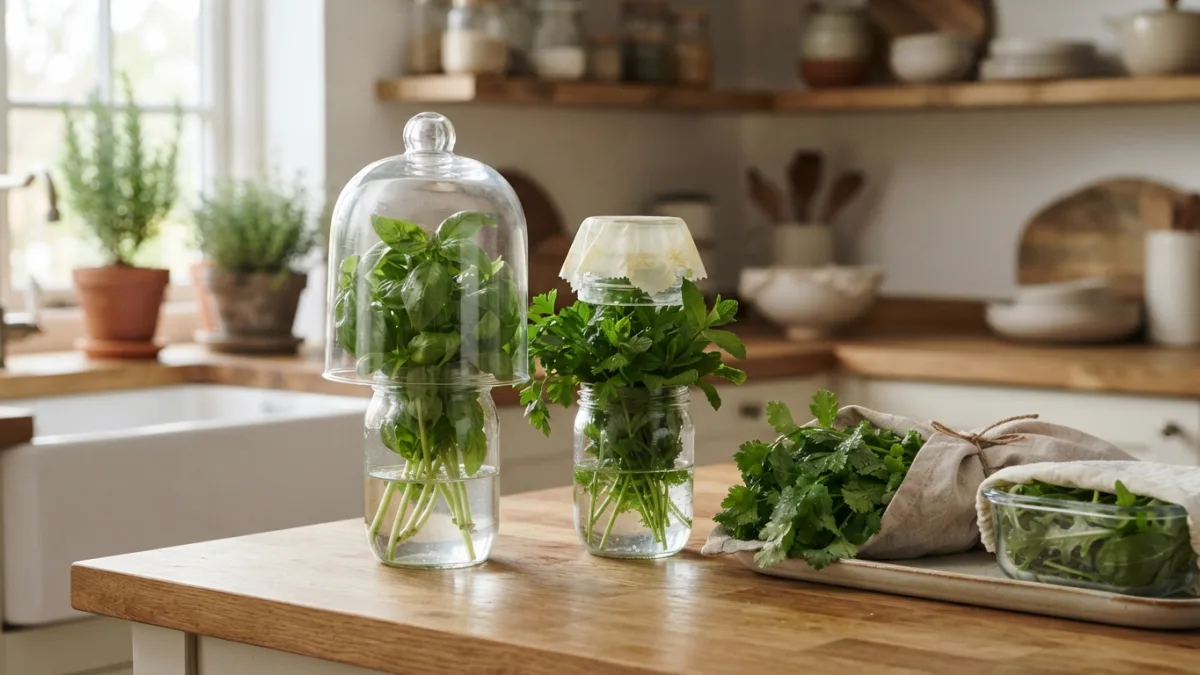
Soft-stemmed herbs like parsley, cilantro, mint, and basil behave a lot like cut flowers, and they should be treated that way. Trim about half an inch off the stems, then place the bunch upright in a glass or jar with an inch or two of water, similar to a small bouquet. For most herbs, cover loosely with a produce bag or a reusable silicone cover and store in the refrigerator. Basil is the one exception: it prefers room temperature and direct light, away from the fridge’s cold air, which can cause its leaves to darken and bruise. Change the water every two to three days, and these herbs can easily stay fresh for one to two weeks instead of wilting within a few days on the counter.
Wrapping Method for Hardy Herbs
Woodier herbs such as rosemary, thyme, oregano, and sage don’t need to stand in water the way softer herbs do. Instead, wrap them loosely in a slightly damp cloth or a reusable beeswax wrap, then tuck them into a container with a lid or a glass jar. The slight moisture keeps them from drying out, while the wrap prevents them from getting crushed or absorbing odors from other foods in the fridge. Avoid soaking the cloth completely, since too much water can lead to mold growth just as easily as too little moisture leads to shriveling. This method works well for herb storage in the crisper drawer, where temperature and humidity stay fairly consistent throughout the week.
How to Keep Greens Fresh Longer Without a Single Plastic Bag
Leafy greens like spinach, kale, arugula, and lettuce need a slightly different approach because their large surface area makes them lose moisture quickly. The best method is to wash and dry the greens thoroughly, then wrap them in a clean, dry kitchen towel or reusable cotton produce bag before placing them in a container with a loose-fitting lid. The towel absorbs excess moisture while still allowing some airflow, which prevents the sliminess that plastic bags often cause. Glass containers with vented lids work particularly well for this purpose, since they keep humidity balanced without letting condensation build up. Store the container in the crisper drawer, and check every few days to remove any leaves that start to yellow, since one wilting leaf can speed up decay in the rest of the batch. This connects closely with another common issue — see Green Deep-Clean Checklist for Moving In or Out of a Rental Home for more on that.
Choosing the Right Containers Without Plastic
Not all storage containers work equally well for every type of produce, and picking the right one makes a real difference in how long your food stays fresh. Below is a quick comparison of some popular plastic-free options and what they’re best suited for.
| Container Type | Best For | Notes |
|---|---|---|
| Glass jars with water | Soft herbs like basil, parsley, cilantro | Change water every 2-3 days |
| Vented glass containers | Leafy greens, lettuce, kale | Line with a dry towel to absorb moisture |
| Beeswax wraps | Hardy herbs like rosemary, thyme | Reusable and washable |
| Cotton produce bags | Mixed greens, herbs in bulk | Breathable and machine washable |
| Ceramic crocks | Root-attached herbs and scallions | Good for countertop storage |
Should You Wash Herbs and Greens Before Storing Them?
There’s some debate about this, but a general rule works well for most kitchens. Sturdy greens like kale and lettuce benefit from being washed and thoroughly dried before storage, since any dirt or bacteria on the leaves can accelerate spoilage. Delicate herbs, on the other hand, sometimes do better unwashed until right before use, especially if you’re using the water glass method, since excess moisture on the leaves themselves can encourage mold. If you do wash your herbs in advance, make sure to dry them completely using a salad spinner or clean towel, because trapped water droplets are one of the most common reasons produce turns slimy early. A few extra minutes spent drying leaves properly can add several days to their shelf life.
Freezing and Other Longer-Term Storage Options
When you buy more herbs and greens than you can use in a week, freezing is a smart backup plan that doesn’t involve plastic bags at all. Chop herbs finely and pack them into ice cube trays with a little water or olive oil, then pop out the frozen cubes into a glass container once solid. This works particularly well for herbs typically used in cooked dishes, like thyme, rosemary, or parsley, since freezing changes their texture slightly and makes them less suitable for fresh garnishes. Leafy greens like spinach and kale can also be blanched briefly, cooled, dried, and frozen in glass containers for smoothies or soups later on. This approach lets you store fresh herbs and greens from a big grocery haul without worrying about waste. You might also find our article on Green Deep-Clean Checklist for Moving In or Out of a Rental Home helpful here.
Common Mistakes That Make Herbs Wilt Faster
Even with the best storage method, a few habits can undo your efforts. Here are some frequent mistakes worth avoiding:
- Storing herbs near fruits like apples or bananas, which release ethylene gas and speed up decay.
- Leaving greens unwashed and dirty in a sealed container, which traps bacteria and moisture together.
- Cramming too many herbs into one small jar, blocking airflow between the leaves.
- Forgetting to change the water in herb jars, which allows bacteria to build up quickly.
- Storing basil in the refrigerator, where cold temperatures cause the leaves to blacken.
Paying attention to these small details can make the difference between herbs that last a few days and ones that stay vibrant for two full weeks.
Building a Simple Weekly Storage Routine
The easiest way to keep this system working long-term is to build it into your regular grocery routine rather than treating it as an extra chore. As soon as you get home from shopping, take ten minutes to sort your herbs and greens by type, trim stems, wash what needs washing, and set up your jars or wrapped containers right away. Doing this immediately, rather than shoving everything into the fridge as-is, makes a noticeable difference in how long everything lasts. Label your containers with the date if you tend to forget what’s inside, and try to use the most delicate herbs first, saving hardier ones like rosemary for later in the week. Over time, this becomes second nature and barely adds any extra time to your kitchen routine. For a related walkthrough, check out Sustainable Dishwashing: How to Ditch Sponges and Reduce Waste at the Sink.
Storing herbs and greens without plastic isn’t about being perfect or following complicated rules. It’s about understanding what each type of produce actually needs, whether that’s a drink of water, a breathable wrap, or a slightly damp towel. Once you get into the habit, you’ll likely notice you’re throwing away far less food and reaching for fresh, vibrant ingredients even a week or two after your grocery trip. Small changes like these add up, both for your wallet and for the amount of plastic waste your kitchen produces. Give it a try with your next batch of herbs, and you may never go back to the produce bag method again.
Frequently Asked Questions
How long can fresh herbs and greens actually last using these methods?
With proper storage, soft herbs like parsley and cilantro can last one to two weeks, hardy herbs like rosemary can last up to three weeks, and leafy greens typically stay fresh for seven to ten days.
Can I use these storage methods for herbs from my own garden?
Yes, homegrown herbs respond just as well to these techniques. In fact, since they haven’t traveled far or sat in a store display, they often last even longer once stored properly.
Is it better to store herbs in the fridge or on the counter?
It depends on the herb. Basil and other very tender herbs prefer room temperature, while most other herbs and leafy greens do best in the refrigerator’s crisper drawer.
What’s the best way to revive slightly wilted herbs?
Trim the stems and place them in a glass of cold water for about thirty minutes to an hour. This often brings soft herbs back to life if they haven’t started to turn brown or slimy.
Do I need special equipment to store fresh herbs and greens without plastic?
Not at all. A few glass jars, some clean kitchen towels, and reusable produce bags are usually enough to get started, and most people already have these items at home.