How to Read Food Labels for Sustainable, Ethical Choices
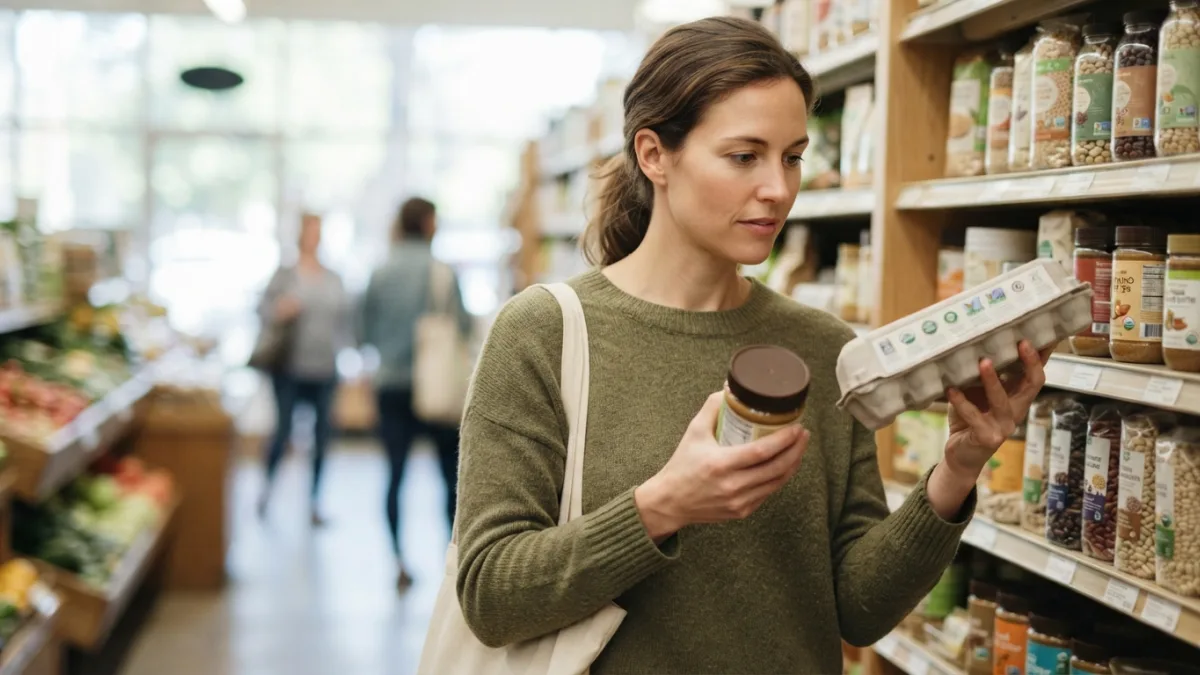
Standing in the grocery aisle, staring at a dozen different egg cartons all claiming to be “natural,” “farm fresh,” or “humane,” can feel like trying to solve a puzzle with missing pieces. Learning to read food labels is one of the most practical skills a shopper can pick up, especially if sustainability and animal welfare matter to you. Labels are supposed to help us make informed decisions, but many are designed by marketing teams rather than food scientists, which means they often confuse more than clarify. Once you know what to look for, though, those confusing little icons and buzzwords start making a lot more sense. This guide breaks down the real meaning behind common label claims so you can shop with confidence instead of guesswork.
Why Learning to Read Food Labels Matters for the Planet
Food production leaves a massive footprint, from water use and deforestation to greenhouse gas emissions and worker conditions. The choices we make at checkout ripple back through entire supply chains, influencing how farms operate and what practices get rewarded. When you read food labels carefully, you’re essentially voting with your wallet for the farming and manufacturing methods you want to see more of. This isn’t about achieving perfection or avoiding every processed item forever. It’s about making steadier, more informed choices over time. Small shifts, like choosing certified coffee or seafood with a traceable source, add up when millions of shoppers make the same decision. Companies notice sales patterns, and sustainable food choices that once sat quietly on a shelf now often get prime placement because demand has grown. If you want to dig deeper, our guide on How to Reduce Food Waste at Home (Practical Guide) covers this in more detail.
Understanding Nutrition Labels vs Ethical Claims
It helps to separate two different jobs a label does. Nutrition labels, the standardized panels listing calories, fat, sugar, and sodium, are regulated fairly strictly in most countries and follow a consistent format. Understanding nutrition labels is mostly about health: portion sizes, added sugars, and ingredient order, since ingredients are listed by weight from most to least. Ethical and sustainability claims, on the other hand, often appear as separate logos, seals, or text elsewhere on the packaging, and regulation varies wildly depending on the term and the country. A product can be nutritionally decent and environmentally questionable, or vice versa. Knowing which panel answers which question keeps you from assuming a “low fat” label also means the item was produced responsibly, because those are two completely separate conversations happening on the same box.
The Most Trustworthy Food Label Certifications
Not all seals are created equal, and some are far more rigorous than others. Third-party food label certifications generally carry more weight because an outside organization audits the claim, rather than the brand simply printing whatever sounds good. A few certifications worth learning to recognize include:
- USDA Organic or EU Organic: restricts synthetic pesticides and fertilizers, and bans genetic engineering.
- Fair Trade Certified: aims to ensure farmers and workers receive fairer prices and safer conditions.
- Rainforest Alliance: focuses on farming practices that protect forests, soil, and water.
- Marine Stewardship Council (MSC): indicates seafood from fisheries meeting sustainability standards.
- Certified Humane or Animal Welfare Approved: sets specific standards for animal living conditions.
These logos aren’t flawless systems, but they involve independent verification, which is a meaningful step above a company’s own unverified promises.
Decoding Vague Marketing Words
Words like “natural,” “farm fresh,” “artisanal,” or “wholesome” sound reassuring but usually have no legal definition and no enforcement behind them. A product can be labeled “natural” and still involve intensive farming methods or minimal animal welfare standards. Similarly, “cage-free” sounds better than it often is in practice, since it doesn’t guarantee outdoor access, just that birds aren’t kept in cages, though conditions can still be crowded. “Grass-fed” is a bit more specific but can still vary depending on whether the animal was finished on grain before slaughter. The safest approach is treating unregulated words as marketing rather than proof, and instead looking for an accompanying certification logo or a specific, verifiable claim, such as a named farm or a supply chain tracking number you can look up. This connects closely with another common issue — see Best Reusable Food Storage Alternatives to Plastic Wrap for more on that.
Checking the Ingredient List for Hidden Issues
The ingredient list often tells a more honest story than the front of the package. Palm oil, for instance, appears under dozens of different names, including palm kernel oil, sodium palmate, and glyceryl stearate, which makes it tricky to spot unless you know what to search for. Since much of the world’s palm oil production has been linked to deforestation, checking for a certification like RSPO, the Roundtable on Sustainable Palm Oil, can help identify more responsibly sourced options. Soy is another ingredient worth watching, especially in processed foods, since large-scale soy farming has contributed to land clearing in parts of South America. None of this means every product containing these ingredients is harmful, but reading past the front label into the fine print gives you a clearer picture of what you’re actually buying.
Seafood, Meat, and Traceability
Seafood labeling can be particularly tricky because supply chains often involve multiple countries and processors before a fish reaches a store shelf. Look for wording that specifies the catch method, like “pole and line” or “wild caught” versus vague terms with no method attached. Country of origin labeling can offer a clue too, since fishing regulations differ significantly by region. For meat and poultry, terms like “pasture-raised” tend to indicate more space and outdoor access than “cage-free” or “free-range,” though standards still vary between certifying bodies. When ethical food shopping is a priority, it often pays to research a specific brand’s supply chain policies directly on their website, since packaging space is limited and companies committed to transparency usually publish more detailed sourcing information online.
A Quick Comparison of Common Certifications
Because so many labels look similar at a glance, a side-by-side comparison can make the differences easier to remember while you’re shopping.
| Certification | Main Focus | Independently Verified |
|---|---|---|
| USDA/EU Organic | Pesticide and fertilizer restrictions | Yes |
| Fair Trade Certified | Farmer and worker welfare | Yes |
| Rainforest Alliance | Land, water, and forest protection | Yes |
| MSC (seafood) | Fishery sustainability | Yes |
| “Natural” or “Farm Fresh” | No fixed meaning | No |
Keeping a mental note of which claims involve outside audits versus which are simply marketing phrases can save a lot of second-guessing at the shelf. You might also find our article on How to Shop Package-Free at the Grocery Store helpful here.
Packaging Matters Too
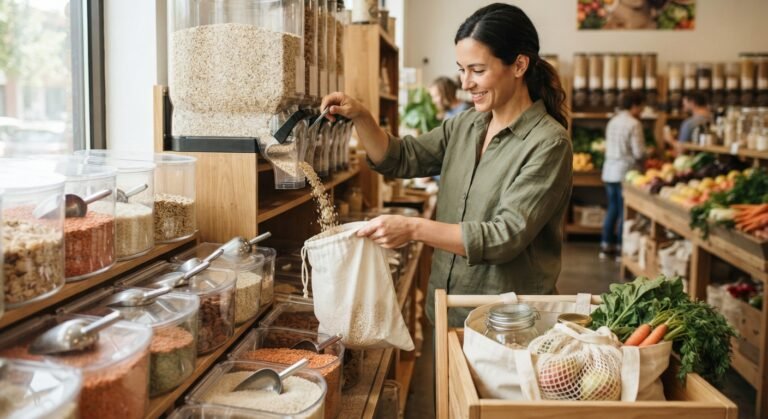
Sustainability isn’t only about what’s inside the box or bag, it’s also about what happens to the packaging afterward. Recycling symbols vary by region, and a triangle with a number doesn’t always mean your local facility actually accepts that material, so it helps to check your municipality’s guidelines occasionally. Some brands now include compostable packaging, though genuine compostability often requires industrial composting facilities rather than a home compost bin, so read the fine print there as well. Bulk bins, when available, cut down on packaging waste entirely and are worth considering for pantry staples like grains, nuts, and legumes. Eco-friendly grocery shopping isn’t only about the label wording; it also involves thinking through how the product will be disposed of once it’s used, which is easy to overlook in the moment.
Practical Tips for Everyday Shopping
Nobody has time to research every single item during a weekly grocery run, so building a few habits makes this manageable long term. Start by picking three or four product categories that matter most to you personally, maybe coffee, chocolate, eggs, and seafood, and learn the relevant certifications for just those items first. Keep a mental shortlist of brands you already trust so you’re not re-evaluating everything from scratch each visit. Store apps and certification websites often let you search a product or barcode if you’re ever unsure. And remember that price and availability are real constraints for most households, so aim for steady improvement rather than an all-or-nothing standard. Even switching one or two regular purchases to a certified option is a meaningful step forward.
Putting It All Together
Reading labels well is a skill that improves with practice, much like learning to read a map or a recipe. The front of the package is designed to catch your eye, but the real information usually sits in the ingredient list, the certification logos, and sometimes a company’s own website. Once you get familiar with a handful of trustworthy seals and a few red-flag ingredients, the whole process speeds up considerably, and you’ll find yourself scanning packages in seconds rather than minutes. Sustainable and ethical shopping doesn’t require perfection or an unlimited budget. It simply asks for a bit of curiosity and a willingness to look past the marketing language printed in bold letters, toward the smaller print that tells the fuller story.
Frequently Asked Questions
What’s the fastest way to read food labels while grocery shopping?
Focus on three things quickly: the ingredient list order, any certification logos you recognize, and country of origin if it’s listed. This gives you a solid snapshot without needing to analyze the entire package. For a related walkthrough, check out Sustainable Living on a Budget: Where to Start.
Are “natural” and “organic” labels the same thing?
No. “Organic” is a regulated term with specific legal requirements around pesticides and fertilizers, while “natural” generally has no enforced legal definition in most countries, making it far less reliable as an indicator.
How can I tell if a certification is trustworthy?
Look for certifications backed by an independent third-party auditor, such as Fair Trade, Rainforest Alliance, or MSC. If a claim only appears as text with no accompanying logo or verification body, treat it as a marketing statement rather than a guarantee.
Does cage-free mean the animals had outdoor access?
Not necessarily. Cage-free simply means animals weren’t kept in individual cages, but it doesn’t guarantee outdoor space. Terms like “pasture-raised” typically indicate more outdoor access, though standards still vary by certifier.
Is sustainable shopping more expensive?
Certified products can cost more, but not always. Buying in bulk, choosing seasonal produce, and focusing your budget on just a few priority categories, like coffee or eggs, can make ethical food shopping more affordable without overhauling your entire grocery list at once.