Best Refillable Cleaning Product Brands, Reviewed
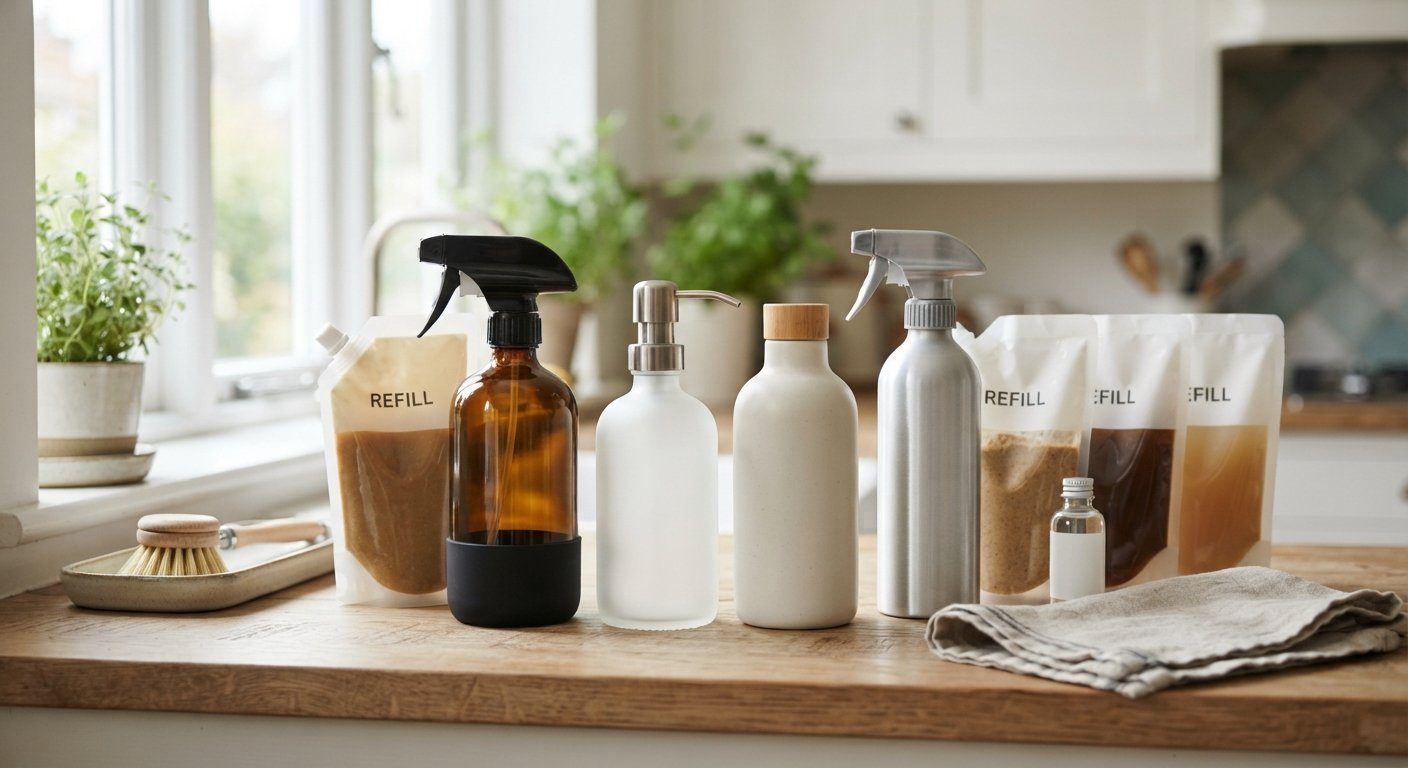
Under every kitchen sink in America, there’s probably a graveyard of half-used spray bottles with peeling labels and crusty triggers. That plastic pile-up is exactly what refillable cleaning brands are trying to fix. Instead of buying a new bottle every time you run out of dish soap or glass cleaner, you buy one sturdy bottle upfront and then purchase concentrated refills, usually in the form of tablets, pods, or pouches that you mix with water at home. It sounds like a small change, but it adds up fast when you consider how many plastic spray bottles the average household tosses out each year. We tested and researched the most talked-about refillable cleaning brands on the market right now to see which ones actually work, which ones smell good, and which ones are worth the switch.
Why Refillable Cleaning Products Are Having a Moment
The refillable cleaning trend didn’t appear out of nowhere. Consumers have grown increasingly frustrated with single-use plastic, and cleaning supplies are one of the biggest offenders in most homes. A typical spray bottle is mostly water anyway, so shipping it across the country in its final form wastes fuel and packaging for no good reason. Refill systems solve this by shipping concentrated formulas in lightweight tablets or small pouches, then letting you add tap water at home. That means less plastic waste, lower shipping emissions, and often lower long-term costs once you’ve bought the reusable bottle. Brands have picked up on this shift and started competing not just on price, but on scent, sustainability certifications, and how satisfying the whole process feels.
What We Looked for When Reviewing These Brands
Not all refillable cleaners are created equal, so we judged each brand on a few key factors before deciding which ones deserved a spot on this list. Price matters, but so does actual cleaning performance, because nobody wants an eco-friendly product that leaves streaks on their countertops. We also paid attention to how easy the refill process actually is, since some systems require more effort than others. Here’s what we prioritized:
- Cleaning effectiveness on common household messes like grease, grime, and glass
- Scent quality and whether it lingers in an unpleasant way
- Cost per use compared to traditional bottled cleaners
- Packaging materials and how recyclable or reusable they are
- Overall convenience of refilling and storing the products
Blueland: The Brand That Started the Conversation
Blueland is probably the name most people think of first when refillable cleaning comes up, and for good reason. The brand sells a starter kit with durable, forever bottles paired with dissolvable tablets for products like glass cleaner, bathroom spray, and multi-surface cleaner. You just fill the bottle with warm water, drop in a tablet, shake, and wait a few minutes for it to dissolve completely. The tablets come in a compact cardboard box, which takes up a fraction of the shelf space that liquid bottles would need. Performance-wise, the multi-surface cleaner handles everyday spills and countertop grime without much fuss, though it’s not quite as strong as heavy-duty degreasers for baked-on kitchen messes. The scents lean light and clean rather than overpowering, which most testers appreciated.
Grove Collaborative: A Wider Product Range
Grove Collaborative takes a slightly different approach by offering a broader marketplace of eco-conscious brands alongside its own refillable line. Their reusable glass and aluminum bottles pair with concentrate refills that you mix with water, similar to Blueland’s system, but Grove also sells refills for laundry detergent and dish soap in concentrated pouches rather than tablets. This gives shoppers more flexibility if they want to refill everything from hand soap to all-purpose cleaner without juggling multiple brands. The company also has a longer track record, having built a loyal subscription base over several years. One thing to note is that Grove’s subscription model can feel a bit pushy if you’re not careful about managing your account, so first-time users should read the fine print before signing up.
Force of Nature: For the Chemical-Conscious Household
Force of Nature stands out because it doesn’t rely on traditional refill tablets at all. Instead, you use a small electrolytic device that converts water, salt, and vinegar into an EPA-registered disinfectant right in your kitchen. It sounds a little like a science experiment, but the process only takes a few minutes, and the result is a cleaner that kills common household germs without leaving behind harsh chemical residue. This makes it a strong pick for households with young kids, pets, or anyone sensitive to traditional cleaning chemical smells. The tradeoff is that you need to plan ahead, since the solution has a limited shelf life once activated. It’s less convenient for quick grab-and-go cleaning, but the disinfecting power makes it worth the extra step for many families.
Common Good: Simple, Minimalist, and Effective
Common Good takes a straightforward approach with glass bottles and refill stations available at partner retail stores, plus mail-order refill pouches for those who don’t have access to a local refill shop. The formulas are plant-based and unscented or lightly scented with essential oils, which appeals to people who find synthetic fragrances irritating. Testers found the dish soap refill particularly impressive, cutting through grease on pots and pans about as well as mainstream bottled brands. The brand’s minimalist label design and glass packaging also make it one of the more attractive options if you like your cleaning supplies to look presentable on open shelving. The main downside is availability, since refill stations aren’t in every city yet, which means many customers rely on shipped pouches instead.
How These Brands Compare Side by Side
Choosing between these brands often comes down to your priorities, whether that’s price, scent, or how the product performs on tough messes. The table below breaks down the basics so you can compare at a glance before committing to a starter kit.
| Brand | Refill Format | Best For | Approximate Cost Per Refill |
|---|---|---|---|
| Blueland | Dissolvable tablets | Everyday multi-surface cleaning | Low to moderate |
| Grove Collaborative | Concentrate pouches | Households wanting a wide product range | Moderate |
| Force of Nature | Electrolyzed water device | Disinfecting and chemical-sensitive homes | Low |
| Common Good | Glass bottle refill or mail pouches | Plant-based, minimalist households | Moderate to high |
Tips for Making the Switch to Refillable Cleaners
Switching your whole cleaning cabinet over to refillable products doesn’t have to happen overnight. Most people find it easier to start with one or two products, like glass cleaner or hand soap, before committing to a full lineup. It also helps to keep your reusable bottles somewhere visible, like under the sink in a labeled bin, so refilling becomes part of your normal routine rather than an extra chore you forget about. If you’re unsure whether a brand’s scent or texture will work for your household, look for starter kits that include sample sizes or a money-back guarantee. Finally, don’t feel pressured to abandon a product you already love just because it’s not refillable yet; the market is expanding quickly, and more mainstream brands are rolling out refill options every year.
Is Switching to Refillable Cleaners Actually Worth It?
For most households, the answer is a cautious yes, though it depends on what you value most. If reducing plastic waste and cutting down on shipping weight matters to you, refillable brands offer a clear environmental upside backed by common sense rather than marketing spin. If you’re mainly chasing savings, the math works out in your favor over time, but only after the upfront cost of the reusable bottles pays for itself, which can take a few refill cycles. Performance-wise, the best refillable brands now hold their own against traditional bottled cleaners, closing a gap that used to make eco-friendly products feel like a compromise. The biggest hurdle left is habit, since remembering to order refills instead of grabbing a bottle off a store shelf takes a little adjustment. Once that habit sticks, most people find there’s no real reason to go back.
Frequently Asked Questions
Are refillable cleaning products as effective as traditional cleaners?
Generally yes, especially for everyday tasks like wiping counters, cleaning glass, and washing dishes. For extremely tough grease or heavy-duty disinfecting, some traditional formulas may still have an edge, though the gap has narrowed considerably in recent years.
Do refillable cleaning brands actually save money long-term?
Yes, typically after the first purchase of the reusable bottle. Refill tablets and pouches usually cost less per use than buying a brand-new bottle each time, so the savings grow the longer you stick with the system.
How do I know which refill format is easiest to use?
Dissolvable tablets tend to be the simplest since you just add water and wait, while concentrate pouches require careful measuring. If convenience is your top priority, start with a tablet-based brand like Blueland before trying more hands-on systems.
Are refillable cleaners safe for households with kids or pets?
Most refillable cleaning brands use plant-based or non-toxic ingredients, making them a solid choice for homes with kids or pets. Still, it’s smart to check individual product labels, since formulas and safety guidelines vary by brand.
Where can I buy refill pouches or tablets once I run out?
Most brands sell refills directly through their websites via subscription or one-time purchase, and some, like Grove Collaborative, also offer retail partnerships. A growing number of stores now stock refill stations too, so it’s worth checking locally before ordering online.