
How to Compost in a Small Apartment
Living in a small apartment often feels like a good excuse to skip composting altogether. No backyard, no garden, no space for a big smelly bin — so why bother? But here’s the thing: composting has quietly become one of the easiest habits to adopt no matter how tiny your kitchen is. Whether you’re stacking vegetable scraps in a shoebox-sized bin under the sink or feeding a colony of worms in a closet, apartment composting is not only possible, it’s becoming increasingly popular among city dwellers who want to shrink their waste footprint without needing a house with a yard.
Why Bother Composting Without a Yard?
Food waste makes up a surprisingly large chunk of what ends up in landfills, and when it breaks down there without oxygen, it releases methane, a greenhouse gas far more potent than carbon dioxide. Composting redirects that waste into something useful: nutrient-rich material that can feed plants instead of polluting the atmosphere. For apartment dwellers, this might mean donating finished compost to a community garden, using it for balcony planters, or even giving it away to neighbors with backyard gardens. Beyond the environmental angle, composting also cuts down on how often you take out the trash, which is a small but real convenience when you’re hauling bags down several flights of stairs or through a narrow hallway.
Choosing the Right Composting Method for Your Space
Not all composting methods work the same way, and picking the right one depends on how much space you have, how much smell you can tolerate, and how hands-on you want to be. Some methods need daily attention, while others can practically run themselves for weeks. The good news is that even a studio apartment has room for at least one of these approaches. Here are the main options worth considering:
- Worm composting (vermicomposting): Uses red wiggler worms to break down scraps quickly and with minimal odor.
- Bokashi fermentation: A Japanese method that pickles food waste using a special bran, working in a sealed bucket.
- Electric countertop composters: Small appliances that dry and grind food waste into a soil-like material within hours.
- Freezer storage with drop-off: Simply freezing scraps until you can bring them to a community compost site or farmers market collection point.
Worm Composting: Small, Quiet, and Surprisingly Clean
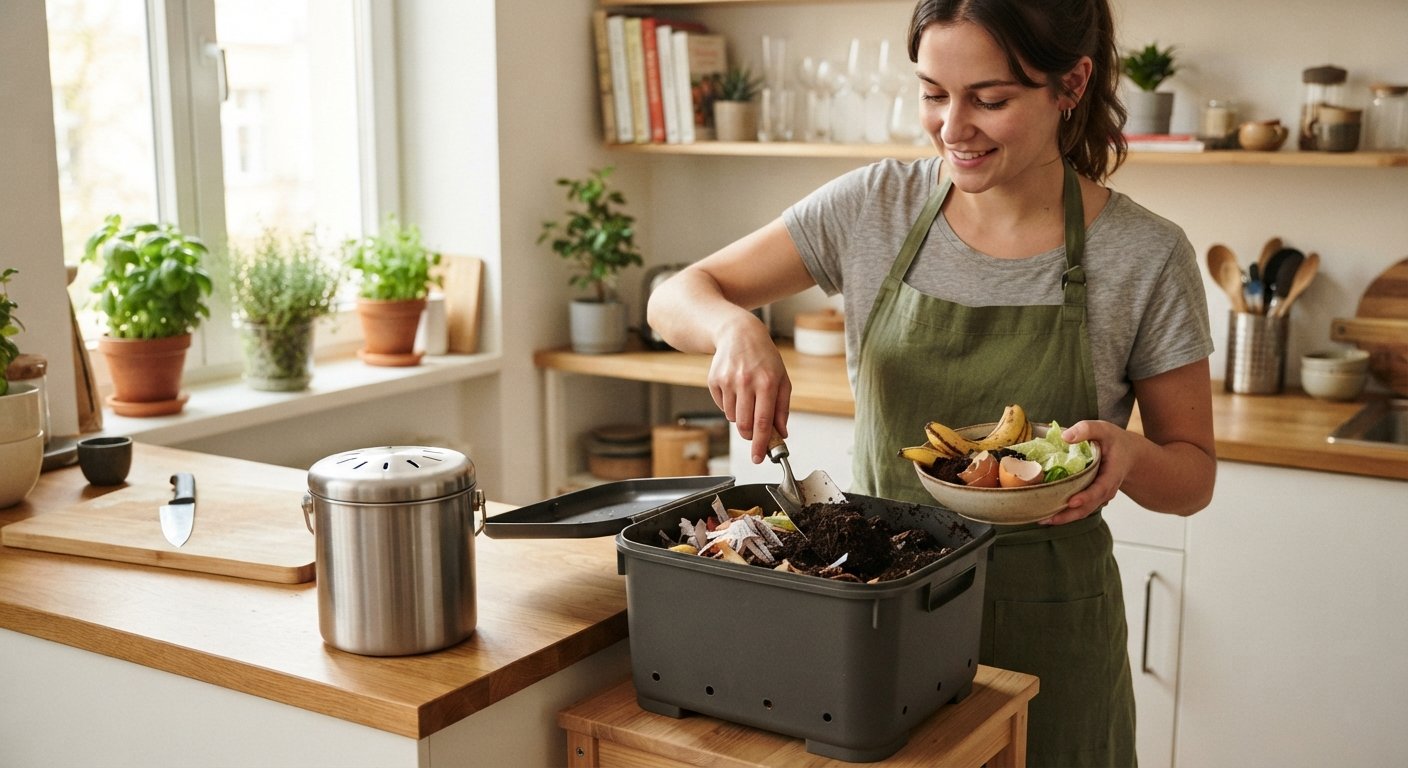
Worm bins are one of the most popular choices for apartment composting because they take up very little room and, when managed properly, don’t smell bad at all. A basic setup involves a plastic bin with holes drilled for airflow, some moistened bedding like shredded newspaper, and a pound or two of red wiggler worms, which you can order online or buy from a local worm farm. You feed them small amounts of fruit and vegetable scraps a few times a week, and within a couple of months, you’ll have dark, crumbly compost known as worm castings. The bin can live under a sink, in a closet, or even on a balcony if temperatures stay moderate. Just avoid meat, dairy, and citrus in large quantities, since these can attract pests or upset the worms’ digestion.
Bokashi: Fast Fermentation for Busy Renters
Bokashi composting works differently than traditional methods because it relies on fermentation rather than decomposition. You layer food scraps in an airtight bucket with a sprinkle of bokashi bran, which contains beneficial microbes that pickle the waste rather than rotting it. This method can handle things worms can’t, including meat, dairy, and oily foods, making it more flexible for real-world kitchen scraps. After about two weeks of fermenting, the pre-compost material still needs to finish breaking down, either buried in soil or added to an outdoor compost pile, so it works best if you have access to a garden, a community compost drop-off, or even a large potted plant outdoors. The process is compact, sealed, and virtually odor-free until you open the bucket.
Electric Composters: The Low-Effort Option
If the idea of managing worms or fermentation feels like too much, electric countertop composters offer a more hands-off alternative. These appliances heat, dry, and grind food scraps into a soil-like substance in just a few hours, and many models are compact enough to sit on a kitchen counter. The trade-off is that the output isn’t quite the same as traditional compost since it lacks the same microbial activity, so it works best mixed into soil rather than used on its own. These machines also use electricity and can be pricier upfront compared to a simple worm bin, but for renters who want convenience and minimal mess, they’re a solid middle ground.
Setting Up Your Composting Station
Once you’ve picked a method, think about where it will actually live day to day. A corner under the kitchen sink, a shelf in a pantry, or even a spot on a balcony can work, as long as the bin has proper airflow and isn’t exposed to extreme heat or cold. Keep a small container with a lid on your counter for daily scraps, then transfer them to your main bin every day or two to prevent buildup. Lining the counter container with a compostable bag or newspaper makes cleanup easier and cuts down on residue. It helps to keep your setup close to where you actually cook and prep food, since a system that’s inconvenient to reach is one you’ll eventually stop using.
What You Can and Can’t Compost Indoors
Knowing what belongs in your compost bin makes a big difference in how well the process works and how much odor or pest activity you deal with. Fruit and vegetable scraps, coffee grounds, eggshells, and tea bags are generally safe bets across most composting methods. Meat, dairy, oily foods, and heavily processed items are trickier indoors because they decompose slowly and can attract fruit flies or produce stronger smells, though bokashi systems can handle some of these thanks to fermentation. It also helps to chop larger scraps into smaller pieces, since this speeds up breakdown and keeps your bin more manageable. When in doubt, a quick search for your specific composting method’s guidelines can save you from a smelly surprise.
Dealing with Common Problems
Even a well-managed compost system runs into hiccups occasionally, and knowing how to troubleshoot keeps you from giving up too soon. Fruit flies are probably the most common complaint, and they usually show up when food scraps are left exposed or when a bin has too much moisture. Covering fresh scraps with a layer of dry bedding, like shredded paper, usually solves this. A sour or ammonia-like smell often means the bin has too much moisture or not enough airflow, which you can fix by adding dry material and stirring things up. If your worm bin seems sluggish, check that the temperature isn’t too cold, since worms slow down significantly below around 55 degrees Fahrenheit.
Where the Finished Compost Goes
Not every apartment dweller has a garden waiting for fresh compost, so it helps to know your options ahead of time. Community gardens are often happy to accept finished compost, and many cities now run drop-off programs at farmers markets or designated collection points specifically for this purpose. If you have houseplants, mixing finished compost into potting soil gives them a nutrient boost, though it should be blended rather than used on its own since it can be quite concentrated. Some neighbors with yards are also glad to take compost off your hands in exchange for fresh vegetables or herbs later in the season. A quick search for local composting programs in your city can reveal drop-off spots you didn’t know existed.
Making It a Habit That Sticks
The biggest hurdle with apartment composting usually isn’t the science, it’s building the habit. Start small by composting just fruit and vegetable peels for the first few weeks before expanding to other scraps, so the process doesn’t feel overwhelming. Keeping your bin visible and easy to access, rather than shoved in a hard-to-reach cabinet, makes it far more likely you’ll stick with it long term. Many people find that once they see how little trash actually goes to the landfill each week, the motivation to keep composting grows on its own. Give yourself permission to experiment with different methods until you find the one that fits your lifestyle, since the best composting system is ultimately the one you’ll actually use consistently.
Frequently Asked Questions
Does apartment composting attract bugs or pests?
It can if scraps are left uncovered or the bin isn’t properly sealed, but most pest issues are preventable. Covering fresh food waste with dry bedding, using a bin with a tight-fitting lid, and avoiding meat or dairy in worm bins all help keep pests away.
How much does it cost to start composting in an apartment?
A basic worm bin setup can cost as little as the price of a plastic storage container and a pound of worms, often under $40 total. Bokashi kits run similarly affordable, while electric composters are the priciest option, typically ranging from $200 to $400.
Will my compost bin smell bad in a small space?
A properly maintained bin shouldn’t smell much at all. Bad odors usually signal too much moisture, not enough airflow, or food waste that’s been left exposed too long, all of which are fixable with small adjustments.
Can I compost if I don’t have any plants or a garden?
Yes. Many cities have community drop-off programs, farmers market collection points, or neighbors and community gardens happy to take finished compost off your hands.
How long does it take to get usable compost indoors?
This depends on the method. Worm bins typically produce finished compost in two to three months, bokashi fermentation takes about two weeks plus additional breakdown time, and electric composters can produce results in just a few hours, though the output differs from traditional compost.
I started with just the freezer scrap bag method before finally working up the courage to try vermicomposting under my sink. It really does cut down on trash runs down the stairs more than you’d expect! Love that you highlighted Bokashi as well—handling dairy/meat scraps is always the trickiest part indoors. Solid breakdown.”