Air Freshener Alternatives: 7 Best Eco-Friendly Swaps
That “fresh linen” scent from a plug-in might smell clean, but it often comes from a mix of synthetic ingredients that mostly cover odors instead of removing them. If you want a home that smells good without the guesswork, air freshener alternatives are cheaper, simpler and kinder to the planet than most people expect. Many of them start with ingredients already sitting in your kitchen cupboard. A box of baking soda, a few citrus peels and a small bottle of essential oil can do more than you would think. You can also skip the aerosol cans, plastic refill pods and batteries that end up in landfills, which is a real benefit for anyone trying to cut down on household waste.
This guide covers seven practical swaps, from quick sprays to slow-release diffusers and stovetop blends. Some add a gentle fragrance, and others simply soak up bad smells so your home smells like nothing at all, which is often the goal. You will also find a side-by-side comparison, safety advice for homes with pets and children, and answers to common questions. None of these ideas need special skills or expensive equipment. Most take less than ten minutes to set up. Pick one or two that suit your space, test them for a week, and adjust from there. The best routine is the one you will actually keep using. If you want to dig deeper, our guide on plastic free deodorant: 7 best tested brands for safe skin covers this in more detail.
Why People Are Rethinking Store-Bought Scents
Concerns about air freshener health risks usually start with the label, or the lack of a detailed one. Many commercial products list “fragrance” as a single ingredient, even though that word can cover a long list of individual chemicals. Sprays, gels and plug-ins can also release volatile organic compounds, often called VOCs, into the air you breathe. The U.S. Environmental Protection Agency’s guide to indoor air quality explains how household products can affect the air inside our homes and why good ventilation matters. People with asthma, allergies or scent sensitivity often notice headaches or irritation first.
There is an environmental side, too. Aerosol cans, single-use plastic refills and electric plug-ins create waste that is hard to recycle. Choosing air freshener alternatives gives you more control over what goes into the air and what goes into the trash. It is still important to be honest here: essential oils and other natural scents also release compounds into the air, so “natural” does not mean “risk-free.” The smartest approach combines gentle scents, good airflow and moderate use, rather than replacing one strong fragrance with another.
7 Eco-Friendly Air Freshener Alternatives to Try at Home
Each option below works a little differently. Some release scent on demand, some work quietly in the background for weeks, and some remove odors without adding any fragrance. Mix and match based on the room, your budget and how much time you want to spend.
1. A DIY Room Spray You Can Mix in Two Minutes
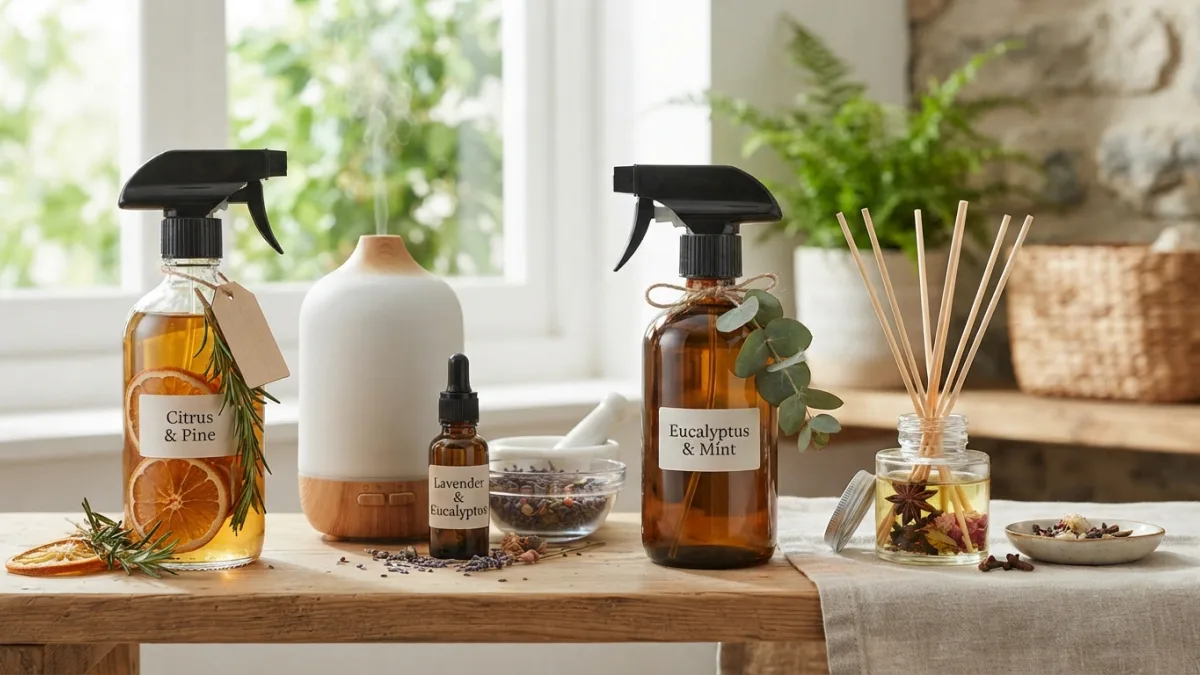
A homemade DIY room spray is the fastest swap you can make, and it costs very little. Oil and water do not mix well, so a small amount of witch hazel or high-proof alcohol helps spread the oil through the water. Here is a simple starting formula for a 4-ounce (about 120 ml) glass spray bottle:
- About 3 ounces of distilled water
- About 1 ounce of witch hazel or unflavored vodka
- 10 to 20 drops of essential oil, such as lavender, lemon or sweet orange
Shake the bottle well before every use, because the oil will still separate over time. Spray into the air, not directly onto wood furniture, leather or delicate fabrics, since oils can leave marks. Start with fewer drops. You can always add more, but a spray that smells too strong is hard to fix. A glass bottle is better than plastic, because some oils can break down certain plastics over time. This connects closely with another common issue — see Comparing Eco-Friendly Cat Litter Brands: Dust, Odor Control, and Packaging for more on that.
2. Essential Oil Diffuser Blends for Every Room
If you already own a diffuser, a few well-chosen combinations can make it feel like a new tool. Ultrasonic models use water and a small amount of oil, while nebulizing models use pure oil and tend to produce a stronger scent. These pairings are easy to remember, with two to three drops of each oil in an ultrasonic diffuser:
- Living room: sweet orange and cedarwood for a warm, welcoming smell
- Kitchen: lemon and rosemary to cut through cooking odors
- Bedroom: lavender with a little cedarwood for a calm evening mood
- Bathroom: eucalyptus and peppermint for a fresh, clean feel
Run the diffuser in short sessions of 30 to 60 minutes instead of all day, and keep a window open a little when you can. Clean the water tank regularly to stop residue and bacteria from building up.
3. A Homemade Reed Diffuser for Low-Effort Scent
A homemade reed diffuser is perfect for hallways, entryways and bathrooms where you want a soft, steady fragrance without plugging anything in. You need a narrow-necked glass jar, a handful of rattan reeds, a light carrier oil such as fractionated coconut oil or sweet almond oil, and your favorite essential oil. Add about a quarter cup of carrier oil, a small splash of alcohol to help the liquid travel up the reeds, and 20 to 30 drops of essential oil. Place the reeds in the jar, wait a few hours, then flip them so the oily ends point up. Flip them again every week or so to refresh the scent. Replace the reeds when they stop absorbing oil, usually after a month or two of steady use.
4. Simmer Pot Recipes That Make Your Kitchen Smell Amazing
Simmer pot recipes are a cozy, almost zero-waste way to fill a home with scent, and they make good use of food scraps you would otherwise throw away. Fill a small pot with water, add your ingredients and keep it on the lowest heat. Try these combinations:
- Citrus and spice: orange peels, a cinnamon stick and a few whole cloves
- Garden fresh: lemon slices, fresh rosemary and a few sprigs of thyme
- Sweet and warm: apple peels, a splash of vanilla extract and a pinch of nutmeg
Check the pot often and add more water as it evaporates, because a dry pot can scorch or become a fire risk. Never leave it unattended, and turn it off before you leave the house or go to bed. You can usually reuse the same mix for a day or two if you refrigerate it overnight. You might also find our article on Sustainable Party Supplies: 7 Easy Eco-Friendly Ideas helpful here.
5. A Baking Soda Deodorizer for Carpets, Bins and Shoes
A baking soda deodorizer is one of the oldest tricks in the book, and it is still one of the most useful. Baking soda helps neutralize many acidic odors instead of just hiding them. Leave an open box in the fridge, sprinkle a thin layer on carpets or a mattress, wait at least 15 to 30 minutes, then vacuum thoroughly. For a pretty, scented version, fill a small jar with baking soda, add a few dried lavender buds or a couple of drops of oil, and cover it with a lid that has small holes punched in it. You can also dust a little into trash cans, gym bags and smelly shoes overnight. It is cheap, widely available and easy to replace when it stops working.
6. Activated Charcoal: A Natural Odor Eliminator That Adds No Scent
If you would rather have no smell at all, activated charcoal is a natural odor eliminator worth keeping in mind. It has a very porous surface that traps many odor-causing molecules, which is why it shows up in water filters and cooker hoods. You can read more about how it works on the Wikipedia overview of activated carbon. Small fabric bags of charcoal work well in closets, cars, basements, shoe racks and near litter boxes. Because they release no fragrance, they are a good choice for people who get headaches from scents. Charcoal does lose its power over time, so replace or refresh the bags according to the product’s instructions.
7. Fresh Air, Sunlight and Real Greenery
The simplest of all air freshener alternatives costs nothing: open a window. Even ten minutes of cross-ventilation can clear stale air, cooking smells and humidity faster than any spray. Use exhaust fans while you cook or shower, wash pet bedding and couch throws often, and let rugs and cushions air out in the sun when the weather allows. Fresh flowers and pots of herbs like mint, basil or rosemary bring a light, natural scent to a room. Houseplants will not replace ventilation, but they make a space feel fresher and more alive. Remember that most bad smells have a source, so finding and cleaning it should always come first.
Comparing the Best Air Freshener Alternatives at a Glance
Not sure where to start? This table compares the seven swaps by what they do best, how much effort they need and how long they last.
| Option | Best For | Adds Scent? | Effort | How Long It Lasts |
|---|---|---|---|---|
| Room spray | Quick refresh before guests arrive | Yes | Low | Minutes to an hour |
| Diffuser blends | Setting a mood in living spaces | Yes | Low | While running |
| Reed diffuser | Hallways and bathrooms | Yes, mild | Low after setup | Several weeks |
| Simmer pot | Kitchens and cozy weekends | Yes | Medium (needs watching) | While simmering |
| Baking soda | Carpets, fridges, shoes and bins | No (unless added) | Very low | Weeks to a few months |
| Activated charcoal | Closets, cars and litter areas | No | Very low | Varies by product |
| Ventilation and plants | Every room, every day | Light, natural | Very low | Ongoing |
Pet Safe Essential Oils and Other Safety Tips
Many readers search for pet safe essential oils, but the honest answer is more complicated than a simple list. Cats are especially sensitive, because their bodies process certain compounds differently, and dogs, birds and small animals can react too. Oils such as tea tree, eucalyptus, peppermint and many citrus oils are often mentioned as ones to avoid around pets. The ASPCA Animal Poison Control Center is a trusted place to check concerns, and your vet can give advice for your specific animal. If you have pets, scent-free options like baking soda, charcoal and ventilation are the safest choices. For a related walkthrough, check out Dishwashing Tools: 3 Best Eco-Friendly Options Compared.
A few general rules apply to every household:
- Store oils out of reach of children and pets, and never let them be swallowed.
- Keep diffusers and reed jars on stable surfaces where they cannot be knocked over.
- Always give people and animals a way to leave a scented room.
- If anyone in your home has asthma, is pregnant or has a medical condition, talk to a doctor before using strong scents regularly.
How to Build a Routine That Works for Your Home
You do not need all seven swaps at once. A practical setup for most homes looks like this: baking soda or charcoal working quietly in problem areas, a reed diffuser in the entryway, and a spray or diffuser for moments when you want something extra. Save the simmer pot for weekends or when guests are coming. Pay attention to how you feel, too. If a scent starts to feel heavy or gives you a headache, use less or take a break. Good-smelling homes usually come from clean surfaces, fresh air and light fragrance, not from constant perfume. Start small, keep what works and let the rest go.
The best air freshener alternatives are the ones that fit your daily life without adding new problems. With a few cheap ingredients and some simple habits, you can enjoy a fresher home, produce less waste and know exactly what you are breathing in.
Frequently Asked Questions
Are natural air freshener alternatives completely safe?
Not completely. Essential oils still release compounds into the air and can bother sensitive people or pets. Use small amounts, keep rooms ventilated, and choose scent-free options like baking soda when in doubt.
How long does a homemade room spray last?
The scent usually fades within an hour. The mixture itself is best used within a few weeks. Make small batches, store them in glass and throw out any spray that smells strange or looks cloudy.
Can I use tap water instead of distilled water?
You can, but distilled water is better. Tap water may leave mineral spots and can allow bacteria to grow faster, which shortens the life of your spray.
Which option works best for pet odors?
Scent-free options are usually the smartest choice. Baking soda on carpets, activated charcoal near litter areas, regular washing of bedding and fresh air all remove odors without exposing pets to strong oils.
Do eco-friendly swaps really save money?
In most cases, yes. A box of baking soda and a bottle of essential oil can last for months, while plug-in refills and aerosol cans need to be bought again and again.