Wool Dryer Balls: 7 Surprising Test Results Revealed
Somewhere right now, someone is tossing two gray wool balls into a dryer and hoping for a laundry miracle. Do wool dryer balls really work? The short answer is yes, in some ways, but not in all the ways the packaging suggests. Some claims hold up well. Others fall flat.
The promises are big: softer clothes, faster drying, no static, lower bills, and no chemicals. We sorted those claims into seven results so you can see what to expect before you spend any money. Some of them surprised us. If you want to dig deeper, our guide on Honest Review of Popular Zero-Waste Starter Kits: What You’ll Actually Use covers this in more detail.
What We Know About Wool Dryer Balls Before Testing
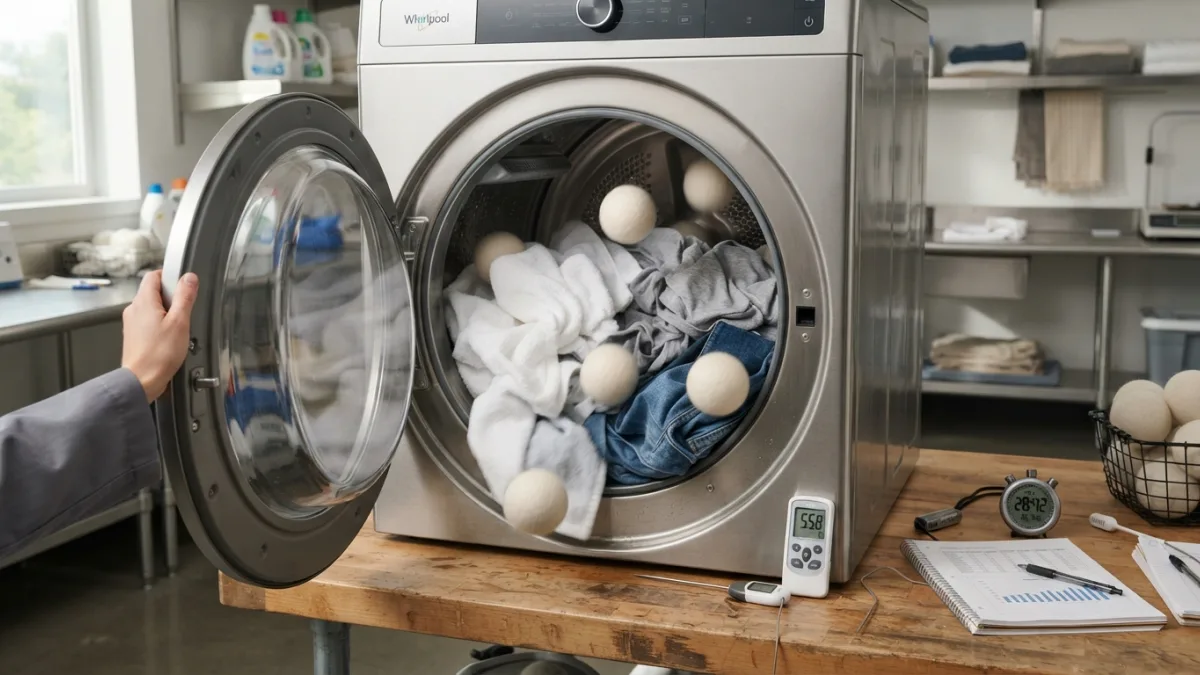
First, a fair warning. Large, independent lab studies on this topic are hard to find, so we won’t throw around made-up percentages. What we can do is explain how dryer balls work, point to what basic laundry science says, and show you how to check the results in your own home. The idea is simple. The balls bounce around in the drum, separate wet items, and help hot air move through the load. That is the whole mechanism, and it explains both their strengths and their limits.
Want your own proof? Try this simple home test:
- Wash a full load of mixed towels and cotton shirts, and spin it well.
- Split the wet laundry into two equal piles. Weigh them on a bathroom scale if you can.
- Dry one pile with dryer balls and the other without, using the same heat setting.
- Note the time until everything feels fully dry, plus how soft and static-free the clothes feel.
- Repeat at least three times, since one run can fool you.
Result 1: Dryer Balls vs Dryer Sheets Is a Softness Draw, With One Big Difference
Many people want to know how dryer balls vs dryer sheets compare on softness. Wool balls tumble clothes and break up clumps, so fabrics often come out a bit fluffier and less stiff. Dryer sheets work differently. They leave a thin coating of softening ingredients and usually a fragrance on the fabric. That coating makes clothes feel silky, but it can also build up on towels and sportswear over time and may make them less absorbent. So the result is mixed. Sheets can feel softer on day one, while wool balls win on simplicity and on leaving no residue.
Result 2: They Can Help Reduce Drying Time, but Not Dramatically
Here is the claim that matters most to your wallet. Wool balls can help reduce drying time because they stop wet items from balling up into one soggy lump. When towels and sheets stay separated, warm air reaches more of the fabric. Many home testers report a modest gain, especially with bulky loads. But the effect depends on your dryer, your load size, and how well your washer spins out water. Don’t expect a half-hour cycle to become ten minutes. Think of it as a small boost, and time your own loads to see. This connects closely with another common issue — see Reviewing Reusable Alternatives to Paper Towels: Swedish Cloths, Bamboo Towels, and Rags for more on that.
Result 3: Static Cling Prevention Is the Weak Spot
This is the result that surprises people most. When it comes to static cling prevention, plain wool balls are only so-so. Static electricity builds up when dry fabrics rub together, and synthetic materials like polyester are the worst offenders. Wool balls add a little separation, but they don’t coat clothes the way a dryer sheet does. Over-drying makes static worse, so stopping the cycle a few minutes early can help more than any accessory. Some people tuck in a small ball of aluminum foil as a low-cost trick, though results vary.
Result 4: Dryer Energy Savings Are Real but Small
If your dryer runs for less time, you use less power or gas, and that is where dryer energy savings come from. The balls themselves don’t use any energy. They only help if they shorten your cycles. For one household, the saving per load is likely tiny, but it can add up over a year of regular laundry. Bigger gains come from habits like cleaning the lint filter, not overloading the drum, and choosing an efficient machine. For help picking one, see the ENERGY STAR page on clothes dryers.
Result 5: How Many Dryer Balls You Use Changes the Outcome
People often ask how many dryer balls they need, and the answer depends on load size. Most brands suggest about three to six balls, with fewer for small loads and more for large ones. A single ball in a big drum is easy to overlook, since it can get lost among the towels. More balls mean more movement and more separation, up to a point. Too many can make the drum noisy without adding much benefit. A simple approach is to start with four, then adjust after a few loads. Follow your brand’s guide if it gives one.
Result 6: Dryer Ball Essential Oils Fade Fast
Wool balls have no scent, which is a plus for sensitive skin and a minus for people who love fresh-smelling laundry. That is why dryer ball essential oils are so popular. People add a few drops to the balls before the cycle. The catch is that the scent is usually faint on clothes and fades quickly, and you need to reapply often. Use only a few drops, let them soak in, and check your dryer manual and the ball maker’s advice first. Never put oil-soaked fabrics into a hot dryer. Oil-stained laundry can be a fire risk. You might also find our article on Reusable vs. Disposable: What's Actually Worth Buying helpful here.
Result 7: Dryer Ball Lifespan Is Long, but Not Forever
The last result is about durability. Good dryer ball lifespan is the main reason they save money over disposable sheets. Many makers say their balls last for years or hundreds of loads, but that claim depends heavily on quality and use. Cheap or loosely packed balls can unravel, shed fuzz, or lose their shape. Dense, tightly wound ones tend to hold up better. Replace any ball that comes apart or leaves bits of wool on your clothes. A quick look every few months is enough to catch problems early.
Should You Buy Wool Dryer Balls?
If you want a natural fabric softener alternative, wool dryer balls are a reasonable pick, as long as your expectations are realistic. They are reusable, free of added fragrance, and gentle on towels and baby clothes. They won’t give you the scented, super-soft finish of a liquid softener, and they won’t banish static on their own.
They suit people who dislike chemical residue, want less waste, or just want a small drying boost. If you love strong fragrance or fight constant static in winter, you may still want a backup. At a modest price, a set is a low-risk experiment. Run the home test, trust your own results, and keep what works.
Frequently Asked Questions
Do wool dryer balls really work?
Yes, to a degree. They separate laundry and improve airflow, which can shorten drying and leave clothes a little fluffier. They do little for scent and only help a bit with static. For a related walkthrough, check out Best Reusable Food Storage Alternatives to Plastic Wrap.
Can wool dryer balls damage clothes?
Generally no. They are soft and sold for regular use. Check that they are not shedding fibers, and always follow the care instructions on delicate garments.
Are wool dryer balls safe for sensitive skin?
They contain no added fragrance or softening chemicals, so many people with sensitive skin like them. Anyone with a wool allergy should be careful and may prefer another option.
How often should I replace them?
Replace them when they fall apart, lose their shape, or leave fibers on your laundry. With good quality, that can take years, but there is no fixed date.
Can I use wool dryer balls with dryer sheets?
You can, but it defeats much of the point. If you want to cut chemicals and cost, try the balls alone for several loads first, then decide whether you still need the sheets.