Sustainable Dishwashing: How to Ditch Sponges and Reduce Waste at the Sink
Take a look at the sponge sitting by your kitchen sink right now. Chances are it’s a synthetic, dye-colored brick of plastic foam that will spend a few weeks trapping bacteria before you toss it in the trash, where it will sit in a landfill for centuries. Sustainable dishwashing offers a simple fix to this daily habit most of us never think twice about. It’s not about scrubbing harder or buying expensive gadgets. It’s about rethinking one small corner of your kitchen routine so it stops quietly adding to the plastic problem.
Why the Traditional Sponge Is a Problem
The average kitchen sponge is made from polyurethane foam, a petroleum-based plastic that never fully breaks down. Every time you scrub a dirty plate, tiny fibers shed into your sink and eventually into waterways. Studies on kitchen hygiene have long flagged sponges as one of the germiest objects in the average home, since their damp, porous texture is basically a five-star hotel for bacteria. Most people replace a sponge every few weeks, which means a single household can go through dozens of them a year. Multiply that across millions of kitchens, and you start to see how something so small turns into a genuinely large source of plastic waste sent straight to the landfill. If you want to dig deeper, our guide on How to Reduce Plastic in Your Bathroom covers this in more detail.
What Sustainable Dishwashing Actually Means
Sustainable dishwashing simply means choosing tools and habits at the sink that don’t rely on single-use plastic or harsh chemicals. It fits neatly into a broader zero waste kitchen mindset, where the goal isn’t perfection but reduction. You’re not required to throw out every plastic item you own overnight. Instead, the idea is to swap disposable, short-lived products for ones that last longer, break down naturally, or can be reused hundreds of times. This shift also tends to save money over time, since a durable dish brush or scrubber often outlasts a dozen sponges. It’s a small, practical entry point into more sustainable living that doesn’t demand a total lifestyle overhaul.
Eco-Friendly Dish Scrubber Alternatives Worth Trying
There’s no shortage of options once you start looking beyond the plastic sponge aisle. Several materials have become popular precisely because they clean well while being kinder to the planet.
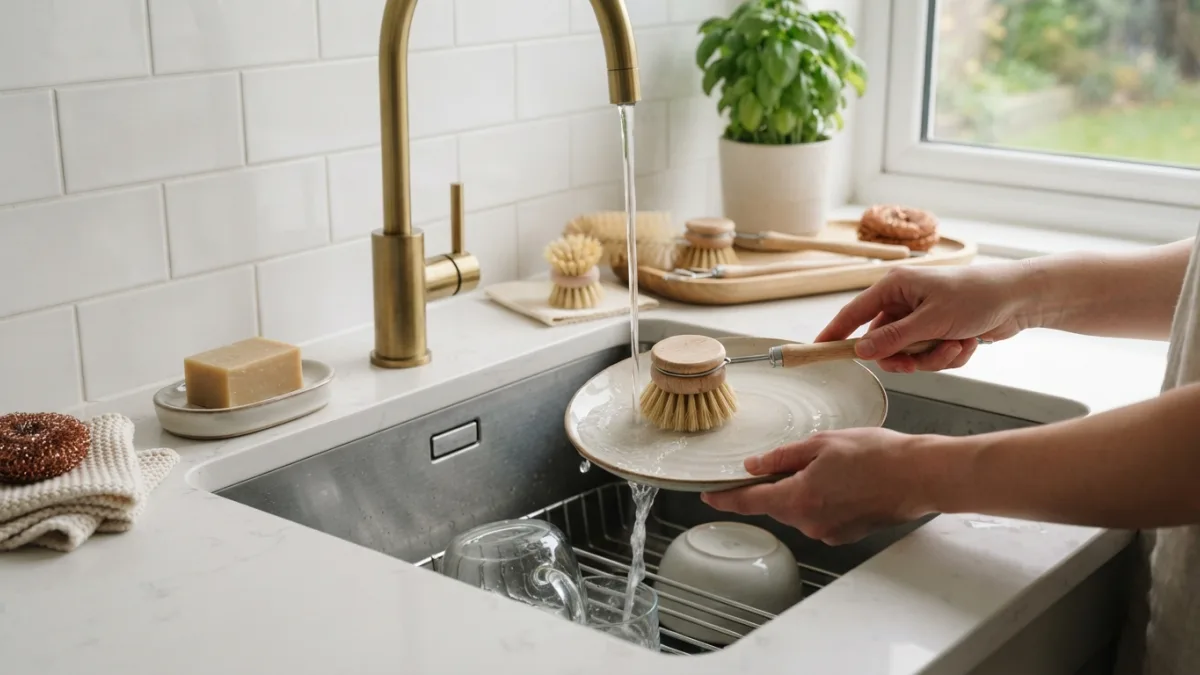
- Wooden dish brushes with replaceable heads, so only the bristle part needs swapping out rather than the entire tool.
- Coconut fiber scrubbers, which are naturally abrasive enough for stuck-on food and fully compostable when worn out.
- Silicone scrubbers, durable and quick-drying, though not biodegradable, they last for years and resist bacterial buildup better than foam.
- Compostable cellulose sponges, often made from wood pulp and cotton, offering a familiar sponge feel without the plastic footprint.
- Cotton or linen dishcloths, which can be washed and reused for a long time before being retired as rags.
Comparing the Most Common Alternatives
If you’re trying to decide where to start, it helps to see how these options stack up against each other in practical terms. This connects closely with another common issue — see Sustainable Swaps for Every Room in Your Home for more on that.
| Material | Typical Lifespan | Compostable | Best For |
|---|---|---|---|
| Wooden dish brush | 1-2 years (head replaced periodically) | Yes (handle) | Everyday dishes, pots, pans |
| Coconut fiber scrubber | 2-4 weeks | Yes | Tough, baked-on messes |
| Silicone scrubber | 2-3 years | No | Non-stick pans, quick daily use |
| Cellulose sponge | 3-6 weeks | Yes | General cleanup, wiping counters |
| Cotton dishcloth | Several months | Yes | Light cleaning, drying dishes |
How to Make the Switch Without Feeling Overwhelmed
You don’t need to replace every item under your sink in one weekend. Start by finishing off the sponges you already own, then replace them one at a time with a reusable dish brush or a compostable option. Keep a small drying rack or hook near the sink so your new tools can air out fully between uses, which cuts down on bacteria far more effectively than leaving a damp sponge balled up in a dish. If budget is a concern, look for bulk packs of coconut scrubbers or cellulose sponges, which often work out cheaper per use than name-brand plastic ones. The goal is steady progress, not an instant, all-or-nothing transformation of your kitchen.
Pairing Natural Cleaning Alternatives With Your New Tools
Swapping your scrubber is only half the equation. What you use alongside it matters too. Many people are moving toward natural cleaning alternatives like castile soap, diluted vinegar, or baking soda paste for tougher grease and grime. These options tend to come in less packaging, especially if you buy concentrated versions or refill from bulk bins, and they skip some of the synthetic fragrances and dyes found in many mainstream dish soaps. A simple mix of baking soda and a splash of water can lift burnt-on food from a pan just as well as a store-bought scouring powder, often for a fraction of the cost. Pairing these with an eco-friendly dish scrubber rounds out a sink setup that’s genuinely low-impact from start to finish.
Caring for Your Reusable Dish Brush
A reusable dish brush only stays hygienic if you treat it right. Rinse it thoroughly after each use and shake off excess water before setting it down, ideally in a spot with good airflow rather than flat against the sink basin. Every week or so, give wooden or bamboo handles a quick soak in hot water with a splash of vinegar to kill off any lingering bacteria, and let bristle heads dry completely in the sun when possible, since UV light naturally helps disinfect. Silicone scrubbers can usually go straight into the dishwasher for a deep clean. Treated well, most of these tools last far longer than a typical sponge, which means less frequent shopping trips and less packaging waste overall. You might also find our article on DIY Natural Cleaning Products That Actually Work helpful here.
Reducing Plastic Waste Beyond the Sponge
Once you’ve tackled the scrubber itself, it’s worth glancing around the rest of your sink setup. Dish soap bottles, sponge holders, and even dishwasher pods often come wrapped in plastic that’s easy to overlook. Buying dish soap in bulk, choosing refillable glass bottles, or picking brands that use cardboard packaging can meaningfully reduce plastic waste over a year of regular use. Some grocery stores and zero waste shops now offer refill stations specifically for dish and hand soap, letting you bring your own container. None of these swaps need to happen all at once, but each one chips away at the plastic footprint of a part of the house that generates far more trash than most people realize.
Small habits add up faster than they seem to at first. A single switch from disposable sponges to a reusable dish brush might feel minor on its own, but repeated daily over months and years, it keeps a surprising amount of plastic out of landfills and waterways. Sustainable dishwashing isn’t about achieving some perfect, waste-free kitchen overnight. It’s about making one sink, one household, slightly less wasteful than it was before, and letting that habit become second nature. The sink is one of the most-used spots in any home, which makes it a genuinely good place to start when you’re looking to live a little lighter on the planet.
Frequently Asked Questions
Is sustainable dishwashing actually more expensive than using regular sponges?
Not usually. While a wooden dish brush or silicone scrubber costs more upfront than a pack of foam sponges, it lasts much longer, so the cost per use ends up lower over time. For a related walkthrough, check out Eco-Friendly Laundry Room Setup: Line Drying, Detergent Sheets, and Laundry Stripping.
How often should I replace a compostable sponge or coconut fiber scrubber?
Most compostable sponges and coconut scrubbers last three to six weeks with regular use. Replace them sooner if they start to smell or fall apart, and toss the old one straight into your compost bin.
Can silicone scrubbers really be considered part of a zero waste kitchen?
Silicone isn’t biodegradable, but its long lifespan, often two to three years, means far less waste ends up in landfills compared to replacing plastic sponges every few weeks.
What’s the best way to keep a reusable dish brush from smelling bad?
Let it dry fully between uses in a well-ventilated spot, and give it an occasional soak in hot water with vinegar to kill off bacteria before it has a chance to build up odor.
Do natural cleaning alternatives clean as well as regular dish soap?
For everyday dishes, options like castile soap or a baking soda paste generally work just as well. For very greasy pots, you may need a bit more elbow grease, but they get the job done.