Kid- and Pet-Safe House Cleaning: Non-Toxic Products for Floors, Furniture, and Toys
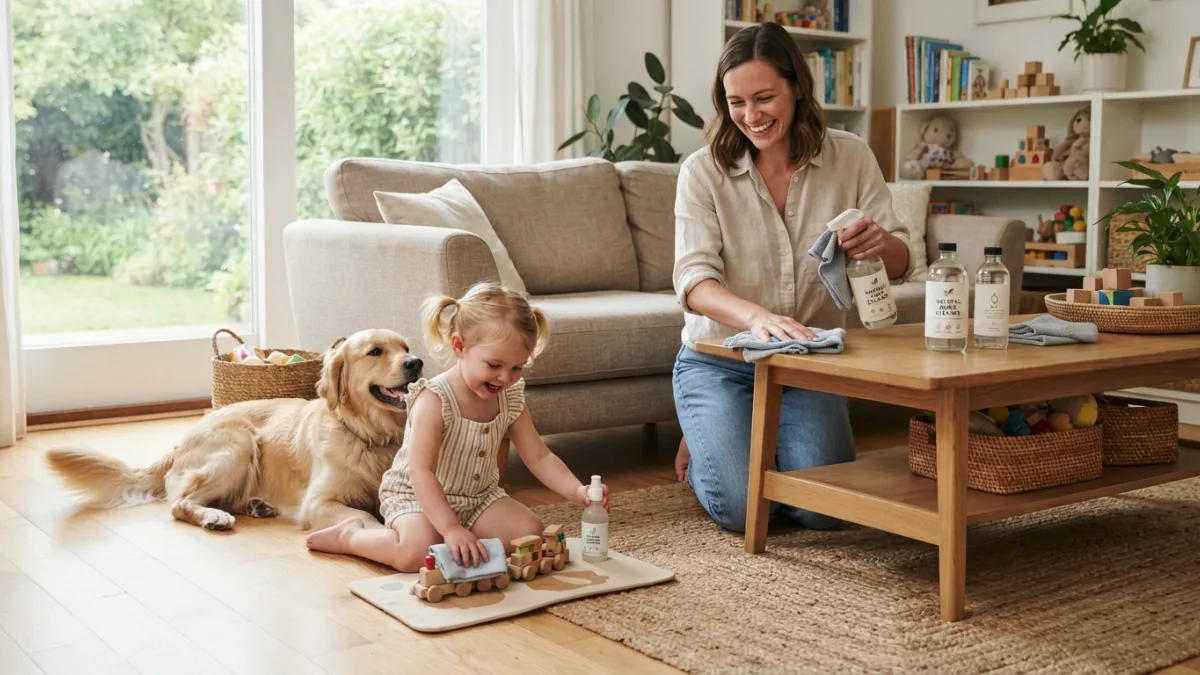
There’s a specific kind of panic that hits when you spot your toddler licking the floor or your dog chewing on a spray bottle cap. Most conventional cleaning products contain chemicals that were never designed with small hands, paws, or curious mouths in mind. That’s why so many parents and pet owners are switching to kid and pet safe cleaning routines that still get the job done without leaving behind residues that worry you every time someone crawls across the living room rug. The good news is that going non-toxic doesn’t mean sacrificing cleanliness. It just means being a little more thoughtful about what you spray, wipe, and let dry on the surfaces your family touches every single day.
Why Standard Cleaners Raise Red Flags
Many popular cleaning sprays and floor polishes list ingredients like ammonia, chlorine bleach, and synthetic fragrances on their labels, and some don’t disclose everything at all. These substances can irritate the lungs, skin, and eyes of children and animals, whose bodies are smaller and more sensitive than an adult’s. Pets in particular spend most of their lives close to the floor, breathing in whatever settles there after mopping or vacuuming. Kids crawl, teethe on furniture legs, and put toys directly in their mouths. Even products marketed as “family friendly” sometimes contain preservatives or fragrance chemicals linked to skin reactions. None of this means you need to panic about every bottle under your sink, but it does explain why so many households are rethinking their cleaning cabinet from the ground up. If you want to dig deeper, our guide on DIY Natural Cleaning Products That Actually Work covers this in more detail.
What “Kid and Pet Safe” Actually Means
The term gets used loosely, so it helps to know what it should actually mean in practice. A truly kid and pet safe product avoids harsh solvents, artificial fragrances, and chemicals that remain active on surfaces after they dry. It should also be free of ingredients that are toxic if licked or swallowed in small amounts, since accidental contact is basically guaranteed in a house with kids or animals. Look for short, recognizable ingredient lists rather than vague terms like “proprietary blend.” Reputable eco-friendly cleaning products often list plant-based surfactants, vinegar, castile soap, or hydrogen peroxide instead of chlorine or ammonia. Certifications from organizations that test for asthma triggers or environmental safety can also give you a quicker way to judge a product without reading a chemistry textbook every time you shop.
Choosing a Non-Toxic Floor Cleaner
Floors take the brunt of daily life in a house with kids and pets, from muddy paw prints to spilled juice, so this is often the first place people upgrade their routine. A good non-toxic floor cleaner should cut through grime without leaving a chemical film that pets later walk through and then lick off their paws. Simple solutions work surprisingly well here.
- Diluted white vinegar with a few drops of castile soap handles most hard floors, including tile and sealed wood.
- Plant-based floor cleaners sold specifically as pet-safe are widely available now and clearly labeled for that purpose.
- Steam mops use only water and heat, making them one of the safest options for homes with crawling babies or dogs that lick the floor.
Whatever you choose, make sure floors are fully dry before letting kids or pets back into the room, since damp residue is often what causes irritation.
Furniture and Upholstery Without the Harsh Fumes
Couches, rugs, and armchairs collect fur, drool, crumbs, and everything else a busy household produces, which makes them a magnet for stains and odors. Unfortunately, many upholstery cleaners rely on strong solvents to break down grease and pet smells, and those solvents can linger in fabric fibers for days. A gentler approach starts with a mix of water, mild dish soap, and baking soda for spot cleaning, followed by a thorough vacuum once the area dries. For a dedicated pet-safe furniture cleaner, look for enzyme-based sprays that break down odor-causing bacteria rather than masking smells with fragrance. These enzymatic cleaners are especially useful for accidents from puppies or toddlers still in training, since they target the actual source of the smell instead of just covering it up temporarily. This connects closely with another common issue — see How to Reduce Plastic in Your Bathroom for more on that.
Keeping Toys Clean Without Toxic Residue
Toys go through more mouth contact than almost anything else in the house, whether it’s a chew toy for the dog or a teething ring for the baby. This makes toy cleaning one of the most important areas to get right. A natural toy disinfectant usually relies on hot water, mild soap, or diluted vinegar rather than bleach-based wipes, which can leave behind residue even after rinsing. Hard plastic toys can typically go through a dishwasher cycle on the top rack, while stuffed animals can be machine washed in hot water with a scent-free detergent. For toys that can’t get fully wet, a solution of water and white vinegar in a spray bottle, wiped down and air dried, handles most everyday germs without introducing new chemicals into a child’s daily routine.
Comparing Common Non-Toxic Cleaning Ingredients
Not every natural ingredient works the same way, and knowing which one suits a particular job saves time and frustration. The table below breaks down some of the most common chemical-free household cleaning staples and where they perform best.
| Ingredient | Best Used For | Things to Keep in Mind |
|---|---|---|
| White vinegar | Floors, glass, general surfaces | Strong smell fades quickly but avoid on natural stone |
| Baking soda | Carpets, upholstery, odor absorption | Works best combined with vacuuming afterward |
| Castile soap | Toys, floors, hand washing surfaces | Needs proper dilution to avoid a sticky residue |
| Hydrogen peroxide | Stain removal, light disinfecting | Test on fabric first since it can lighten some dyes |
| Enzyme cleaners | Pet accidents, odor breakdown | Needs a longer contact time to fully work |
Reading Labels Like a Pro
Marketing language on cleaning bottles can be misleading, since terms like “natural” and “green” aren’t strictly regulated in most places. Instead of trusting the front label, flip the bottle over and check the actual ingredient list. Words like “fragrance” or “parfum” often hide a mix of undisclosed synthetic chemicals, so unscented or naturally scented options are usually the safer bet for a kid and pet safe home. Watch out for warning symbols too, since a product requiring gloves or ventilation for adult use probably isn’t something you want drying on a floor where a baby will crawl an hour later. Building a habit of quickly scanning labels before you buy makes it much easier to stick with a consistent, safer cleaning routine over time instead of accidentally reintroducing harsh chemicals through a new product.
Simple DIY Recipes Worth Trying
You don’t need a cabinet full of specialty products to keep a kid and pet safe home. Many households manage perfectly well with a small rotation of homemade solutions that cost a fraction of store-bought versions. You might also find our article on Sustainable Swaps for Every Room in Your Home helpful here.
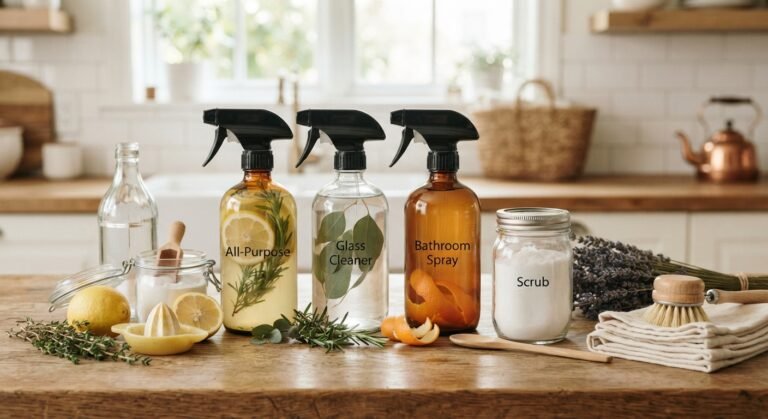
- All-purpose spray: one part white vinegar, one part water, and a few drops of lemon essential oil for smell.
- Wood furniture polish: a mix of olive oil and a small amount of vinegar, applied with a soft cloth.
- Carpet freshener: baking soda sprinkled generously, left for fifteen minutes, then vacuumed thoroughly.
- Glass and mirror cleaner: equal parts water and vinegar with a microfiber cloth for a streak-free finish.
These recipes are flexible, inexpensive, and easy to make in bulk, which means fewer plastic bottles ending up in the trash as an added bonus.
Building a Sustainable Routine
Switching to safer cleaning products works best as a gradual process rather than an overnight overhaul. Start with the areas your kids and pets touch most, like floors and toys, then move on to furniture and less frequently used surfaces. Keep a small stock of multipurpose ingredients like vinegar, baking soda, and castile soap instead of buying a separate product for every task, since this simplifies your routine and reduces clutter under the sink. Store everything in clearly labeled containers, especially if you’re diluting concentrates yourself, so there’s no confusion about what’s inside. Over time, this approach becomes second nature, and you’ll likely find that a chemical-free household cleaning routine isn’t just safer, it’s also simpler and cheaper than juggling a dozen specialized sprays for every possible mess.
Making your home safer for the smallest and furriest members of your family doesn’t require throwing out every product you own today. Small, consistent swaps add up over weeks and months, and each one reduces the amount of unnecessary chemical exposure your kids and pets face during ordinary daily life. Whether you start with a homemade floor spray or simply switch to an enzyme cleaner for pet messes, every change moves you closer to a home that feels genuinely clean rather than just chemically scented. The goal isn’t perfection, it’s progress, and a kid and pet safe household is well within reach for anyone willing to read a few labels and try a few new habits.
Frequently Asked Questions
Is vinegar really safe to use around pets?
Diluted white vinegar is generally considered safe for cleaning floors and surfaces around pets, though the strong smell can be unpleasant for dogs and cats with sensitive noses. Always let vinegar solutions dry fully before letting animals back into the area. For a related walkthrough, check out How to Compost in a Small Apartment.
Can I use bleach at all in a kid and pet safe home?
Bleach can still be used occasionally for specific disinfecting needs, but it should be heavily diluted, used in a well-ventilated area, and rinsed thoroughly afterward. Many households prefer to reserve it for rare deep cleaning rather than everyday use.
What’s the safest way to clean stuffed animals?
Most stuffed toys can be machine washed in hot water with a mild, unscented detergent and air dried completely. For toys that can’t be machine washed, a light spray of diluted vinegar followed by air drying works well as a natural toy disinfectant.
Are essential oils safe to add to cleaning recipes?
Some essential oils can be harmful to pets, especially cats, even in small amounts. If you want to add fragrance to a homemade cleaner, research the specific oil first or skip it entirely if you have pets in the house.
How do I know if a store-bought product is truly non-toxic?
Check the full ingredient list rather than relying on front-label claims like “natural” or “green.” Look for recognizable ingredients, avoid vague terms like “fragrance,” and consider products with third-party safety certifications.