How to Eat Seasonally (and Why It Matters)
Picture two tomatoes. One traveled 2,000 miles in a refrigerated truck, picked green and gassed to turn red before it reached your grocery store. The other grew in soil down the road, ripened under actual sunlight, and landed on your kitchen counter within days of being picked. If you’ve ever tasted the difference, you already understand why seasonal eating has become more than a passing food trend. It’s a return to something our grandparents just did without thinking, and it turns out they were onto something worth remembering.
What Does It Actually Mean to Eat Seasonally?
Eating seasonally means choosing fruits and vegetables at the point in the year when they naturally grow in your region, rather than relying on produce shipped in from the other side of the planet. Strawberries in June instead of January. Squash in October instead of April. It sounds simple, and in many ways it is, but modern grocery stores have trained us to expect every fruit and vegetable, all year round, regardless of climate or growing conditions. That convenience comes with hidden costs, and understanding them is the first step toward shopping and cooking with the seasons in mind.
Why Seasonal Produce Actually Tastes Better
Fruits and vegetables picked at peak ripeness, close to where they’re sold, simply taste better. A tomato left to ripen on the vine develops natural sugars and flavor compounds that never fully form in one picked early for shipping. The same goes for corn, peaches, and berries. When produce travels long distances, it’s often picked before it’s ready and ripened artificially along the way, which sacrifices flavor for shelf life. Farmers markets and local produce sections tend to carry items harvested within a day or two, and that short window between farm and table makes a noticeable difference on your plate.
The Nutritional Case for Seasonal Eating
Nutrient levels in fruits and vegetables start declining the moment they’re harvested, and that decline speeds up during long transport and storage. Produce grown out of season and shipped from distant countries has often spent days or weeks in transit before reaching store shelves, losing vitamins along the way. Seasonal produce, picked at its ripest and sold soon after, tends to retain more of its nutritional value. This doesn’t mean off-season produce is unhealthy, but choosing what’s in season generally gives you a nutritional edge, along with better taste.
The Environmental Impact Worth Considering
Growing food out of season often requires heated greenhouses, artificial lighting, or long-distance transport by plane or truck, all of which increase the carbon footprint of what ends up on your plate. Seasonal, local produce generally travels shorter distances and needs fewer artificial growing conditions, which can meaningfully reduce its environmental impact. Supporting seasonal agriculture also tends to encourage crop rotation and biodiversity, since farmers growing for local, seasonal markets often plant a wider variety of crops throughout the year rather than focusing on a single high-demand item shipped globally.
It’s Easier on Your Wallet, Too
When a fruit or vegetable is in season, it’s abundant, and abundance drives prices down. Farmers don’t need to pay for long-distance shipping, special storage, or off-season growing conditions, and those savings often get passed along to shoppers. That’s why watermelon is cheap in August and expensive in December. Buying seasonally can meaningfully lower your grocery bill, especially if you shop at farmers markets where prices reflect what local farms currently have in surplus rather than what a global supply chain decided to import.
How to Start Eating Seasonally
Learn Your Region’s Growing Calendar
Every region has its own rhythm. Someone in Florida will see different produce cycles than someone in Minnesota or the UK. A quick search for “seasonal produce calendar” plus your state, province, or country will usually turn up a helpful guide. Many agricultural extension offices and local farming organizations publish these calendars for free, and they make a great reference to keep in your kitchen or saved on your phone.
Shop at Farmers Markets
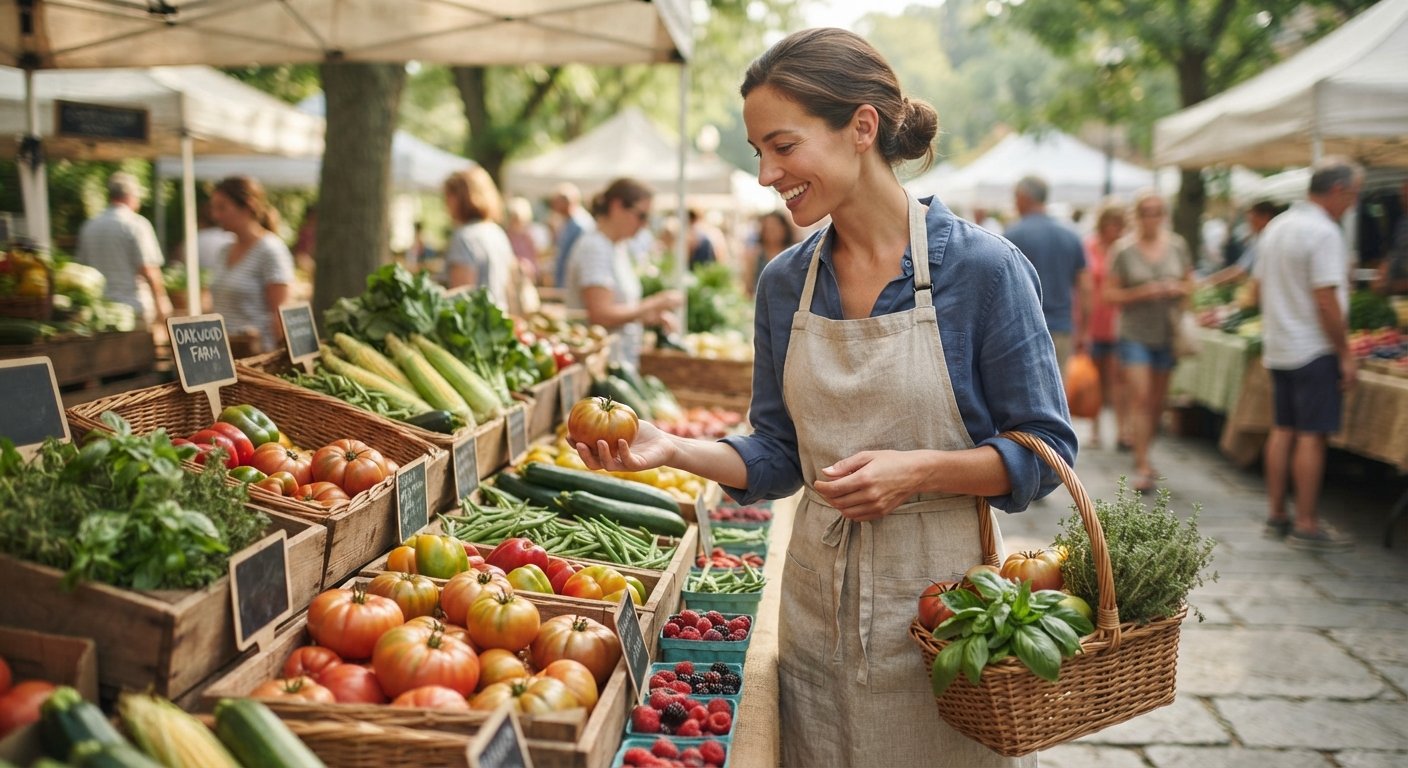
Farmers markets are the easiest way to eat seasonally without much guesswork, since vendors typically sell only what they’ve grown recently. Walking through a market and seeing what’s actually available tells you what’s in season better than any calendar could. Talking to the farmers themselves is also a great way to learn about upcoming produce and how to prepare it.
Join a CSA Program
Community Supported Agriculture, or CSA, programs let you pay a local farm upfront for a regular box of seasonal produce throughout the growing season. This approach not only guarantees seasonal eating, it also introduces you to vegetables you might not normally buy, pushing your cooking in new directions.
Simple Ways to Build Seasonal Meals
Once you know what’s in season, the next step is planning meals around it rather than starting with a recipe and hunting for ingredients that may be out of season. Here are a few practical strategies:
- Plan your weekly menu after visiting the market, not before, so your meals reflect what’s actually fresh.
- Keep a small list of versatile seasonal staples, like leafy greens in spring or root vegetables in winter, that can be swapped into familiar recipes.
- Batch-cook seasonal produce at its peak and freeze portions for later, especially with items like berries, tomatoes, or squash.
- Try one new seasonal vegetable each month to expand your cooking repertoire naturally.
Over time, this shift in mindset becomes second nature, and grocery shopping starts to feel more like following nature’s calendar than sticking to a rigid list.
What Seasonal Eating Looks Like Throughout the Year
While exact timing varies by region, general patterns hold true across most temperate climates. Spring brings tender greens like spinach and asparagus, along with early strawberries. Summer is the season of abundance, with tomatoes, corn, zucchini, peaches, and berries all at their peak. Fall shifts toward heartier produce like apples, pumpkins, and root vegetables as temperatures cool. Winter leans on stored and cold-hardy crops such as citrus fruits, cabbage, and squash that keep well through colder months. Learning these general patterns gives you a mental map to work from, even before checking a detailed regional calendar.
Frequently Asked Questions
Does eating seasonally mean I can never buy out-of-season produce?
Not at all. Seasonal eating is about shifting the majority of your choices toward what’s currently in season, not banning everything else. Occasional out-of-season treats are fine; the goal is building a habit, not following a strict rule.
Is frozen produce still considered seasonal?
Yes, in many cases. Frozen fruits and vegetables are typically picked and frozen at peak ripeness, which locks in nutrients and flavor. Buying frozen seasonal produce during off-months can be a smart, budget-friendly alternative to fresh imports.
How do I find out what’s in season where I live?
Search online for a seasonal produce calendar specific to your state, province, or country, or simply ask vendors at your local farmers market. Local agricultural extension offices often publish free, region-specific guides as well.
Is seasonal eating always cheaper than buying regular groceries?
Generally, yes, since seasonal produce is more abundant and requires less special handling or transport. However, prices can still vary by location and vendor, so it’s worth comparing farmers markets and grocery stores in your area.
Can eating seasonally really make a difference for the environment?
It can help, especially when combined with buying local. Reducing reliance on heated greenhouses and long-distance shipping lowers the carbon footprint associated with food production, though the overall impact depends on how and where your food is grown and transported.