Fridge Organization: 7 Easy Zones to Cut Food Waste
Open almost any refrigerator in America and you’ll find the same scene: a wilting bag of spinach hiding behind last week’s takeout, a mystery jar pushed to the back, and milk that expired without anyone noticing. Smart fridge organization fixes this chaos, and it does more than make your kitchen look tidy. It actually helps you eat the food you already bought before it spoils, which saves money and cuts down on the astonishing amount of food that ends up in landfills every year. The good news is that you don’t need fancy containers or a total kitchen renovation. You just need to understand how your fridge works and set up a few simple zones.
Why Fridge Zones Matter for Reducing Food Waste
Your refrigerator isn’t one uniform cold box. Temperature actually varies quite a bit from the top shelf to the bottom drawer, and from the back wall to the door. Cold air sinks, so the bottom of the fridge stays coldest, while the door swings open constantly and stays warmest. Setting up fridge zones based on these temperature differences means each food sits where it will last longest, instead of getting buried in the wrong spot and forgotten. According to the USDA’s guidance on refrigeration and food safety, keeping your fridge at or below 40°F and organizing items by temperature sensitivity is one of the simplest ways to extend freshness and prevent spoilage-related waste. If you want to dig deeper, our guide on Reusable Jar System: 7 Easy Steps for Bulk Food Storage covers this in more detail.
1. Top Shelf: The Ready-to-Eat Zone
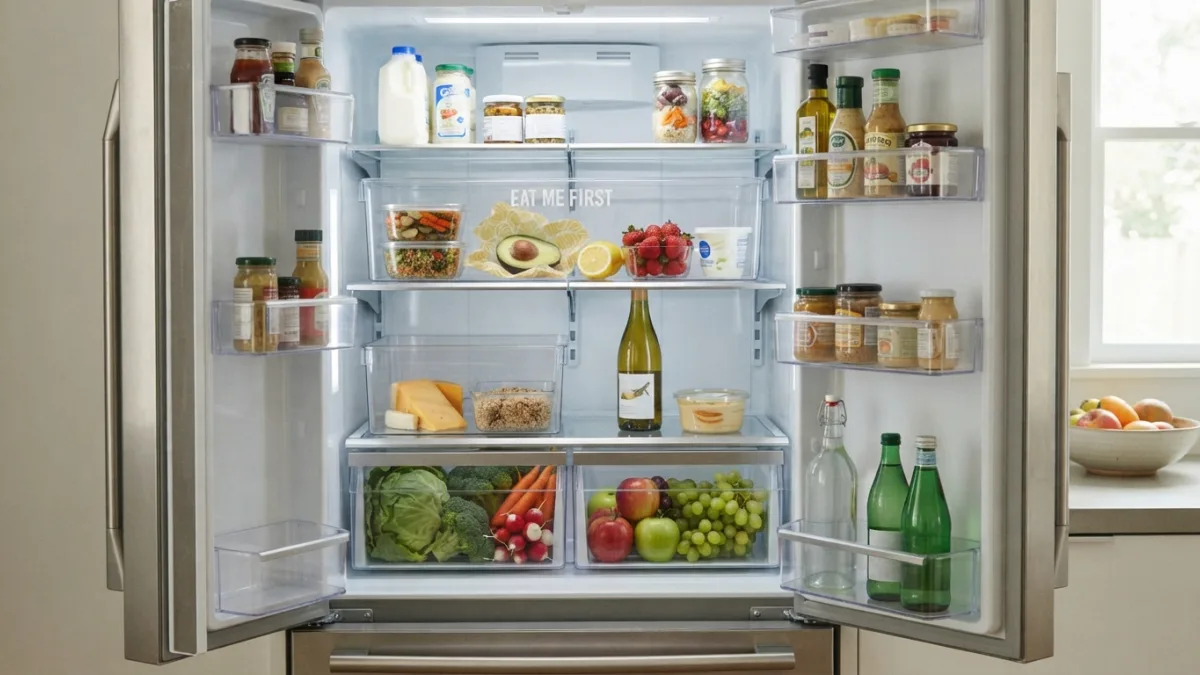
The top shelf sits at a fairly stable, moderate temperature, which makes it perfect for foods that don’t need cooking before you eat them. Think leftovers, deli meats, yogurt, and drinks. Because this shelf is at eye level, it’s also the easiest place to spot food before it goes bad. Store your lunch leftovers and snacks here so they’re the first thing you see when you open the door. This small habit alone can dramatically reduce food waste, since studies on household behavior consistently show that visibility is one of the biggest factors in whether food gets eaten or forgotten. If you can see it, you’re far more likely to grab it before it turns into science experiment material at the back of the fridge.
2. Middle Shelf: The Dairy and Egg Zone
The middle shelf stays cool and consistent, which makes it the ideal home for dairy products like milk, cheese, butter, and eggs. Skip the temptation to store eggs in the door, even though many fridge doors have a built-in egg tray. Door temperatures fluctuate too much, and eggs last noticeably longer when kept in a steady, cold environment. Keep milk toward the back of this shelf rather than the front, since the back is slightly colder and less exposed to warm air every time the door opens. This zone works well for anything you use daily but that still needs consistent chilling to stay safe and fresh for as long as possible.
3. Bottom Shelf: The Raw Meat and Seafood Zone
The bottom shelf is the coldest part of your fridge, making it the safest spot for raw meat, poultry, and seafood. Storing these items here also protects everything else, because if raw meat juices leak, they drip downward instead of contaminating food below. Always place raw proteins in a sealed container or on a tray to catch any drips. This is one of the most important refrigerator storage tips for food safety, not just food waste, since cross-contamination can make you sick even if the food itself hasn’t spoiled. The FoodSafety.gov resource from the U.S. government offers detailed guidance on safe storage temperatures and handling for raw meat and seafood. This connects closely with another common issue — see How to Read Food Labels for Sustainable, Ethical Choices for more on that.
4. Crisper Drawers: The Fruit and Vegetable Zones
Most refrigerators come with two crisper drawers, and they usually have adjustable humidity settings for a good reason. Vegetables like lettuce, broccoli, and carrots do best in high humidity, which slows moisture loss and keeps them crisp longer. Fruits, on the other hand, release ethylene gas as they ripen, and this gas speeds up spoilage in nearby produce, so they generally do better in a low-humidity drawer. Separating fruits and vegetables into their own crisper drawers, rather than tossing everything into one, can meaningfully extend how long your produce stays fresh. This is one of the easiest changes to make, and it directly targets one of the biggest sources of household food waste: spoiled fruits and vegetables nobody got around to eating.
5. Door Shelves: The Condiment and Drink Zone
The door is the warmest part of the fridge because it’s exposed to room air every single time someone opens it. This makes it a poor choice for anything perishable, but a perfectly good spot for condiments, sauces, juices, and other items that are naturally more shelf-stable thanks to sugar, salt, vinegar, or preservatives. Ketchup, mustard, salad dressings, and jam can all handle the door’s temperature swings without much issue. Save this zone for things you use often and that won’t spoil quickly, keeping your more delicate perishables safely tucked into the colder interior shelves where temperatures stay steadier throughout the day.
6. The “Eat Me First” Bin: Your Priority Zone
This is arguably the single most effective trick for cutting food waste at home. Set aside one small bin, basket, or even just a designated spot on the top shelf, and label it clearly as your “eat me first” bin. Anything nearing its expiration date, half-used produce, or leftovers that need to be finished soon goes straight into this bin. Once a day, glance inside before deciding what to cook or grab for a snack. This simple habit turns “out of sight, out of mind” into “front and center, use it now.” Many people who try this method report cutting their household food waste noticeably within just a few weeks, simply because the reminder is impossible to ignore. You might also find our article on Zero-Waste Baking: What to Do with Extra Dough, Egg Whites, and Kitchen “Scraps” helpful here.
7. The Labeling Zone: Dates, Names, and Reminders
Even with perfect zones, food still gets wasted if nobody remembers what’s inside a container or how long it’s been sitting there. That’s where food labeling comes in. Keep a roll of masking tape and a marker in a kitchen drawer near the fridge, and get in the habit of writing the date on leftovers, opened jars, and homemade meals before you store them. You don’t need anything complicated: just the name of the dish and the date it was made or opened. This tiny habit removes the guesswork of “is this still good?” and prevents the common mistake of tossing out food that’s still perfectly fine simply because nobody could remember how old it was.
Quick Comparison of Fridge Zones and What Belongs Where
| Zone | Temperature | Best For |
|---|---|---|
| Top Shelf | Moderate, stable | Leftovers, drinks, ready-to-eat food |
| Middle Shelf | Cool, consistent | Dairy, eggs, cheese |
| Bottom Shelf | Coldest | Raw meat, poultry, seafood |
| Crisper Drawers | Adjustable humidity | Fruits and vegetables (separated) |
| Door Shelves | Warmest, fluctuating | Condiments, sauces, juices |
| Eat Me First Bin | Wherever it’s most visible | Soon-to-expire or half-used food |
Setting up these seven zones doesn’t take a whole weekend or a shopping trip for new bins, though a few clear containers can help if you want to invest in them later. Start small: rearrange one shelf this week, add a labeled “eat me first” spot, and keep a marker handy for dates. Over time, these habits become automatic, and you’ll likely notice fewer sad, forgotten vegetables and less money quietly disappearing into the trash. The EPA’s food waste reduction resources point out that most wasted food happens at the household level, which actually means each of us has real power to change the pattern, one organized fridge at a time.
Frequently Asked Questions
What is the ideal refrigerator temperature to reduce food waste?
Your fridge should stay at or below 40°F (4°C). Anything warmer speeds up bacterial growth and shortens how long food stays safe and fresh, leading to earlier spoilage and more waste. For a related walkthrough, check out One-Pot Low-Waste Meals: Simple Recipes That Use Up Leftovers.
Do I really need separate crisper drawers for fruits and vegetables?
It helps quite a bit. Fruits release ethylene gas that speeds up ripening and spoilage in nearby vegetables, so keeping them in separate drawers with different humidity settings extends freshness for both.
How does an “eat me first” bin actually reduce waste?
It works by making soon-to-expire food impossible to ignore. Instead of leftovers getting buried and forgotten, they stay visible and top of mind, so you’re far more likely to use them before they spoil.
Is masking tape and a marker really enough for food labeling?
Yes, it’s a simple and effective system. Writing the date on leftovers or opened containers removes the guesswork about freshness and helps you avoid throwing away food that’s still perfectly fine.
Can better fridge organization actually save money?
Absolutely. Households that waste less food buy less to replace it, and organized fridges make it easier to plan meals around what you already have instead of duplicating groceries you forgot you owned.