

Sustainable Dinner Party: 10 Easy Tips for Menu & Cleanup
Great dinner parties used to be judged by the size of the roast and the number of matching plates. Today, the smartest hosts think differently — and a sustainable dinner party is quickly becoming the new standard for anyone who loves feeding friends without feeding the landfill. The good news? Hosting greener does not mean serving sad salads on paper plates. It means cooking with the seasons, buying a little less, using what you already own, and planning for the mess before it happens.
Below are ten practical tips that cover the whole evening, from writing the menu to washing the last fork. None of them require a farm, a compost tumbler, or a big budget. Most of them will actually save you money, and a few will make you a better cook along the way. If you want to dig deeper, our guide on Zero-Waste Baking: What to Do with Extra Dough, Egg Whites, and Kitchen “Scraps” covers this in more detail.
1. Build the Menu Around Seasonal Local Ingredients
Start with what is growing now, not with a recipe you saw in January. Seasonal local ingredients usually travel shorter distances, taste better, and cost less at their peak. Visit a farmers market or check the produce that your grocery store is pushing at the front of the shop — that is often what is abundant. Then write your menu backward from those ingredients. Tomatoes and corn in late summer? Serve a tomato salad and a corn soup. Root vegetables in winter? Roast them hard with olive oil and herbs. The Seasonal Food Guide is a simple way to check what is in season near you. This one habit does more for a sustainable dinner party than almost anything else on your table.
2. Make Plants the Star, Not the Side Dish
You do not have to go fully vegan to host a lower-impact meal. Just flip the plate. Give vegetables, grains, beans, and mushrooms the center of the table, and treat meat, fish, or cheese as an accent rather than the headline. A whole roasted cauliflower with tahini, a deep lentil stew, or handmade pasta with brown butter and sage can feel just as generous as a steak. Guests rarely miss the meat when the flavors are big. If you do serve animal products, buy less of a better product from a producer you can name. Smaller portions of higher-quality ingredients are a core move in zero waste entertaining, because expensive food almost never gets thrown away.
3. Cook the Right Amount (Seriously)
Over-catering is the most common mistake at any dinner party, and it is the main reason food ends up in the bin. A useful rule: plan about one generous main, two sides, one starch, and one dessert for six to eight people. Add a second main only if you have guests with different diets. Ask about allergies and preferences when you send the invitation, not the day before. The U.S. Environmental Protection Agency’s resources on sustainable management of food explain why preventing waste at the source beats dealing with it later. Cooking to an honest headcount is the least glamorous tip here — and probably the most effective one for the planet and your wallet.
4. Shop With a List and Use the Whole Ingredient
Once the menu is set, write a real list and stick to it. Impulse buys are the enemy of any host trying to reduce food waste. Then cook nose-to-tail and root-to-leaf. Carrot tops become pesto. Broccoli stems get shaved into slaw. Herb stems, onion skins, and parmesan rinds go into a stock bag in the freezer. Stale bread turns into croutons or breadcrumbs for a gratin topping. Beet greens sauté like chard. These scraps are usually free, and they often carry more flavor than the part you paid for. Guests notice when a menu feels thoughtful rather than assembled, and using whole ingredients is a quiet way to show that care. This connects closely with another common issue — see One-Pot Low-Waste Meals: Simple Recipes That Use Up Leftovers for more on that.
Easy scrap swaps to try
- Vegetable trimmings → freezer stock bag
- Herb stems → blended into sauces, dressings, or marinades
- Citrus peels → infused oil, candied garnish, or cleaning vinegar
- Day-old bread → panzanella, breadcrumbs, or bread pudding
- Bean cooking liquid → a richer base for soups and stews
5. Skip Plastic Free Tableware Shortcuts — Use What You Own
Here is the twist: the greenest option for a sustainable dinner party is almost never something you buy. It is the mismatched plates already in your cupboard. Disposable items, even the compostable kind, still take energy and materials to make, and most municipal systems cannot actually process them. If you need more place settings, borrow from a neighbor or check a local library of things. When single-use really is unavoidable — a big outdoor party, no dishwasher, no sink — choose genuinely plastic free tableware made of untreated wood, bamboo, or plain paper, and set up a clear bin for it. Mismatched vintage plates, by the way, look better in photos than any matching set.
6. Rethink Drinks and the Bar
Drinks are an easy blind spot. Buy larger bottles instead of many small ones, and serve water in pitchers or reusable glass bottles rather than individual plastic. Local wine, regional beer, or a batched cocktail in a big jug cuts packaging and pours faster, which means you spend more time with your guests. Offer one good non-alcoholic option — a sparkling shrub, iced hibiscus tea, or a citrus soda you mix yourself — so drivers and non-drinkers are not stuck with tap water. Use real glasses. If you are short, mason jars work and nobody complains. Small choices at the bar keep the recycling bin manageable and make the whole evening feel more intentional.
7. Set a Low-Impact Table
You can decorate beautifully without buying a single thing. Use cloth napkins, even if they do not match. Skip plastic wrap and reach for beeswax wraps, lidded containers, or a plate placed over a bowl. For the centerpiece, try branches from the yard, a bowl of seasonal fruit, potted herbs that you keep afterward, or candles in jars you already have. Avoid glitter, confetti, balloons, and single-use themed decorations — they are almost impossible to recycle and last about two hours of joy. Dim lighting hides a multitude of sins, so candles do double duty. Thoughtful, simple table settings are one of the friendliest parts of zero waste entertaining, because they cost nothing and look genuinely elegant.
8. Serve Family-Style to Control Portions
Plated portions decided in the kitchen almost guarantee scraped plates. Family-style serving lets guests take exactly what they want, which cuts waste dramatically and makes the table feel warmer. Put the food in the middle in big bowls and platters, and hold some back in the kitchen for second helpings rather than putting everything out at once — food that never leaves the pot stays perfectly good for tomorrow. Keep serving spoons visible so nobody uses their fork. If you are worried about running out, lead with the most filling dish. This single change to how you serve does more for a sustainable dinner party than most people expect, and it takes no extra effort. You might also find our article on How to Read Food Labels for Sustainable, Ethical Choices helpful here.
9. Send Leftovers Home (And Make It Easy)
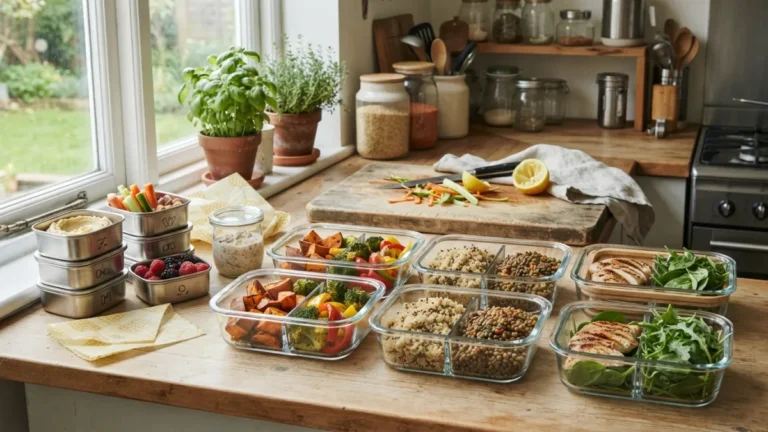
Do not let leftovers die in your fridge. Before guests arrive, stack clean jars and containers in a visible spot near the kitchen. At the end of the night, invite everyone to fill one. Most people are delighted — free lunch is a great party favor. Label anything with common allergens, and be careful with foods that have been sitting out too long. Food-safety guidance generally recommends refrigerating perishables within about two hours of serving, so pack things up before the last round of coffee. Whatever stays with you should be cooled quickly and used within a few days. Plan a “leftovers night” the next evening so the effort of cooking stretches twice as far.
10. Clean Up Smart: Sorting, Washing, and Composting Leftovers
Set up your cleanup before the doorbell rings. Put out three clearly marked containers — recycling, compost, and landfill — so guests sort correctly without asking. Scrape plates into the compost bin rather than the sink, and check your local rules, since many cities now collect food scraps at the curb. Composting at home works too, even in a small apartment with a countertop bin or a worm system. For dishes, a full dishwasher generally uses less water than washing a big load by hand, and skipping the pre-rinse saves more. Use a refillable dish soap and a compostable brush or cloth. Composting leftovers and sorting properly is the last step that ties the whole night together.
The Bottom Line
None of this requires perfection. You will forget the compost bin one night and buy the wrong napkins the next. That is fine. The real goal is a table where the food tastes like the season, the portions match the guest list, and almost nothing ends up in the trash. Pick two or three of these tips for your next gathering, get comfortable with them, and add more later. Hosting well and hosting responsibly turn out to be the same skill: paying attention. Your friends will remember the meal, not the packaging — and a genuinely sustainable dinner party tends to be the one people ask you to host again.
Frequently Asked Questions
How far in advance should I plan a sustainable dinner party?
About a week is ideal. That gives you time to confirm your headcount, ask about dietary needs, visit a farmers market, and check what is already in your pantry and freezer. Last-minute planning almost always leads to over-buying and extra packaging. For a related walkthrough, check out Reusable Jar System: 7 Easy Steps for Bulk Food Storage.
Are compostable plates really better than regular disposables?
Only sometimes. Many compostable products need industrial composting facilities that are not available everywhere, so they end up in landfill anyway. Reusable plates you already own are the better choice. If you must use disposables, pick simple, uncoated materials and confirm your local facility accepts them.
What if my guests eat meat and I want to serve less of it?
Do not announce it as a restriction. Serve a rich, satisfying vegetable-forward main and offer meat as one strong component rather than the centerpiece. Big flavors — roasting, smoking, fermenting, good fat and acid — matter far more than the protein source.
How do I reduce food waste if I always cook too much?
Cook one fewer dish than you think you need, hold back second helpings in the kitchen, serve family-style, and have containers ready so guests can take food home. Freeze anything you will not eat within a few days.
Can I host sustainably in a small apartment without outdoor space?
Absolutely. Use a countertop or under-sink compost bin and drop scraps at a municipal collection point or farmers market. Borrow extra plates from neighbors, buy drinks in large bottles, and lean on cloth napkins you can throw in with your regular laundry.




Great post, Ghani! I really like the point that the greenest option is usually something you already own, like mismatched plates, cloth napkins, and mason jars. Serving family-style and holding back second helpings in the kitchen is a smart way to control portions without making guests feel restricted. Stacking clean jars by the kitchen so guests can take leftovers home is also a lovely touch. The “cook one fewer dish than you think you need” advice is going straight into my next hosting plan. Thanks for keeping it realistic and budget-friendly!