Top Reusable Coffee Filters for Drip Machines, French Press, and Espresso Makers
Every morning, millions of coffee drinkers rip open a paper filter, brew their cup, and toss the filter straight into the trash without a second thought. That small daily habit adds up fast — thousands of filters per household over a lifetime, all ending up in landfills. Switching to reusable coffee filters is one of the simplest changes you can make in your kitchen, and it works whether you brew with a drip machine, a French press, or an espresso maker. Beyond cutting down on waste, many coffee lovers say reusable filters actually improve flavor, since natural oils and fine particles that paper normally traps stay in the cup. This guide walks through the best options for each brewing method, what to look for before buying, and how to keep your filter working well for years.
Why Switch to Reusable Coffee Filters?
Paper filters aren’t expensive individually, but the cost sneaks up on you over months and years, especially if you’re buying specialty unbleached brands. A quality metal or cloth filter typically pays for itself within a few months and then keeps saving you money indefinitely. There’s also the environmental angle — paper filters are usually single-use, and even though many are compostable, plenty end up in the regular trash anyway. Eco-friendly coffee filters made from stainless steel, cloth, or nylon mesh eliminate that waste stream almost entirely. On top of the practical benefits, reusable filters change the character of your brew. Because metal mesh has larger pores than paper, more of the coffee’s natural oils pass through, giving you a fuller-bodied, richer cup. Some people find this stronger flavor takes getting used to, but most switch and never look back. If you want to dig deeper, our guide on Eco-Friendly Laundry Room Setup: Line Drying, Detergent Sheets, and Laundry Stripping covers this in more detail.
Best Reusable Coffee Filters for Drip Machines
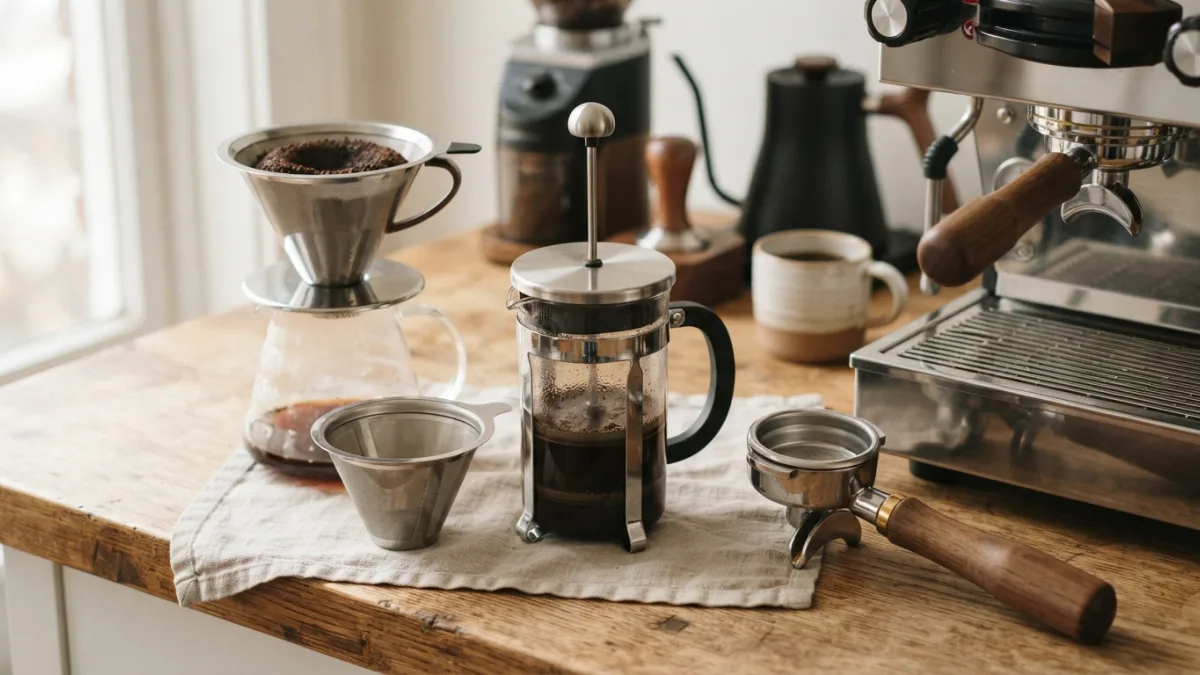
Drip coffee maker filters come in two main shapes: cone-style and basket-style, so the first step is checking which one fits your machine before buying anything. Stainless steel mesh filters are the most popular reusable option for drip brewers because they’re durable, dishwasher-safe in most cases, and hold their shape over years of daily use. Brands like Cuisinart, Keurig-compatible universal filters, and generic stainless steel cone inserts fit most standard machines, including Mr. Coffee, Black+Decker, and Bunn models. Look for a filter with fine double-mesh construction, since single-mesh versions tend to let more grounds slip through into your cup. A sturdy rim or handle also makes it much easier to remove the filter safely when it’s full of hot, wet grounds. If your machine takes a specific filter basket size, measure it before ordering, because a poor fit leads to overflow and messy countertops.
Top Picks for French Press Brewing
French press machines already come with a built-in metal mesh plunger, but that stock filter isn’t always fine enough to stop sediment from ending up in your cup. A reusable French press filter upgrade, usually made of finer stainless steel mesh, dramatically reduces the gritty texture some people dislike about press coffee. Many upgraded filters use a double or even triple mesh screen, trapping more fine particles while still letting through the natural oils that give French press coffee its signature body. These replacement filters are typically inexpensive and easy to install, screwing onto the existing plunger rod in seconds. Some brands also sell reusable filters compatible with French press-style cold brew makers, which is useful if you brew both hot and cold coffee at home. When shopping, check the diameter carefully, since French press sizes vary between 3-cup, 4-cup, and 8-cup models, and a mismatched filter simply won’t seal properly against the glass or steel walls.
Reusable Options for Espresso Makers
Espresso brewing works under high pressure, so espresso maker filters need to be built with tighter tolerances than drip or French press versions. Reusable metal espresso filter baskets are widely available for machines that accept portafilters, including many Breville, De’Longhi, and Gaggia models. These baskets usually come with a fine mesh or precisely drilled holes designed to hold back grounds while still letting pressurized water extract properly. For stovetop moka pots, reusable filter discs made of stainless steel can replace the paper pads some users add for a cleaner cup, though many moka pot users skip filters entirely since the basket itself does the filtering. If you use a pod-style machine like a Nespresso or Keurig, reusable capsules filled with your own ground coffee are a great way to keep using the convenience of a pod system without generating plastic waste. Just be aware that reusable pods often produce a slightly different crema and strength compared to factory-sealed capsules. This connects closely with another common issue — see Sustainable Dishwashing: How to Ditch Sponges and Reduce Waste at the Sink for more on that.
Comparing the Main Filter Types
Choosing between metal, cloth, and mesh filters comes down to your priorities around flavor, cleanup, and how much sediment you’re willing to tolerate in your cup. The table below breaks down the main differences to help you decide which material fits your brewing habits best.
| Filter Type | Best For | Cleanup Effort | Flavor Impact |
|---|---|---|---|
| Stainless Steel Mesh | Drip machines, espresso, French press | Low, often dishwasher-safe | Full-bodied, more oils pass through |
| Cloth (Cotton or Hemp) | Drip machines, pour-over | Moderate, needs rinsing and occasional boiling | Cleaner taste, closer to paper |
| Nylon Mesh | Drip machines, budget option | Low to moderate | Slightly more sediment than steel |
| Reusable Pods | Keurig and Nespresso machines | Moderate, requires refilling each use | Close to original pods, slightly less crema |
What to Look for Before Buying
Not all reusable filters are created equal, so a few features are worth checking before you add one to your cart. First, confirm the mesh density — a double-layer or 300+ mesh count generally traps more fine grounds than a cheaper single-layer design. Second, check the material quality; food-grade 304 stainless steel resists rust and holds up far longer than thinner, lower-grade metal. Third, think about size compatibility, since even filters marketed as “universal” sometimes don’t fit snugly in certain machines. Fourth, consider how easy the filter is to clean, because a design with lots of tight corners or seams can trap old coffee oils and become difficult to scrub. Finally, look at the warranty or return policy, since a filter that seems slightly off after unboxing is much easier to deal with when the seller offers an easy exchange.
How to Clean and Maintain Reusable Filters
Keeping your filter in good shape isn’t complicated, but skipping maintenance leads to stale flavors and clogged mesh over time. Rinse the filter with hot water immediately after each use to knock loose most of the grounds before they dry and stick. Once a week, give it a deeper clean with a soft brush and a small amount of dish soap, paying attention to the mesh weave where oils tend to build up. For stainless steel filters, an occasional soak in a mixture of water and baking soda helps remove stubborn coffee residue and any lingering odors. Cloth filters need slightly different care — boil them for a few minutes every week or two to strip away built-up oils that can turn rancid and affect taste. Whatever material you use, avoid abrasive scrubbers that can damage fine mesh, and always let the filter dry fully before storing it to prevent mold growth. You might also find our article on Kid- and Pet-Safe House Cleaning: Non-Toxic Products for Floors, Furniture, and Toys helpful here.
Common Mistakes to Avoid
Even with a good filter, a few habits can undermine your results. One common mistake is grinding coffee too fine for a mesh filter, which lets excess sediment slip through and makes the cup taste muddy. Another is skipping regular cleaning, which leaves behind old coffee oils that turn rancid and make even fresh grounds taste off. People also sometimes buy a filter based on brand name alone without checking the actual size specs, leading to a poor fit and coffee overflowing the basket. It also helps to remember that reusable filters, especially metal ones, won’t produce a cup that tastes identical to paper-filtered coffee — expecting an exact match sets you up for disappointment. Finally, don’t forget that reusable filters still need eventual replacement; steel mesh can wear thin or bend out of shape after a couple of years of heavy daily use, so check yours periodically for damage.
Frequently Asked Questions
Do reusable coffee filters change the taste of coffee?
Yes, slightly. Because metal and cloth filters let more natural oils through than paper, coffee brewed with reusable coffee filters usually tastes richer and fuller-bodied, sometimes with a bit more sediment at the bottom of the cup.
Are metal coffee filters better than paper ones?
It depends on your priorities. Metal coffee filters are reusable, reduce waste, and preserve more oils and flavor compounds, while paper filters produce a cleaner, lighter cup and are more convenient for people who don’t want extra cleanup. For a related walkthrough, check out How to Reduce Plastic in Your Bathroom.
Can I use a reusable filter in any drip coffee maker?
Most drip machines accept universal cone or basket-style reusable filters, but you should always check the size and shape specifications before buying to avoid a poor fit or overflow issues.
How often should I replace a reusable coffee filter?
Stainless steel filters can last several years with proper care, but you should replace them once you notice bent mesh, rust spots, or a loose fit that lets too many grounds through.
Is a reusable French press filter worth the upgrade?
Yes, especially if you find standard French press coffee too gritty. A finer mesh replacement filter reduces sediment while keeping the rich, full-bodied flavor that French press brewing is known for.