One-Pot Low-Waste Meals: Simple Recipes That Use Up Leftovers
That sad half-bag of spinach wilting in your crisper drawer doesn’t have to end up in the trash. Neither does the leftover rice from Tuesday’s takeout or the two lonely carrots rolling around your fridge. Low waste meals turn these odds and ends into dinner, and the best part is you only need one pot to do it. Instead of planning a shopping list around a recipe, you flip the process: you look at what’s already there and build something delicious around it. This approach saves money, cuts down on the guilt of tossing food, and honestly makes weeknight cooking a lot less stressful. Once you get the hang of it, you’ll start seeing your fridge as a puzzle waiting to be solved rather than a source of dinner-time dread.
Why One-Pot Cooking Is the Perfect Match for Leftovers
One-pot recipes work so well for using up leftovers because they’re forgiving by nature. A soup, stew, or grain bowl doesn’t demand exact measurements or perfectly fresh ingredients. You can toss in that slightly limp celery, the extra chicken from last night, or a spoonful of sauce sitting in the back of the fridge, and it all melts into the final dish without anyone noticing. There’s also the practical side: fewer dishes mean less cleanup, which matters a lot on a Tuesday night when you’re exhausted and just want to eat. Cooking everything together in one pan or pot also lets flavors blend in a way that separate dishes can’t quite match. It’s efficient, it’s low effort, and it happens to be one of the easiest ways to reduce food waste without changing your whole lifestyle. If you want to dig deeper, our guide on How to Read Food Labels for Sustainable, Ethical Choices covers this in more detail.
Building a Low Waste Meal From What’s Already in Your Kitchen
The secret to consistent low waste meals is training yourself to shop your own kitchen before you shop the store. Start by doing a quick scan of your fridge, freezer, and pantry every few days. Look for things nearing the end of their life: wilting greens, half-used cans, stale bread, or rice that’s been sitting for two days. Then think about a base you can build around them, like a broth, a tomato sauce, or simply olive oil and garlic. Most one-pot dishes follow a loose formula of a base, a protein, a starch, and vegetables, which means almost anything can slot into one of those categories. This mental shortcut turns “I don’t know what to make” into “I have exactly what I need,” and it works whether you’re cooking for one person or a whole family.
A Simple Formula to Remember
- Base: broth, canned tomatoes, coconut milk, or a splash of stock
- Protein: leftover meat, beans, eggs, or tofu
- Starch: rice, pasta, potatoes, or bread
- Vegetables: whatever needs using up first
Five Easy One-Pot Recipes That Use Up Leftovers
You don’t need a fancy recipe book to make this work; you just need a handful of flexible templates you can repeat with different ingredients each time. Below are five ideas that consistently turn odds and ends into satisfying dinners. Each one takes less than 45 minutes and uses a single pot, skillet, or sheet pan, so cleanup stays minimal. Think of these less as strict recipes and more as starting points you can adjust based on what’s sitting in your kitchen right now. The goal isn’t perfection, it’s making dinner without adding anything new to the grocery list.
1. Fried Rice From Whatever You’ve Got
Leftover rice is one of the easiest starting points for a low waste meal because it actually cooks better the second day, when it’s had time to dry out slightly. Heat a little oil in a skillet, scramble in an egg, then add the rice along with any small bits of vegetables or meat you have on hand: chopped carrots, peas, green onion, leftover chicken, or even a bit of last night’s stir-fry. A splash of soy sauce and a few minutes of stirring turns it into a full meal in under fifteen minutes. This is one of those leftover recipes that rarely comes out the same way twice, which is part of the fun. You can make it spicy, add sesame oil for depth, or throw in kimchi if you have some. This connects closely with another common issue — see How to Shop Package-Free at the Grocery Store for more on that.
2. One-Pot Vegetable and Bean Stew
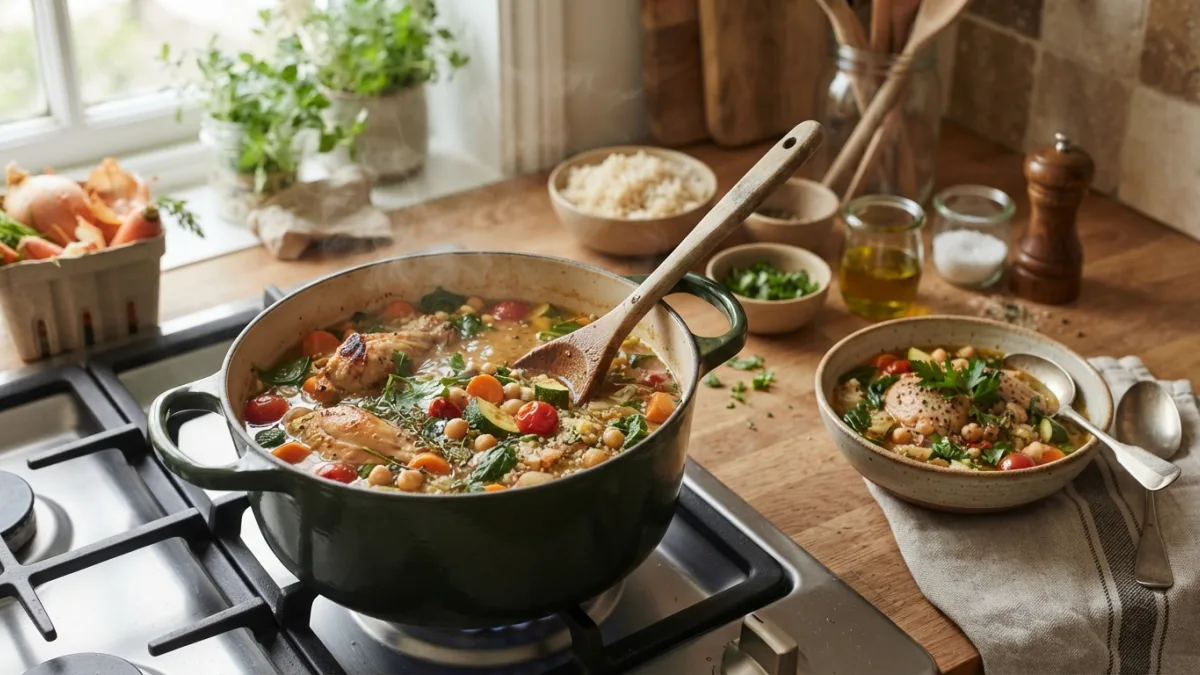
When your vegetable drawer starts looking a little chaotic, a stew is often the answer. Sauté onion and garlic in a big pot, then add whatever vegetables need to go, chopped into similar-sized pieces so they cook evenly. Pour in canned tomatoes or broth, toss in a can of beans for protein and body, and let it simmer for twenty to thirty minutes. Season with whatever herbs and spices you like, whether that’s cumin and paprika for something smoky or thyme and bay leaf for something more classic. This kind of dish is nearly impossible to get wrong, and it freezes well too, so if you end up with extra, you’ve basically made next week’s lunch without any additional effort.
3. Leftover Roast Chicken and Rice Skillet
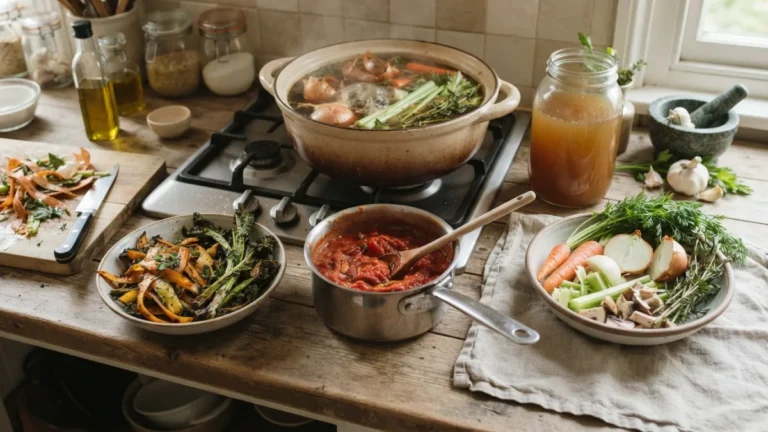
If you roasted a chicken over the weekend, the carcass and scraps don’t have to go straight into the bin. Simmer the bones briefly with water and a few vegetable trimmings to make a quick broth, then use that broth to cook rice in the same pot along with shredded leftover chicken meat. Add in any vegetables that need using, a bit of garlic, and a squeeze of lemon at the end for brightness. This turns what many people consider kitchen scraps into a comforting, almost risotto-like dish. It’s a great example of how one-pot recipes can stretch a single roast chicken into two or three additional meals throughout the week.
4. Pasta With a “Clean Out the Fridge” Sauce
Pasta might be the most flexible base for using up leftovers because almost any sauce works with it. Heat olive oil in a pot, add garlic, then toss in whatever vegetables are close to going bad, along with any leftover sauce, canned tomatoes, or even a spoonful of pesto sitting in the fridge door. Add the pasta directly to the pot with just enough water or broth to cook it through, stirring occasionally so it doesn’t stick. This one-pot method means the pasta absorbs the flavors of the sauce as it cooks, rather than being boiled separately and combined at the end. It’s quick, it’s satisfying, and it rarely requires a trip to the store. You might also find our article on A Beginner's Guide to Reducing Meat Without Going Vegetarian helpful here.
5. Fried or Baked Grain Bowl With Roasted Scraps
Cooked grains like quinoa, farro, or leftover rice make an excellent base for a bowl that uses up small amounts of several different things at once. Roast any vegetable ends or wilting produce on a sheet pan with olive oil and salt until they caramelize slightly, then combine them with the grains in a single pot along with a protein like beans, leftover meat, or a fried egg on top. A simple dressing made from vinegar, oil, and mustard ties everything together. This is one of the easiest weeknight dinners because it doesn’t really require a recipe at all, just a sense of proportion and a willingness to experiment.
Tips for Storing Leftovers So They Actually Get Used
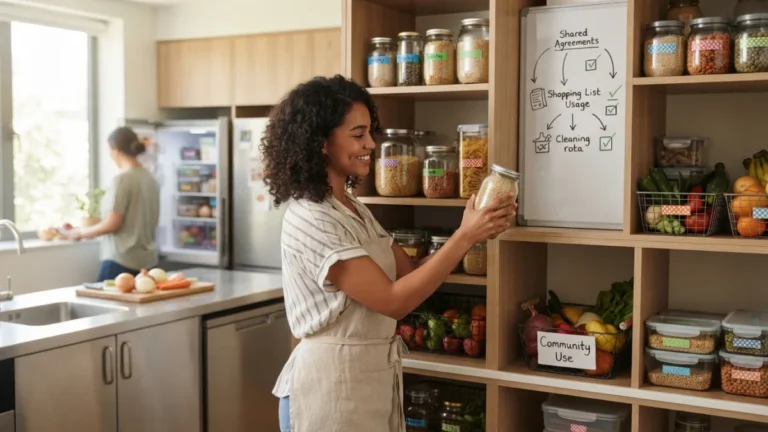
Half the battle with reducing food waste isn’t cooking, it’s remembering what you have before it goes bad. Store leftovers in clear containers rather than opaque ones, so you can see what’s inside without having to open every lid in the fridge. Label containers with the date, especially for things like cooked grains or sauces that all start to look the same after a day or two. Keep a small notepad or phone note listing what needs to be used up soon, and check it before you start cooking. Grouping similar items together, like all your vegetables in one bin and proteins in another, also makes it easier to see what’s available at a glance. These small habits make a noticeable difference in how much food actually gets eaten instead of forgotten.
Common Mistakes That Lead to More Food Waste, Not Less
Even people trying to cook low waste meals sometimes fall into habits that work against them. Buying too much fresh produce at once, without a plan for using it quickly, is one of the biggest culprits. Another common mistake is forgetting about the freezer, which can hold onto bread, cooked grains, and even certain vegetables for weeks longer than the fridge. Overcomplicating meals is another issue: the more complicated a recipe, the less likely people are to actually make it before ingredients spoil. Finally, tossing food based on the printed date rather than how it actually looks and smells often leads to unnecessary waste, since many of these dates indicate peak quality rather than safety. Avoiding these habits makes it much easier to stick with a low waste approach long term. For a related walkthrough, check out How to Eat Seasonally (and Why It Matters).
Making Low Waste Cooking a Regular Habit
The easiest way to keep this going isn’t a strict system, it’s a small shift in how you think about meal planning. Instead of asking “what do I want to eat,” start asking “what do I need to use up,” and let that guide your choices for the week. Keeping a flexible list of one-pot templates, like the ones above, means you always have a starting point even on nights when you’re too tired to think creatively. Over time, this becomes less about avoiding waste and more about genuinely enjoying the challenge of turning small amounts of this and that into something worth eating. It also tends to save a surprising amount of money, since you’re getting full use out of groceries you already paid for instead of letting them quietly expire in the back of the fridge.
Frequently Asked Questions
What counts as a low waste meal?
A low waste meal is simply a dish built around ingredients you already have, especially ones close to spoiling, rather than a recipe that requires a fresh shopping trip. The goal is to use up what’s on hand before it goes to waste.
Can I freeze leftovers from one-pot meals?
Yes, most one-pot dishes like stews, soups, and rice-based meals freeze well for a few months. Just cool them completely before freezing and store them in airtight containers to preserve texture and flavor.
How do I know if leftovers are still safe to eat?
Trust your senses more than the date on the container. If something smells off, looks slimy, or has visible mold, it’s time to toss it, but otherwise most cooked leftovers stay good in the fridge for three to four days.
What’s the easiest one-pot recipe for a beginner?
Fried rice is one of the simplest starting points, since it requires almost no technique and works with nearly any combination of leftover vegetables, protein, and rice. A basic vegetable stew is a close second.
How can I reduce food waste beyond one-pot meals?
Meal planning around what’s already in your kitchen, storing food properly, and freezing extras before they spoil all go a long way. Small habits, repeated consistently, tend to make a bigger difference than any single big change.