How to Build a Capsule Wardrobe (Sustainable Style Guide)
Most of us open a closet stuffed with clothes and still say the same thing every morning: “I have nothing to wear.” That frustrating contradiction is exactly why the capsule wardrobe trend has stuck around for decades and keeps gaining new fans every year. A capsule wardrobe means owning a small, carefully chosen collection of clothes that all work together, so you can create dozens of outfits from a handful of pieces. It is not about deprivation or living with three shirts and a pair of jeans. It is about intention, quality, and cutting through the noise of fast fashion. Building one takes some upfront thought, but the payoff is a closet that actually makes sense, saves money, and reduces your environmental footprint at the same time.
What Exactly Is a Capsule Wardrobe?
The term dates back to the 1970s, when a London boutique owner named Susie Faux used it to describe a small set of timeless pieces that never go out of style, later popularized in the United States by designer Donna Karan. The modern version usually includes somewhere between 25 and 40 items, though there is no strict rulebook. What matters is that every piece fits your lifestyle, flatters your body, and can be mixed and matched with several other items in the collection. Think of it as a personal uniform built from versatile basics rather than trend-driven purchases that get worn twice and forgotten. The goal is to reduce decision fatigue, simplify your mornings, and stop the cycle of impulse buying clothes you never really wear.
Why Sustainability and Capsule Wardrobes Go Hand in Hand
Fast fashion has trained many of us to see clothing as disposable, something to wear a few times before tossing it aside for the next trend. A capsule wardrobe pushes back against that mindset by prioritizing longevity over quantity. When you own fewer pieces, you naturally invest more care into choosing them, which usually means better fabrics, sturdier construction, and brands that treat workers and the planet with more respect. Buying less also means less textile waste ending up in landfills, less water and energy used in manufacturing, and less demand for the cheap synthetic fibers that shed microplastics into waterways. Sustainability is not just about what you buy; it is also about what you choose not to buy, and a capsule wardrobe is one of the simplest ways to practice that restraint.
Step 1: Audit Your Current Closet
Before buying anything new, take everything out of your closet and drawers and lay it all out where you can see it. This step feels tedious, but it is the foundation of a successful capsule wardrobe. Sort your clothes into categories: pieces you wear often and love, pieces you rarely touch, and pieces that no longer fit or suit your life. Be honest with yourself about that middle pile, since most of us hold onto clothes out of guilt rather than genuine affection for them. Try on anything you are unsure about and pay attention to how it makes you feel, not just how it looks in a mirror. This process usually reveals patterns, like a preference for certain colors or a wardrobe full of tops but almost no bottoms that match them.
Questions to Ask During Your Audit
- Have I worn this in the past year?
- Does it fit my current body and lifestyle?
- Can I name at least three other pieces I would pair it with?
- Would I buy this again today if I saw it in a store?
- Is it damaged beyond repair, or could a quick fix bring it back to life?
Step 2: Define Your Personal Style and Lifestyle Needs
A capsule wardrobe only works if it reflects how you actually live, not some idealized version of your life on social media. Someone who works from home in a casual industry needs a very different set of clothes than someone who commutes to a corporate office five days a week. Think about your daily routine, your climate, and the activities that fill most of your week. Consider also the colors and silhouettes that consistently make you feel confident, since those are the ones you will reach for again and again. Many people find it helpful to choose a core color palette, such as neutrals like black, navy, white, and beige, with two or three accent colors that all coordinate with each other. This approach makes mixing and matching almost effortless because nearly everything in your closet already goes together.
Step 3: Choose Versatile, Timeless Pieces
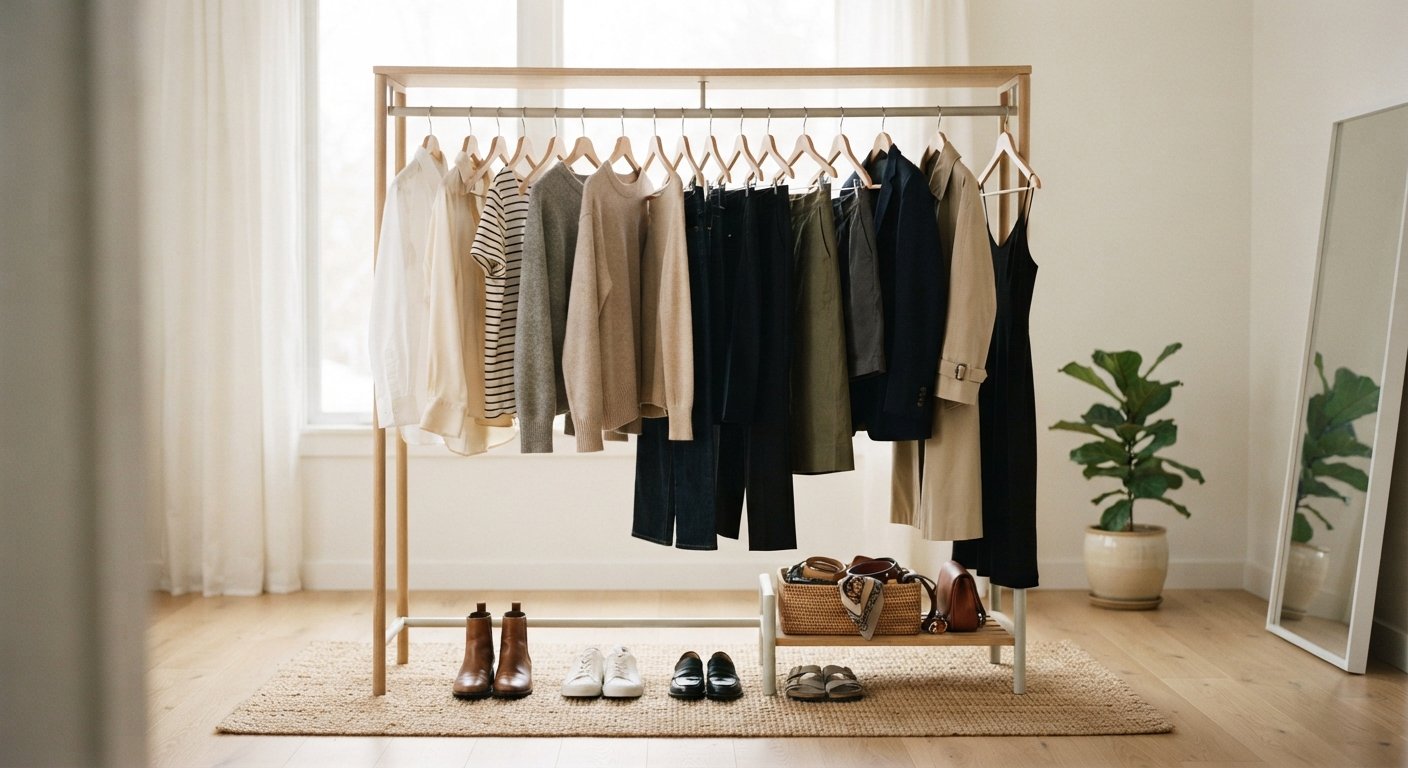
Once you understand your style and needs, focus on building a collection of pieces that work across multiple occasions and seasons. Classic items tend to have the longest lifespan in a capsule wardrobe because they resist the pull of fleeting trends. A well-tailored blazer, a good pair of dark jeans, a crisp white shirt, and comfortable leather shoes can each be styled a dozen different ways depending on what you pair them with. Prioritize fit above almost everything else, since even the highest-quality fabric looks sloppy if the cut is wrong for your body. When shopping, ask yourself whether a piece can transition from day to evening or from work to weekend with a simple accessory swap. If an item only works for one narrow occasion, think carefully before adding it to your capsule.
Core Categories to Include
- Tops: a mix of casual and slightly dressier options in neutral and accent colors
- Bottoms: jeans, trousers, and a skirt or shorts depending on your climate
- Outerwear: one or two jackets or coats suited to your local weather
- Footwear: a few pairs that cover casual, formal, and active needs
- Dresses: one or two versatile options if they suit your lifestyle
- Accessories: a belt, scarf, and jewelry pieces that add variety without clutter
Step 4: Prioritize Quality Over Quantity
It can feel counterintuitive to spend more money on fewer items, but that is exactly the mindset shift a capsule wardrobe requires. A well-made garment crafted from natural or durable fibers, like organic cotton, linen, or wool, tends to last years longer than a cheap synthetic alternative bought on sale. Check seams, buttons, and fabric weight before purchasing, and look for brands that are transparent about where and how their clothes are made. Cost per wear is a useful way to reframe your budget: a $120 coat worn 200 times costs far less per use than a $40 coat that falls apart after ten wears. This approach not only saves money over time but also reduces the constant cycle of replacing worn-out clothing, which is one of the biggest drivers of textile waste worldwide.
Step 5: Shop Secondhand and Support Ethical Brands
Building a sustainable capsule wardrobe does not mean you need to buy everything brand new at full price. Thrift stores, consignment shops, and online resale platforms are full of high-quality, gently used clothing at a fraction of the original cost. Buying secondhand extends the life of garments that already exist, which reduces demand for new production and keeps usable clothes out of landfills. When you do buy new, look for brands that publish information about their supply chains, use certified organic or recycled materials, and pay fair wages to garment workers. Certifications like Fair Trade or GOTS, which stands for Global Organic Textile Standard, can help you spot companies that back up their sustainability claims with independent verification rather than vague marketing language.
Comparing Capsule Wardrobe Shopping Options
Choosing where to shop for your capsule pieces involves trade-offs between cost, sustainability impact, and convenience. The table below breaks down the main options so you can decide what fits your budget and values best.
| Shopping Option | Cost | Sustainability Impact | Best For |
|---|---|---|---|
| Secondhand and Thrift | Low | Very high, no new production required | Budget shoppers, unique finds |
| Ethical New Brands | High | High, transparent and fair sourcing | Investment pieces, long-term wear |
| Fast Fashion | Very low | Low, high waste and labor concerns | Avoid when building a capsule |
| Clothing Swaps | Free | Very high, zero new resources used | Community-minded, social shoppers |
Maintaining Your Capsule Wardrobe Over Time
Building the capsule is only half the work; keeping it sustainable requires ongoing habits. Follow a simple rule when you want to add something new: let one piece go for every new piece that comes in. This keeps your closet from slowly creeping back up to overwhelming levels of clutter. Take care of your clothes properly by following washing instructions, air-drying when possible, and repairing small tears or loose buttons instead of tossing garments at the first sign of wear. Rotate your capsule seasonally, swapping heavier pieces for lighter ones as the weather changes, rather than trying to keep every item accessible year-round. Revisit your collection every few months to check whether your lifestyle has shifted and whether your current pieces still serve you well.
Common Mistakes to Avoid
Many people abandon their capsule wardrobe attempts within the first few months, usually because of a few predictable mistakes. Buying too many neutral basics without enough personality can leave a wardrobe feeling flat and uninspiring, so do not be afraid to include a few statement pieces you genuinely love. Others fall into the trap of building a capsule based on someone else’s aesthetic seen online, only to find the clothes do not suit their actual life or taste. Skipping the closet audit step is another common shortcut that backfires, since it is nearly impossible to know what you need without first understanding what you already have. Finally, treating the capsule as a rigid, permanent rulebook rather than a flexible framework tends to create frustration; the whole point is to make dressing easier, not to add another source of stress.
Frequently Asked Questions
How many items should a capsule wardrobe include?
There is no fixed number, but most people find success with somewhere between 25 and 40 pieces, including tops, bottoms, outerwear, and shoes. The right number depends on your lifestyle, climate, and how often you do laundry.
Do I need to spend a lot of money to build a sustainable capsule wardrobe?
Not necessarily. Secondhand shopping, clothing swaps, and simply wearing what you already own more intentionally can build a sustainable capsule wardrobe on almost any budget. Spending more usually applies only to a few key investment pieces you plan to wear for years.
How long does it take to build a capsule wardrobe?
Most people take a few weeks to a few months, since it involves auditing your current closet, identifying gaps, and gradually replacing or adding pieces rather than buying everything at once. Rushing the process often leads to purchases that do not truly fit your needs.
Can a capsule wardrobe work with kids or a busy family life?
Yes, the same principles apply, though the number of pieces and categories may need to expand slightly to accommodate different activities and faster-changing sizes for children. Focus on durable, easy-care fabrics that can handle frequent washing and wear.
What should I do with the clothes I remove from my closet?
Donate items in good condition to local charities or shelters, sell higher-quality pieces through consignment or resale apps, and recycle anything too worn to reuse through textile recycling programs many cities and retailers now offer.