Green Friends Circle: 7 Easy Ways to Find Your People
Somewhere within a few miles of your front door, there are people already sorting compost, fixing bikes, swapping seedlings, and arguing about recycling rules. You just haven’t met them yet. Building a green friends circle — a small, real-life network of neighbors who care about the planet the way you do — is one of the most practical things you can do for your own motivation, and honestly, for your mood. Climate news can feel heavy when you read it alone at midnight. It feels different when you talk it over with someone who lives on your street. The good news: you don’t need to found an organization or become an activist overnight. You need a few names, a few phone numbers, and a reason to show up.
Here’s the thing most people get wrong. They wait for the perfect group to appear, fully formed, with a friendly website and a meeting time that fits their schedule. That group rarely exists. A green friends circle usually starts messy — two people at a park cleanup, three parents at a school, a handful of strangers in a neighborhood chat. What turns that into something lasting is repetition. You go back. You remember someone’s name. You bring coffee. Sustainability work is social work first and technical work second, because habits spread through relationships, not pamphlets. So treat the search for your people as the project itself, not the warm-up to it. If you want to dig deeper, our guide on Greener Smartphone Use: Digital Declutter, Charging Habits, and Device Lifespan covers this in more detail.
7 Easy Ways to Find Your People
1. Start With Local Environmental Groups That Already Exist
Before you build anything, check what’s already running. Most towns and cities have at least one nonprofit, watershed association, land trust, or conservation chapter quietly doing the work. Search your city’s name plus “conservation,” “watershed,” “climate action,” or “friends of” — that last phrase shows up in the names of hundreds of park and river groups. Your public library is another underrated entry point; librarians often keep lists of community organizations and host free meetings in back rooms. National networks with local chapters, like the Sierra Club, can connect you to an outing or a meeting near you. Joining an existing group gives your green friends circle instant structure, experienced mentors, and a calendar you didn’t have to build.
2. Show Up to a Sustainability Meetup
Casual, low-commitment gatherings are the fastest way to meet people without signing up for a committee. A sustainability meetup might be a zero-waste swap, a plant-based potluck, a repair café, or a talk at a bookstore. Platforms like Meetup list plenty of these by city, and many are free. Go alone if you have to — it forces conversation. Give any group two or three visits before you judge it, because first meetings are always awkward and rarely representative. One tip that works: arrive ten minutes early. The pre-event setup window is when real conversations happen, and it’s where a green friends circle usually takes root.
3. Sign Up for Green Volunteering Events
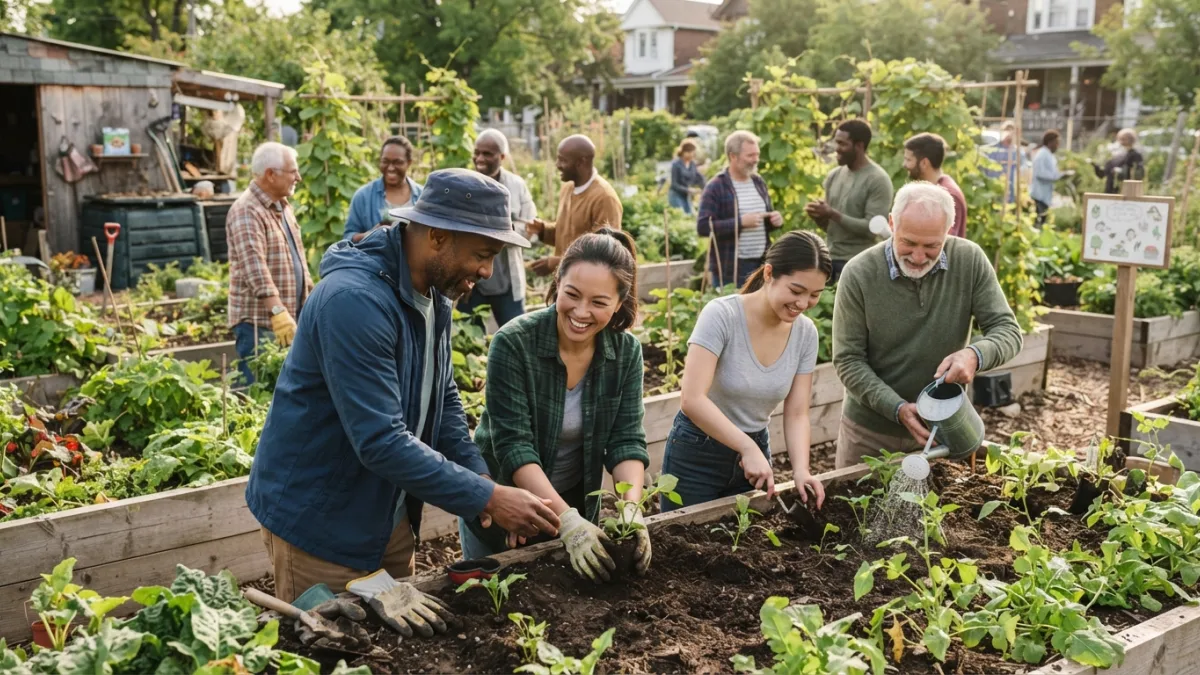
Nothing bonds strangers faster than shared physical work in bad weather. Green volunteering events — river cleanups, tree plantings, invasive species removal, trail maintenance, community garden build days — pair you with people for two or three hours of unhurried talking. Parks departments, municipal sustainability offices, and local land trusts post these on their websites and social pages. Look for recurring events rather than one-offs, since the same faces come back month after month. Bring gloves, bring a snack, and don’t disappear the second the work ends. Most organizers wrap up with coffee or pizza, and that fifteen minutes is worth more for your green friends circle than the previous three hours of digging. This connects closely with another common issue — see Minimalist Packing List: 10 Essential Eco-Travel Items for more on that.
4. Get Your Hands in a Community Garden
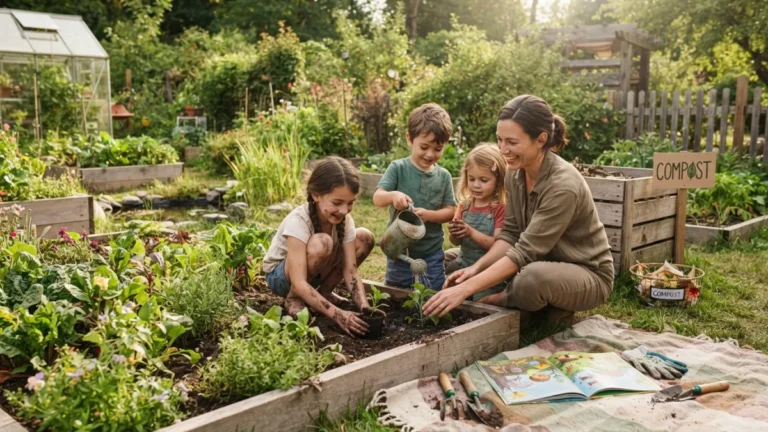
Community gardens are friendship factories disguised as vegetable plots. You share tools, water, advice, and far too many zucchini. Waiting lists can be long in dense cities, so ask about volunteer days even if no plot is free — many gardens welcome extra hands for compost turning or path repair, and that’s a back door into an eco-friendly community that already knows each other. If your town doesn’t have one, school gardens, church grounds, and library lawns are common hosts for new plots. The background on community gardening is a useful primer if you want to understand how these spaces are usually organized before you pitch one.
5. Join Online Eco Groups — Then Move Them Offline
Online eco groups are excellent for finding people and terrible as a final destination. Facebook groups, Reddit city subs, Discord servers, Nextdoor threads, and WhatsApp neighborhood chats all host quiet clusters of people who’d rather be composting. Search terms like “buy nothing,” “zero waste,” “plastic free,” or your city plus “climate.” Then do the part almost nobody does: propose a specific time and place. “Anyone want to meet at the farmers market Saturday at 10?” converts a comment thread into a green friends circle faster than a hundred likes. Keep the online space as the logistics hub — reminders, ride-shares, photo-sharing — and let the friendships live in the physical world.
6. Host Something Small Yourself
If you can’t find your group, become the host. The bar is much lower than you think. A clothing swap in your living room, a repair afternoon where people bring broken lamps, a “bring one plant, take one plant” exchange, a documentary night, a walk to identify neighborhood trees — any of these works. Invite six people and expect three. Set a clear start and end time so guests know what they’re agreeing to. Repeat it monthly on the same date, because predictability is what turns an event into a habit. Hosts underestimate their power: a green friends circle often forms around whoever is simply willing to pick the date. You might also find our article on Sustainable Self Care Rituals: 7 Easy Ways to Relax at Home helpful here.
7. Mine the Groups You’re Already In
Your workplace, school, gym, faith community, or apartment building already contains people with opinions about energy bills and food waste. Start there, because trust already exists. Pitch a small, concrete idea rather than a philosophy — a battery recycling box in the lobby, a bike-to-work challenge, a swap shelf in the break room. Concrete projects attract volunteers; abstract causes attract nods. Government resources such as the EPA’s environmental topics hub can help you back up a proposal with reliable information. Within a month, you’ll know exactly who cares, and those few names become the core of your green friends circle.
Which Route Fits You Best?
| Route | Time Commitment | Best For | How Fast You Meet People |
|---|---|---|---|
| Local environmental groups | Medium to high | People who want structure and mentors | Moderate |
| Sustainability meetup | Low | Newcomers and the commitment-shy | Fast |
| Green volunteering events | Low per event | Hands-on types who hate small talk | Very fast |
| Community garden | Ongoing, seasonal | Anyone wanting long-term neighbors | Slow but deep |
| Online eco groups | Very low | Rural areas, shift workers, parents | Fast online, slow offline |
| Hosting your own event | Medium | Organizers and people in quiet towns | Fast, if you repeat it |
How to Keep a Green Friends Circle Alive
Groups die from silence, not conflict. Protect yours with a few plain rules. Pick one recurring slot — first Sunday, third Thursday — and defend it. Rotate hosting so one person doesn’t burn out. Keep the purpose loose enough that people can join for the company and stay for the cause. Celebrate small wins out loud: the bin that got installed, the 40 pounds of trash pulled from the creek, the neighbor who finally started composting. And resist purity tests. The fastest way to shrink an eco-friendly community is to make newcomers feel judged for their car, their diet, or their plastic bottle. Welcome them first; the habits follow.
Give it six months. That’s roughly how long it takes for a handful of acquaintances to become people you’d text on a Tuesday. In that time you’ll probably plant something, clean something, fix something, and rescue a surprising quantity of furniture from the curb. You’ll also notice the quieter benefit nobody advertises: environmental anxiety weighs less when it’s shared. A green friends circle won’t solve the climate crisis from your kitchen table, and pretending otherwise helps nobody. But it will change your street, your habits, and your week — and that’s a genuinely good place to start. For a related walkthrough, check out How to Make Secondhand Shopping Your First Choice (Without Feeling Deprived).
Frequently Asked Questions
How do I start a green friends circle if my town has nothing?
Start with two people and one repeating event. Pick a simple activity — a monthly litter walk, a seed swap, a documentary night — announce it in a neighborhood chat or on a library noticeboard, and hold it even if only one person shows up. Small towns often have hidden interest that surfaces after the third or fourth time you run the same thing.
Are online eco groups worth joining, or should I stick to in-person events?
Both, with different jobs. Online eco groups are great for finding people, sharing local information, and coordinating logistics. In-person meetings are what create actual friendships. Use the internet to locate your people, then propose a real meeting time and place as soon as you reasonably can.
What if I’m shy or new to environmental topics?
Green volunteering events are ideal for you. Shared physical work removes the pressure of small talk, and nobody quizzes you on your knowledge while you’re pulling weeds. You’ll learn more in three cleanup mornings than in a month of reading, and no one expects a beginner to have all the answers.
How much time does joining a sustainability meetup really take?
Most casual meetups run one to three hours and happen monthly. That’s a manageable commitment for almost anyone. Deeper involvement — committees, board roles, campaign work — is always optional, and good organizers won’t pressure you into it.
How can I tell if a group is a good fit before committing?
Attend two or three times before deciding. Watch how the group treats newcomers, whether meetings end with clear next steps, and whether the same few people do all the work. A healthy green friends circle shares tasks, welcomes questions, and makes it easy to contribute at whatever level suits your life right now.