Community Swap Group: 7 Simple Tips for Amazing Neighbors
Looking at that stack of kids’ books your children have outgrown, or the kitchen gadget you used once, you might wonder if someone nearby could actually use them. Starting a community swap group is one of the simplest ways to turn those unused things into something useful for your neighbors while finding what you need without spending money. Instead of throwing items away or letting them collect dust, you create a small local network where people share, trade, and reuse. It saves money, reduces waste, and helps you meet the people who live just a few doors down. You do not need a big budget or special skills to get started, just a clear idea and a willingness to connect. This guide walks you through practical steps that work for apartments, suburbs, and small towns alike.
When neighbors share directly, everyone benefits in ways that go beyond free stuff. Families save money by finding clothes, toys, and household tools without buying new. At the same time, reusing items keeps usable goods out of the landfill and cuts down on the demand for new production. The U.S. Environmental Protection Agency highlights how reducing and reusing materials is a key part of sustainable living. A local swap also builds real relationships. You learn who has a spare ladder, who loves gardening, and who can fix a bike. That kind of neighborhood sharing creates trust, so people feel more comfortable asking for help and offering it in return. Over time, these small exchanges turn a street of strangers into a supportive network you can count on. If you want to dig deeper, our guide on Zero-Waste Morning Routine: 12 Everyday Swaps Before 9 a.m. covers this in more detail.
7 Simple Tips to Build a Community Swap Group That Lasts
1. Define Your Purpose and Scope
Before you invite anyone, decide what kind of community swap group you want to run. Some groups focus only on children’s items, while others welcome anything from furniture to kitchenware to books. A clear focus helps people know what to post and keeps the feed useful. Think about your neighborhood itself. An apartment building might do well with a small, hallway-based shelf for daily swaps, while a larger suburb might need an online group that covers several streets. Decide if you want to allow only free gifting, or if trading and swapping are also okay. Writing down this purpose in one or two sentences makes it easy to explain to new members and keeps the group from getting confusing later. That short description will become the welcome message everyone sees first.
2. Choose One Simple Platform to Start
Next, pick a simple place for your community swap group to live online. Most neighborhoods already use a platform everyone checks, so build there instead of asking people to download something new. A private Facebook Group works well for posting photos and searching past offers, while WhatsApp or Telegram is better for quick, chatty exchanges. Nextdoor is useful if you want to reach nearby streets you do not know yet. Keep it to one main platform at first. You can always add a second later if needed. Create a clear group name that includes your street or building, set the privacy to private or invite-only, and write a short description with your purpose. Add a cover photo of your neighborhood so it feels local and friendly from the first click.
3. Set Clear and Friendly Swap Group Rules
Clear expectations keep swapping fair and prevent misunderstandings, so set a few basic swap group rules early and keep the tone friendly. People want to know how to claim an item, how long to wait for pickup, and what condition items should be in. Your rules do not need to be long or strict, just clear enough that everyone feels safe participating. Post them in a pinned post or the group description where new members will see them. When rules are visible and fair, members are more likely to respect each other’s time and show up for pickups. A well-run community swap group also handles small problems quickly, so people trust that the group is cared for. That trust is what turns a new group into a lasting habit for the whole street. This connects closely with another common issue — see Zero-Waste Swaps for Beginners: Where to Start for more on that.
- First come, first served or lottery: Decide how people claim items and be consistent.
- Clean and working only: Ask members to offer items that are clean, safe, and functional.
- Pickup window: Set a clear time, like 24 to 48 hours, for collection.
- No reselling: Keep items in the neighborhood sharing circle, not on resale sites.
- Be kind and responsive: Encourage quick replies and thank-you notes.
4. Host Easy, Low-Pressure Trading Events
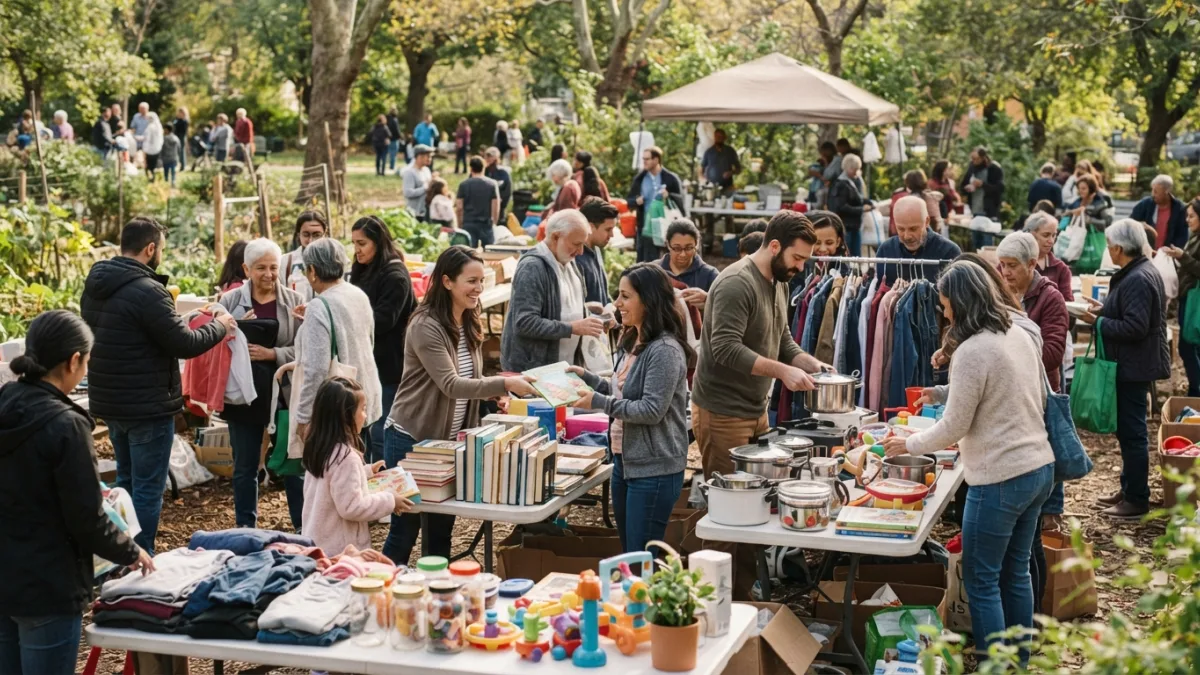
Online posts are great, but in-person trading events make the connection real and a lot more fun. Start with a simple, low-pressure meetup, like a Saturday morning swap in a lobby, garage, driveway, or local park. Ask each person to bring one to three clean, usable items and set them on tables by category: kids, kitchen, books, tools. Give people time to browse, chat, and then take what they need. You do not need to track exact value, just let people give and take freely. Bring a few bags, name tags, and a sign-in sheet for new contacts. If someone has leftovers, have a plan to donate them locally so nothing goes to waste. These face-to-face gatherings build the barter community spirit faster than any online thread.
5. Make Reusing Items Simple and Fair
People will use the community swap group more often if reusing items feels easy and fair for everyone. Encourage clear photos, honest descriptions, and quick updates when an item is taken or still available. Suggest that members wipe down or wash items before offering them, and mention any flaws so there are no surprises at pickup. For larger items like shelves or strollers, ask the giver to post dimensions and pickup details upfront. You can also create themed days to keep things organized, such as ‘Kids’ Clothes Monday’ or ‘Small Appliances Friday.’ This kind of structure prevents the feed from getting messy. Learn more about the impact of reuse and waste reduction from reuse resources on Wikipedia to share with curious neighbors. A little effort on presentation makes every swap feel respectful and worth joining again.
6. Keep Your Barter Community Active and Welcoming
Even the best idea fades if the chat goes quiet, so plan small ways to keep your barter community warm and active. Welcome every new member with a short hello and a quick guide on how to post. Thank people publicly when they give something away, and invite them to share a photo of how they reused an item. Post a weekly prompt, like ‘What are you looking for this week?’ or ‘Free shelf on Maple Street, who needs it?’ to spark conversation. If the community swap group is online, try not to let posts sit unanswered for days. A simple comment keeps momentum going. You can also rotate volunteer helpers who approve posts and greet newcomers, so the work does not fall on one person alone. Shared ownership keeps the energy friendly and sustainable. You might also find our article on Beginner-Friendly Trash Audit: How to Map Your Household Waste in 7 Days helpful here.
7. Grow Slowly and Handle Problems with Care
Growth feels exciting, but a healthy community swap group grows slowly and steadily. Invite new members through personal word of mouth first, then expand to nearby blocks once your core group is comfortable. This keeps trust high and prevents the feed from getting overwhelmed with too many posts. You will eventually face small challenges, like no-shows for pickup or items that are not as described. Address them calmly and privately at first, then remind everyone of the agreed rules. If someone repeatedly ignores the guidelines, it is okay to have a kind but firm conversation or remove them. Keep a simple record of what works, so future organizers can learn. Celebrate milestones, like your 50th swap, to remind everyone why the effort matters. Slow, thoughtful growth protects the friendly culture you worked hard to build.
Bringing It All Together
When your group finds its rhythm, you will notice benefits that go far beyond free items. Neighbors start to chat more on the sidewalk, kids get to pass toys to younger friends, and fewer usable things end up in the trash. You might even discover hidden skills, like someone who can mend clothes or fix electronics, and that knowledge stays in the neighborhood. The best part is how natural it feels once the habit is set. People post without overthinking, pickups happen smoothly, and gratitude becomes part of daily life. A community swap group does not need to be perfect to be valuable. It just needs to be consistent, kind, and open to learning as you go. Those small, steady exchanges create a stronger, more resourceful place for everyone to live.
Ready to start? Pick one small action today and build from there. Create the online space, write your short purpose statement, and invite three to five neighbors you already know. Post the first item yourself to show how it works, even if it is just a set of mugs or a puzzle. Set a date for your first casual trading events, whether online or in person, and keep it simple. As you practice neighborhood sharing and reusing items together, the group will shape itself around what people actually need. Your community swap group can become a steady, friendly resource that saves money, reduces waste, and brings people closer, one thoughtful swap at a time. Start small, stay consistent, and watch how quickly generosity spreads across your block. For a related walkthrough, check out How to Build a Zero-Waste Kitchen.
Frequently Asked Questions
What can I offer in a community swap group?
You can offer most clean, safe, and working household items such as clothes, books, toys, kitchen tools, small furniture, and plants. Avoid anything broken, recalled, or unsafe. When in doubt, ask an admin if the item fits the group’s purpose.
How do I keep swaps safe and fair?
Use clear photos and honest descriptions, set a pickup window of 24 to 48 hours, and meet in a public or semi-public spot like a lobby or porch. Following your swap group rules and communicating quickly helps everyone feel respected and safe.
Do I have to trade something of equal value?
No. Most community swap groups work on a give-and-take basis, not strict value matching. You can give what you no longer need and take what you will use. The goal is reusing items and helping neighbors, not making an exact trade.
How often should we hold trading events?
Start with one event every month or two so it stays special and manageable. If interest is high, you can add smaller online themed days each week. A regular but not too frequent schedule keeps the barter community active without causing burnout.
What if someone does not pick up an item?
Send a friendly reminder, then offer the item to the next person in line after your stated pickup window passes. A quick update in the comments keeps things clear. Consistent no-shows can be addressed privately using your group’s guidelines.