
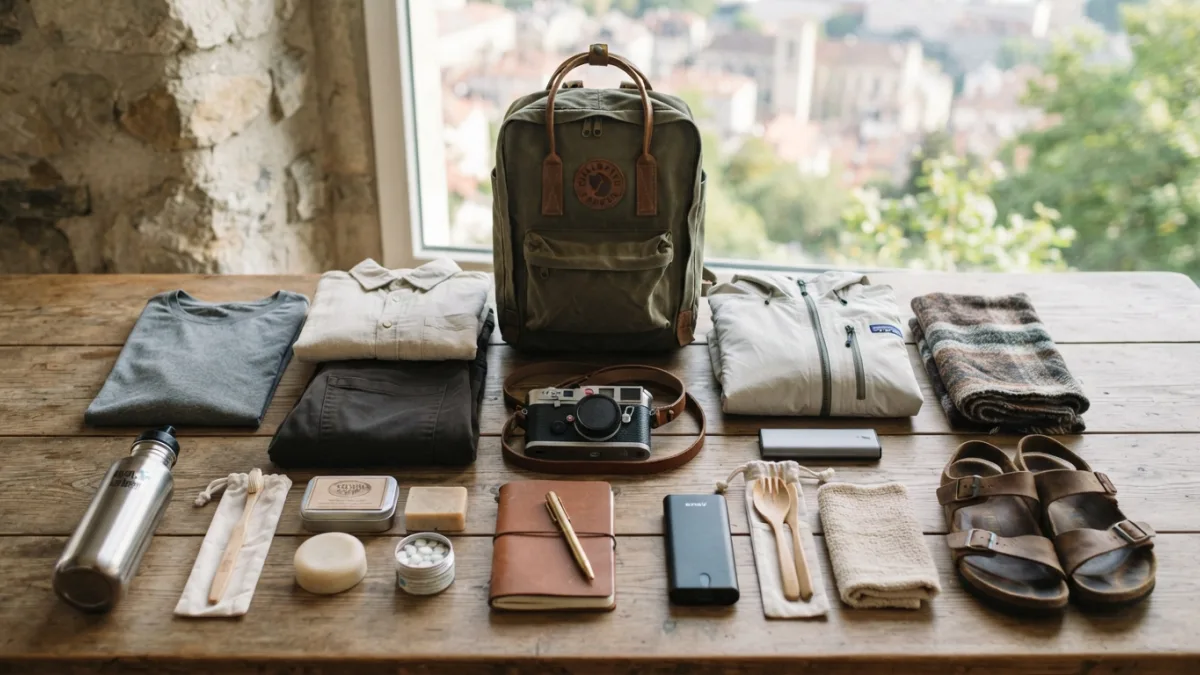
Minimalist Packing List: 10 Essential Eco-Travel Items
The heaviest thing in most suitcases isn’t the shoes or the shampoo — it’s the anxiety of “what if I need it?” That single question turns a light bag into a 23-kilo problem, and it’s exactly why a smart minimalist packing list is the most useful travel tool you’ll ever build. Pack less, and you move faster, spend less on baggage fees, and leave a smaller trail behind you. Pack thoughtfully, and you also stop buying the disposable plastic junk that airports and beach towns sell to unprepared tourists. The good news: the same core kit works in Reykjavík in February and Bangkok in July. Only a few items change.
Why a Minimalist Packing List Works in Every Season
Seasons don’t require completely different luggage — they require different layers. Once you accept that, a single minimalist packing list can cover a ski town, a rainforest, and a city break with only a handful of swaps. The trick is choosing multipurpose pieces made from durable materials, then trusting laundry instead of quantity. Travelers who wash a few items in a sink every three days can live comfortably out of a 35- to 45-litre bag for a month. There’s an environmental benefit too. Lighter aircraft and vehicles burn less fuel, fewer purchases mean less production waste, and gear you keep for a decade beats gear you replace every season. If you want to dig deeper, our guide on How to Build a Capsule Wardrobe (Sustainable Style Guide) covers this in more detail.
The 10 Essentials on Your Minimalist Packing List
These ten eco-friendly travel essentials form the backbone of the kit. Everything else is optional, seasonal, or destination-specific. Start with the bag itself: one carry-on backpack or soft-sided roller with a lifetime repair policy, ideally made from recycled fabric. Then add the items below.
1. A Refillable Water Bottle (Ideally Filtered)
Nothing on the list saves more plastic. A sturdy stainless-steel or BPA-free bottle replaces dozens of single-use bottles on a two-week trip, and a built-in filter lets you drink from taps you’d otherwise avoid. Collapsible silicone bottles work well if space is tight. Empty it before security, refill it after, and check local guidance before drinking tap water — the CDC’s travel health pages list destination-specific advice on water and food safety. One bottle, used daily, is the clearest example of how reusable travel items pay for themselves within a couple of trips.
2. A Capsule Travel Wardrobe in Natural Fibers
Clothing is where most packing lists collapse. Build a capsule wardrobe instead: roughly three tops, two bottoms, one dress or smart shirt, and underwear for four days. Choose a single colour palette so everything matches everything. Merino wool and organic cotton breathe, resist odour, and dry fast, which means fewer items and fewer washes. A capsule travel wardrobe sounds restrictive until you realise you already wear the same favourites on repeat at home. Any solid minimalist packing list treats clothes as a system, not a collection.
3. Solid Toiletries and a Refillable Tin
Shampoo bars, conditioner bars, toothpaste tablets, and solid deodorant remove almost all plastic from your wash bag — and they don’t count as liquids at security. That matters when you’re flying carry-on only and juggling the liquids rule. Store bars in small metal tins or cotton pouches so they dry between uses. Add a bamboo toothbrush and a compact microfibre-free face cloth, and your entire toiletry kit fits in a pouch the size of a paperback. Buy refills locally when you run out rather than carrying three months’ worth.
4. One Packable Insulated Layer
A lightweight down or recycled-synthetic jacket that compresses to the size of a melon is the single most season-flexible item you can own. It’s a pillow on night buses, a warm layer at altitude, and a jacket in cold cities. Look for responsibly certified down or recycled insulation, and check that the brand offers repairs. This is where spending more genuinely makes sense: sustainable travel gear should survive a hundred trips, not ten. This connects closely with another common issue — see Sustainable Self Care Rituals: 7 Easy Ways to Relax at Home for more on that.
5. A Waterproof Shell
Rain arrives in every season, so a light hooded shell earns its place all year. Worn over the insulated layer, it handles genuine cold; worn alone, it handles spring drizzle and tropical downpours. Choose a jacket with taped seams and, ideally, a PFAS-free water-repellent finish, which a growing number of outdoor brands now use. A compact rain shell also removes the temptation to buy a flimsy plastic poncho at a tourist kiosk — the kind that tears once and heads straight to landfill.
6. A Reusable Tote or Stuff Sack
Fold-flat totes weigh almost nothing and replace every plastic bag you’d otherwise accept at markets, bakeries, and pharmacies. Pick one that scrunches into its own pocket and clips to a strap. A second lightweight stuff sack doubles as a laundry bag, a day bag for the beach, and a way to keep dirty shoes away from clean shirts. Cheap, tiny, endlessly useful — a keeper on any minimalist packing list.
7. A Travel Cutlery Set and Collapsible Cup
Street food, train snacks, and takeaway coffee generate a surprising amount of single-use waste. A bamboo or stainless spork, a small reusable straw if you use one, and a collapsible silicone cup cover nearly every situation. Some cafés in Europe and Asia even offer a small discount when you bring your own cup. Keep the set in a cloth pouch in an outside pocket so you actually reach for it instead of accepting the plastic fork by default.
8. A Quick-Dry Travel Towel
Hostels charge for towels, beaches don’t provide them, and hotel towels get washed daily whether you need it or not. One compact quick-dry towel handles showers, swims, and picnics, then dries in an hour on a balcony rail. Organic cotton waffle weave and linen versions dry nearly as fast as synthetics without shedding microplastics in the wash. Hang it up rather than stuffing it damp into your bag, and reuse hotel towels for a couple of days while you’re at it.
9. Mineral Sunscreen and a Solid Lip Balm
Sun exposure isn’t a summer-only issue — snow, altitude, and winter sun all burn. A mineral sunscreen using zinc oxide protects skin and is the safer choice around coral reefs, which is why several destinations have restricted certain chemical filters. Decant into a small refillable tin or tube rather than buying travel-size bottles you’ll throw away. Add a plastic-free lip balm, and you’ve covered most weather. This category is a reminder that eco-friendly travel essentials should protect you first and the environment second — a burn ruins a trip fast. You might also find our article on Sustainable Living on a Budget: Where to Start helpful here.
10. A Compact Repair, First-Aid and Tech Kit
One small pouch handles the boring emergencies: plasters, blister care, any personal medication, rehydration salts, a needle and thread, safety pins, and a couple of strips of repair tape. Add a universal adapter, one multi-head charging cable, and a modest power bank so you’re not buying replacements abroad. Repairing a torn strap with tape costs nothing and keeps a bag in service for years, which is far greener than replacing it. Skip the separate chargers — a single cable that fits your phone, headphones, and camera saves real space.
Adapting the Minimalist Packing List by Season
The core ten stay the same all year. What changes is a small set of swaps, and they’re lighter than most people expect. The table below shows how one bag stretches across four very different climates without adding much weight or bulk.
| Season / Climate | Add to the core kit | Leave at home |
|---|---|---|
| Hot & humid | Linen shirt, sun hat, sandals, electrolyte tablets | Insulated jacket, wool base layer |
| Cold & snowy | Merino base layer, wool hat, gloves, thicker socks | Sandals, swimwear |
| Spring / autumn | Light scarf, one extra long-sleeve layer | Heavy knitwear, bulky boots |
| Mixed multi-climate trip | Compressible base layer set, packable sun hat | Anything worn only once |
How to Pack Carry-On Only Without Feeling Deprived
Committing to carry-on only packing changes how you travel. No baggage waits, no lost luggage, no checked-bag fees, and far less temptation to over-buy. A few habits make it painless:
- Lay everything out, then remove a third. You will not miss it.
- Wear your bulkiest items — boots and the insulated jacket — on travel days.
- Roll soft clothes, fold structured ones, and use one or two packing cubes, not five.
- Count outfits, not garments. Three tops and two bottoms make six combinations.
- Do laundry mid-trip. A tube of concentrated soap and a sink beat an extra five shirts.
- Digitise documents and keep one printed backup of essentials.
Common Mistakes That Ruin a Good List
The biggest error is buying an entirely new kit to be “sustainable.” The greenest gear is usually the gear already in your cupboard — a working jacket beats a newly manufactured one, whatever the label claims. The second mistake is packing for the version of yourself who exercises daily, dresses up nightly, and reads three novels. Pack for your actual habits. Third, don’t ignore local rules and etiquette: some sites require covered shoulders, some trails require proper footwear, and principles like those promoted by Leave No Trace apply in cities as much as in national parks. A good minimalist packing list respects the place you’re visiting, not just your shoulders.
Start Small, Refine Every Trip
Your first attempt won’t be perfect, and that’s fine. Keep a note on your phone during the trip: mark what you used daily, what you used once, and what never left the bag. After three trips, the list practically writes itself. Most travelers find they converge on a similar core — a bottle, a capsule wardrobe, solid toiletries, two good layers, and a few reusable travel items — regardless of where they’re heading. That’s the quiet power of packing light. You spend less time managing possessions and more time actually somewhere, which was the point of leaving home in the first place. For a related walkthrough, check out 10 Sustainable Habits That Take Less Than 5 Minutes.
Frequently Asked Questions
How many clothes should a minimalist packing list include?
For most trips of one to four weeks, aim for three to four tops, two bottoms, one versatile dress or smart shirt, a sleep set, four days of underwear and socks, and two pairs of shoes. Wash mid-trip instead of packing more. The length of the trip should change your laundry plan, not your bag size.
Is carry-on only realistic for winter travel?
Yes, with the right layers. Wear your boots and heaviest jacket on the plane, then pack a merino base layer, a compressible insulated layer, and a waterproof shell. Thin wool layers deliver more warmth per gram than a single bulky coat and squash down far smaller.
What counts as genuinely sustainable travel gear?
Look for durability first: strong stitching, replaceable parts, and a brand that repairs what it sells. Recycled or organic materials, PFAS-free finishes, and responsible down certification are good signals. Anything you’ll use for ten years is greener than a “green” item you replace annually.
Can I bring solid toiletries and reusable cutlery through airport security?
Solid toiletries generally pass without counting toward liquid limits, which is one reason they suit carry-on travel. Blunt bamboo or steel cutlery is usually accepted, though sharp knives are not. Rules vary by country and airport, so check your departure airport’s guidance before you fly.
How do I stop over-packing “just in case” items?
Ask one question about each item: could I buy or borrow this at my destination within an hour? If the answer is yes and the item isn’t essential to your health, leave it behind. Most “just in case” gear is available locally, often cheaper, and frequently never needed at all.