Low-Waste Travel Packing List: Hand Luggage Essentials for Sustainable Trips
Packing a carry-on used to mean cramming in as many outfits as possible and hoping the zipper would survive the flight. These days, more travelers are rethinking that approach with a low-waste mindset, and a smart travel packing list has become the starting point for anyone who wants to reduce plastic waste and unnecessary purchases on the road. Whether you’re heading out for a weekend city break or a month-long backpacking trip, the items you tuck into your hand luggage can make a real difference to how much trash you generate along the way.
Why a Low-Waste Travel Packing List Matters Today
Airports and airplanes generate a surprising amount of single-use waste, from plastic cups handed out mid-flight to the wrapped snacks sold at every gate kiosk. When you carry your own gear, you skip a lot of that waste before it even happens. A thoughtful packing list also saves money, since you’re not buying bottled water, disposable cutlery, or travel-size toiletries every time you land somewhere new. Beyond the environmental angle, packing light and smart makes the whole trip easier. You move through security faster, you’re not lugging around extra weight, and you spend less time hunting for things you forgot. It’s a small shift in habits that pays off in convenience as much as sustainability. If you want to dig deeper, our guide on Zero-Waste Moving Day: Packing, Unpacking, and Decluttering Without Trash Bags covers this in more detail.
Hand Luggage Essentials for Sustainable Trips
Reusable Bottles, Cups, and Utensils
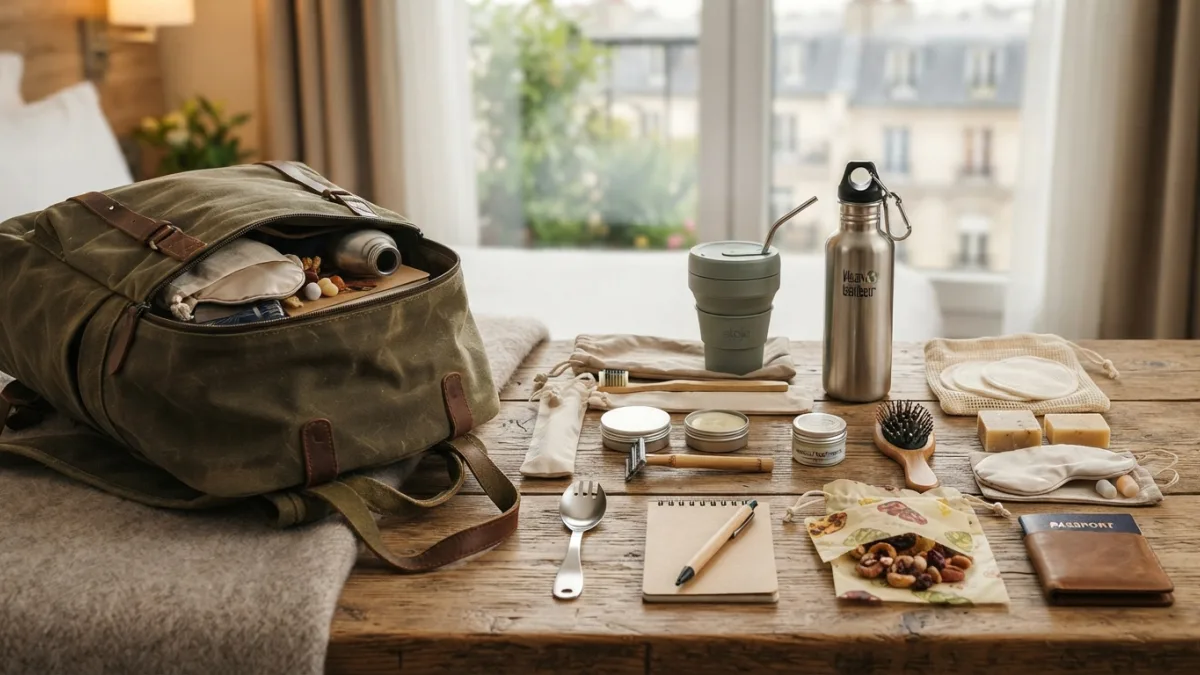
The backbone of any set of hand luggage essentials is a good reusable water bottle. Look for one that’s collapsible or lightweight if space is tight, and remember most airports now have refill stations past security, so you can fill up after you clear the checkpoint. Pack a set of items you’ll actually use:
- A foldable or insulated water bottle
- A compact set of reusable utensils, including a spork or small knife
- A collapsible coffee cup for that airport espresso
- A cloth napkin or small bandana that doubles as a napkin
These small swaps mean you’re not accepting plastic cups, stirrers, or plasticware every time you grab a coffee or a snack during a layover.
Toiletries Without the Plastic Waste
Miniature toiletries are one of the biggest sources of plastic clutter in any suitcase, so this is a great place to trim waste. Solid shampoo and conditioner bars have gotten much better in recent years, and they don’t count as liquids for security screening, which is a nice bonus. A refillable silicone travel bottle works well for anything that has to stay liquid, like sunscreen or contact solution. Bamboo toothbrushes, solid deodorant in a cardboard tube, and a small bar of soap round out a low-waste toiletry kit. None of these items take up much room, and together they cut down significantly on the tiny plastic bottles that usually get tossed after one trip. This connects closely with another common issue — see Plastic-Free Pet Care: Low-Waste Ideas for Cats and Dogs for more on that.
Eco-Friendly Packing Guide for Clothing
Clothing choices matter more than people usually think when it comes to sustainable travel essentials. Packing fewer, more versatile pieces made from natural fibers like cotton, linen, or wool means less laundry waste and fewer items that end up donated or discarded after one season of hard travel wear. An easy rule is to pick clothes that can be layered and mixed across several outfits, so a five-day trip doesn’t require five different shirts. Merino wool items are worth considering too, since they resist odor and can be worn multiple times without washing. A packing cube system helps keep everything organized in a small bag, which makes it much easier to stick to a genuine carry-on and avoid the temptation to check a bag full of extras you won’t actually wear.
Zero Waste Travel Tips for the Airport and Beyond
Airports can be one of the trickiest places to stay low-waste, but a few habits help a lot. Bring your own snacks in reusable containers or beeswax wraps instead of buying prepackaged food at the gate. Download boarding passes and maps to your phone rather than printing paper copies, and carry a small tote bag for any purchases you make along the way, whether that’s souvenirs or duty-free items. Some other easy wins include:
- Packing a reusable produce bag for snacks bought at markets
- Bringing your own headphones instead of accepting the disposable ones
- Requesting no plastic-wrapped blanket or pillow on the plane if you don’t need one
None of these steps take extra effort once they become part of your routine, and they add up over the course of a trip. You might also find our article on Zero-Waste Party Planning: Hosting Birthdays and Gatherings Without Single-Use Plastics helpful here.
Carry-On Only Travel: Packing Smart and Light
Carry-on only travel forces a certain discipline that naturally supports low-waste habits. When you only have one bag, you think twice before buying something you don’t really need, and you’re more likely to reuse what you already packed. Sticking to a single bag also means skipping checked luggage fees and avoiding the risk of lost bags, which is a practical bonus alongside the environmental one. A good approach is to lay out everything you think you need, then remove about a third of it before you zip the bag closed. Most travelers find they never miss the items they left behind, and having less to carry makes moving through airports, train stations, and city streets far less stressful.
Reusable Versus Disposable: A Quick Comparison
Seeing the difference side by side helps explain why small swaps matter so much on a longer trip. The table below compares a few common travel items in their reusable and disposable forms.
| Item | Disposable Option | Reusable Alternative |
|---|---|---|
| Water bottle | Bought plastic bottle each time | Collapsible or insulated bottle refilled daily |
| Coffee cup | Single-use paper or plastic cup | Foldable travel cup |
| Toiletries | Mini plastic bottles | Solid bars and refillable silicone bottles |
| Cutlery | Plastic fork and knife sets | Compact bamboo or steel utensil set |
| Shopping bag | Plastic bag from stores | Foldable tote carried in your daypack |
Building a low-waste kit doesn’t require an expensive overhaul of your entire wardrobe or gear closet. Most of these swaps involve items you can buy once and reuse for years of trips, which actually saves money in the long run compared to constantly repurchasing disposable versions. Start with the basics, a bottle, a cup, and a few toiletry swaps, then add more pieces to your eco-friendly packing guide as you figure out what fits your travel style. The goal isn’t perfection on your first attempt. It’s building habits that stick, so that packing light and packing responsibly becomes second nature rather than something you have to think hard about every time you head to the airport. For a related walkthrough, check out How to Start a Low-Waste Lifestyle When You Rent and Can’t Renovate.
Frequently Asked Questions
What should be at the top of a low-waste travel packing list?
A reusable water bottle and a set of solid or refillable toiletries should come first, since these two categories create the most everyday plastic waste while traveling.
Can I bring solid shampoo bars through airport security?
Yes. Solid shampoo, conditioner, and deodorant bars aren’t classified as liquids, so they don’t count toward your liquids allowance at security checkpoints.
Is carry-on only travel actually possible for longer trips?
It’s doable for most trips under two or three weeks if you pack versatile clothing and plan to do laundry along the way, though it takes some practice to get the packing list right.
How do I keep snacks low-waste while traveling?
Pack snacks in reusable containers or beeswax wraps before you leave home, and buy loose items like fruit or nuts at markets using a reusable produce bag instead of prepackaged options.
Are reusable items worth the extra weight in hand luggage?
Most reusable travel items, like collapsible bottles or bamboo utensils, weigh very little and take up minimal space, so the small trade-off in weight is generally worth the waste and money saved over a trip.