How to Reduce Food Waste at Home (Practical Guide)
Every week, the average household throws away food that could have easily been eaten, and most of us don’t even notice how much it adds up to. A half bag of wilted spinach here, some rice that went bad in the back of the fridge there, and suddenly you’re tossing money straight into the trash bin. Learning how to reduce food waste at home isn’t about becoming a perfect zero-waste household overnight. It’s about small, practical shifts that fit into your existing routine and save you real money at the grocery store. This guide walks through simple, doable strategies anyone can start using this week, whether you live alone, cook for a family, or just want your kitchen to run a little smarter.
Why Reducing Food Waste at Home Actually Matters: Reduce food waste
Food waste isn’t just a personal budget problem, though that’s reason enough to care. When food rots in a landfill, it breaks down without oxygen and releases methane, a greenhouse gas that contributes to climate change far more aggressively than carbon dioxide does over the short term. Beyond the environmental angle, think about everything that went into that food before it reached your kitchen: the water used to grow it, the fuel burned to transport it, the labor involved at every step. Throwing it away means all those resources were spent for nothing. On a personal level, households that pay closer attention to what they buy and use often report noticeably lower grocery bills within just a month or two. Small changes in daily habits ripple outward more than people expect.
Start With Smarter Meal Planning
Meal planning sounds like a chore, but it doesn’t have to involve spreadsheets or elaborate weekly menus. The core idea is simple: know roughly what you’re eating before you shop, so you don’t buy food that has nowhere to go. Even a loose plan, like deciding on four or five meals for the week and checking what ingredients overlap, cuts down on impulse purchases that often end up forgotten in the crisper drawer. Try building meals around what you already have before adding new items to your cart. This single habit is one of the most effective food waste reduction tips because it addresses the root problem: buying more than you actually need.
Simple Ways to Plan Meals Without Overcomplicating It
- Check your fridge and pantry before making a shopping list.
- Plan two or three “flexible” meals that can use up random leftover ingredients, like stir-fries or soups.
- Shop with a list and try to stick to it, even loosely.
- Cook larger batches of staples like rice or beans and repurpose them across different meals.
Shop With Intention, Not Habit
Many of us shop on autopilot, grabbing the same items every week regardless of whether we actually finished them last time. Before heading to the store, take thirty seconds to glance at what’s already sitting in your fridge. If you still have half a bag of carrots from last week, maybe skip buying more this time. Buying in bulk can feel like a good deal, but it often backfires if you can’t realistically eat that much before it spoils. Consider your household size and how quickly you actually go through perishable items like fresh herbs, berries, or leafy greens. It also helps to shop more frequently for smaller amounts of fresh produce rather than doing one giant weekly haul that leaves half the produce forgotten by day five.
Master Food Storage Tips That Actually Extend Freshness
How you store food matters just as much as how much you buy. A lot of produce ends up wasted simply because it was stored the wrong way, not because anyone did anything unreasonable. Herbs like cilantro and parsley last much longer standing in a glass of water in the fridge, similar to a bouquet of flowers. Potatoes and onions should be kept in a cool, dark place, but never together, since they release gases that make each other spoil faster. Bread stays fresher longer in the freezer than on the counter, and you can toast slices straight from frozen. Learning these food storage tips takes a little trial and error, but the payoff is real: food that lasts noticeably longer without any extra cost.
Quick Storage Fixes Worth Trying
- Store leafy greens wrapped loosely in a damp paper towel inside a bag.
- Keep tomatoes at room temperature, not in the fridge, for better flavor and texture.
- Freeze overripe bananas for smoothies or baking instead of tossing them.
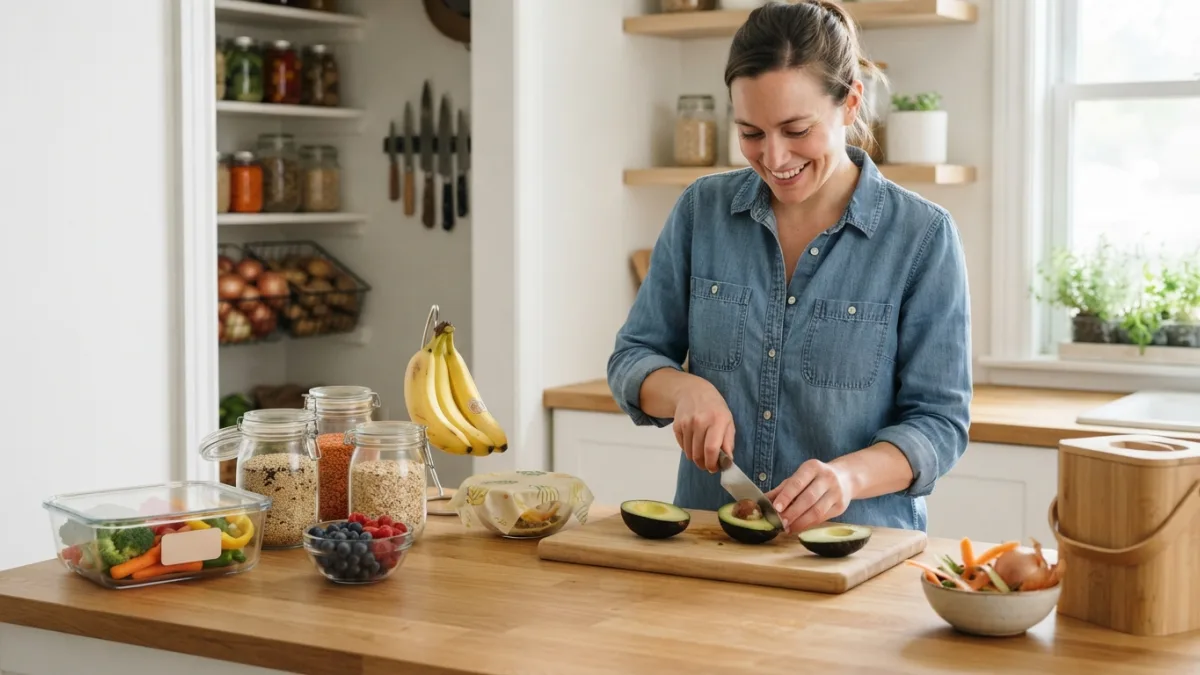
- Use airtight containers for opened items like nuts, flour, and cereal to keep pests and moisture out.
Understand Expiration Dates Before You Toss Anything
One of the biggest sources of unnecessary food waste comes from confusion over date labels. “Best before” and “use by” dates are not the same thing, and most people don’t realize it. A “best before” date is about quality, not safety, meaning the food might taste slightly different past that date but is often still perfectly fine to eat. “Use by” dates, on the other hand, are more directly tied to safety and matter more for items like dairy or raw meat. Trust your senses too. Smell, texture, and appearance often tell you more than a printed date ever could. Before throwing something out automatically, take a moment to actually check it rather than assuming it’s gone bad just because a date on the label has passed.
Get Creative With Leftovers and “Ugly” Produce
Leftovers get a bad reputation, but they’re often just meals waiting for a second act. Vegetable scraps like carrot tops, onion skins, and celery ends can go straight into a bag in the freezer and later become the base for a homemade stock. Stale bread turns into croutons or breadcrumbs with almost no effort. Slightly bruised fruit works perfectly in smoothies, baked goods, or jams, where a little imperfection doesn’t matter at all. Restaurants and grocery stores have started embracing “ugly” produce for exactly this reason, since a misshapen carrot tastes exactly the same as a picture-perfect one. Treating leftovers as an ingredient rather than a chore to deal with opens up a surprising amount of flexibility in the kitchen.
Composting at Home for What You Can’t Use
Even with the best planning, some food scraps are simply unavoidable, like eggshells, coffee grounds, or vegetable peels. Instead of sending these straight to the landfill, composting at home turns them into something genuinely useful for gardens or potted plants. You don’t need a big backyard setup to get started. Small countertop compost bins work fine for apartments, and many cities now offer curbside composting pickup as part of their waste programs. The compost that results makes excellent, nutrient-rich soil for growing your own herbs or vegetables, which creates a nice loop where food scraps eventually help grow more food. It takes a bit of patience, but composting closes the gap between kitchen waste and something genuinely worthwhile.
Build Sustainable Kitchen Habits That Stick
None of these strategies matter much if they only last a week before old habits creep back in. The goal is to build sustainable kitchen habits that become second nature over time, not a temporary experiment. Keep a small whiteboard or sticky note on the fridge listing items that need to be used soon, so nothing gets lost behind other containers. Try a “first in, first out” approach, placing older groceries at the front of the fridge and new ones in the back. Involve everyone in the household, since food waste habits are much easier to fix as a team effort than as one person’s solo mission. Over a few months, these small routines start to feel automatic rather than like extra work.
Small Steps Add Up to Real Change
Reducing food waste at home doesn’t require dramatic lifestyle changes or expensive gadgets. It comes down to a handful of habits repeated consistently: planning meals with intention, storing food properly, understanding labels correctly, and finding new life for scraps and leftovers. Pick one or two ideas from this guide to start with rather than trying to overhaul your entire kitchen at once. Once those become routine, add another habit, and let the changes build gradually. The financial savings alone make it worth the effort, and the added benefit of cutting down your environmental footprint makes it feel meaningful, not just practical. Your kitchen, your wallet, and the planet all end up a little better off.
Frequently Asked Questions
What is the easiest way to start reducing food waste at home?
Start with meal planning and checking what you already have before grocery shopping. This single habit prevents overbuying, which is the root cause of most household food waste.
Does freezing food really help reduce waste?
Yes. Freezing bread, fruit, cooked grains, and even herbs extends their usable life significantly and gives you a backup supply for meals when fresh ingredients run low.
Is composting at home difficult for beginners?
Not at all. Small countertop bins or simple outdoor setups work well for beginners, and many local governments offer composting pickup services that make it even easier.
How do I know if food is still safe to eat past its date label?
Check the smell, texture, and appearance first. “Best before” dates relate to quality, not safety, so many foods remain fine to eat a little past that date if they still look and smell normal.
Can reducing food waste actually save money?
Yes, and often more than people expect. Households that plan meals and store food properly typically notice a real drop in their grocery spending within the first month or two.