How to Build a Zero-Waste Kitchen
Open your kitchen trash can right now. Chances are you’ll find plastic wrappers, food scraps that could have become compost, and packaging you barely remember buying. The average household throws away a shocking amount of food and packaging every week, and most of it ends up in a landfill instead of being reused, recycled, or composted. Building a zero-waste kitchen sounds like a big commitment, but it’s really a series of small habits that add up over time. You don’t need to overhaul everything overnight or spend a fortune on fancy jars and gadgets. This guide walks you through practical, budget-friendly steps to cut down on waste in the room where most household trash originates in the first place.
What Does “Zero Waste” Actually Mean in the Kitchen?
Zero waste doesn’t mean literally producing zero trash. It’s a mindset shift toward reducing what you buy, reusing what you already have, and recycling or composting whatever is left. In a kitchen setting, this means rethinking how you shop, store food, cook, and clean. The goal is to send as little as possible to the landfill while saving money and often eating healthier along the way. Many people who start this journey find that their grocery bills shrink because they waste less food and buy fewer disposable products. It’s less about perfection and more about progress, so don’t feel discouraged if you can’t eliminate every piece of plastic on day one. Even small changes, like switching from paper towels to cloth rags, make a real difference when practiced consistently over months and years.
Start With a Waste Audit
Before changing anything, spend a week paying attention to what actually goes into your trash and recycling bins. Keep a small notebook or use your phone to jot down what you throw away each day. You might notice patterns, like always tossing wilted lettuce or a pile of takeout containers you never reuse. This audit gives you a realistic starting point instead of guessing where to focus your energy. Some people are surprised to discover that food waste, not packaging, makes up the bulk of their trash. Others find that snack wrappers and disposable coffee cups are the main culprits. Once you know your specific habits, you can target the biggest problem areas first rather than spreading yourself thin trying to fix everything at once.
Rethink How You Shop
Shopping smarter is one of the most powerful ways to reduce kitchen waste before it even enters your home. Buying only what you need, and buying it in the right form, cuts down on both food spoilage and packaging waste.
Practical Shopping Swaps
- Bring your own reusable bags, including small mesh ones for produce, instead of using store-provided plastic bags.
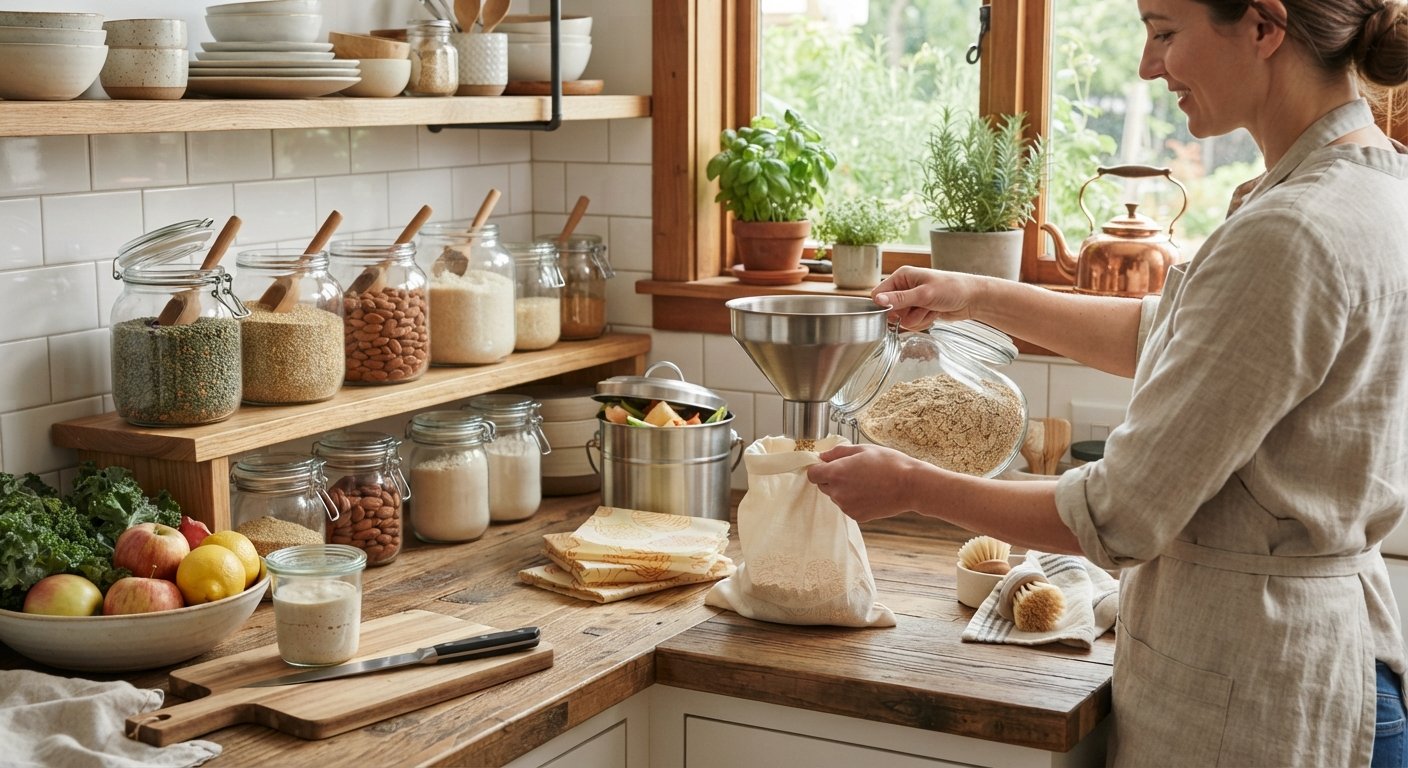
- Shop at bulk bins when available for grains, nuts, spices, and even liquids like oil or soap, using your own containers.
- Choose loose fruits and vegetables over pre-packaged ones whenever the option exists.
- Buy from local farmers markets, where packaging is often minimal and food tends to be fresher, lasting longer in your fridge.
- Plan meals before you shop so you buy only what you’ll realistically use that week.
These small adjustments to your shopping routine can dramatically shrink the amount of packaging that enters your home in the first place.
Master the Art of Food Storage
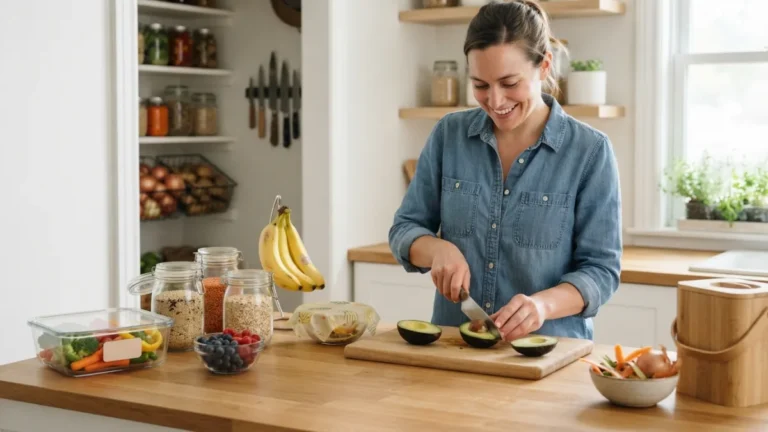
One of the biggest sources of kitchen waste isn’t packaging at all, it’s food that goes bad before you get to eat it. Learning proper storage techniques extends the life of your groceries and keeps money from literally rotting in your fridge. Store fruits and vegetables in the correct humidity drawers, and keep ethylene-producing fruits like apples and bananas away from more sensitive produce that spoils faster when exposed to that gas. Glass jars, beeswax wraps, and silicone bags are excellent reusable alternatives to plastic wrap and disposable sandwich bags. Labeling containers with dates helps you use older food first instead of forgetting it in the back of the fridge. A well-organized fridge, where you can actually see what you have, naturally leads to less waste because you’re reminded to use ingredients before they go bad.
Composting: Turning Scraps Into Resources
Even with the best shopping and storage habits, you’ll still end up with some food scraps like eggshells, coffee grounds, and vegetable peels. Composting turns this so-called waste into nutrient-rich material for gardens instead of letting it rot uselessly in a landfill, where food waste actually contributes to methane emissions. If you have outdoor space, a simple backyard compost bin works well and requires little maintenance beyond occasional turning. Apartment dwellers can use countertop compost bins or worm composting systems, which take up surprisingly little room and produce almost no odor when managed properly. Many cities also now offer municipal compost pickup services, similar to recycling collection, making this option accessible even if you don’t want to manage compost yourself. Check with your local waste management authority to see what’s available in your area before assuming composting isn’t possible where you live.
Choose Reusable Tools Over Disposables
Disposable kitchen products feel convenient in the moment, but they create a steady stream of waste that adds up fast. Swapping them for reusable alternatives is one of the simplest ways to reduce your kitchen’s environmental footprint.
Easy Swaps to Consider
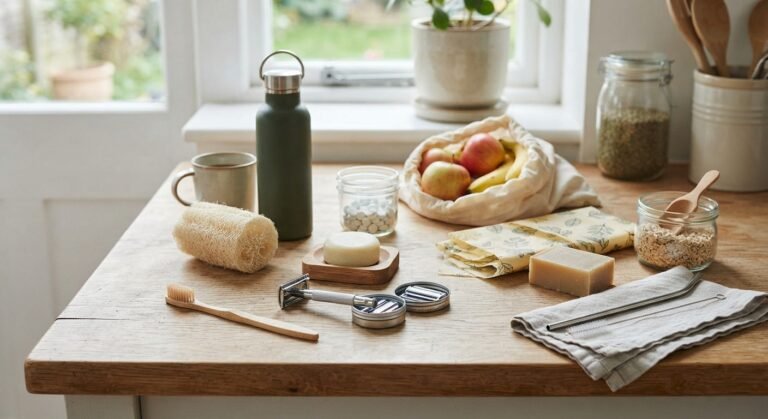
- Cloth napkins and towels instead of paper towels and paper napkins.
- Beeswax wraps or reusable silicone lids instead of plastic wrap.
- A French press or reusable coffee filter instead of disposable pods or paper filters.
- Glass or stainless steel containers instead of single-use plastic storage bags.
- Reusable water bottles and coffee cups instead of disposable ones.
None of these swaps require replacing everything at once. Buy a few reusable items as your disposable ones run out, and over a year or two, your kitchen will naturally shift toward far less waste.
Get Creative With Leftovers and Food Scraps
Many parts of food we typically throw away are actually edible or useful in other ways. Vegetable peels, stems, and trimmings can go into homemade stock instead of the trash. Stale bread turns into croutons or breadcrumbs with just a few minutes in the oven. Overripe bananas make excellent banana bread, and wilting greens can be blended into soups or smoothies before they fully spoil. Keeping a “scrap bag” in your freezer for vegetable odds and ends is a simple habit that lets you build a flavorful stock whenever the bag fills up. This approach not only reduces waste but often results in tastier, more resourceful cooking. Chefs have used these techniques for generations, treating scraps as ingredients rather than trash, and home cooks can easily adopt the same mindset with a little practice.
DIY Cleaning and Kitchen Products
Store-bought cleaning products often come in single-use plastic bottles and contain ingredients you can easily replace with simpler, cheaper alternatives. A mixture of vinegar and water handles many general cleaning tasks, while baking soda works well for scrubbing pots and neutralizing odors. Making your own dish soap or using soap bars instead of bottled liquid soap cuts down on plastic waste significantly over time. Reusable cleaning cloths, like old t-shirts cut into rags, replace paper towels for spills and wiping counters. These homemade solutions aren’t just better for the environment, they’re often gentler on your wallet too, since basic ingredients like vinegar and baking soda cost far less than branded cleaning products. Once you get used to making your own, you may find you never want to go back to buying disposable cleaning supplies again.
Building Habits That Actually Stick
The biggest mistake people make when trying to build a zero-waste kitchen is attempting too much change too quickly, leading to burnout within a few weeks. Instead, pick one or two habits to focus on each month, like starting with composting, then moving to reusable produce bags, then tackling cleaning products. Involve everyone in your household so the responsibility doesn’t fall on just one person, since consistency matters more than perfection. Keep reusable bags by the door so you actually remember to bring them, and store compost bins somewhere convenient so the habit doesn’t feel like a chore. Celebrate small wins, like noticing your trash bin fills up more slowly than it used to. Over months, these individually small changes compound into a genuinely different way of running your kitchen, one that produces far less waste without requiring constant effort or willpower.
Frequently Asked Questions
Is a zero-waste kitchen more expensive than a regular one?
Not usually. While some reusable items require an upfront cost, most people save money over time by buying less packaged food, wasting fewer groceries, and making their own cleaning products instead of buying disposable ones.
Do I need to compost to have a zero-waste kitchen?
Composting helps a lot, but it’s not mandatory. If composting isn’t available where you live, focus on reducing food waste through better meal planning and storage, and prioritize other habits like reusable containers and bulk shopping.
How long does it take to build these habits?
There’s no fixed timeline. Most people find it easier to introduce one or two changes at a time over several months rather than trying to change everything immediately, which tends to feel overwhelming and unsustainable.
What if I live in a small apartment with no outdoor space?
You can still compost using a countertop bin, worm composting system, or a local municipal pickup service. Many of the other zero-waste habits, like bulk shopping and reusable containers, work just as well in small kitchens as large ones.
What’s the single best first step to take?
Start with a waste audit. Understanding exactly what you throw away most often helps you target your efforts effectively instead of guessing, making your transition to a lower-waste kitchen faster and more successful.