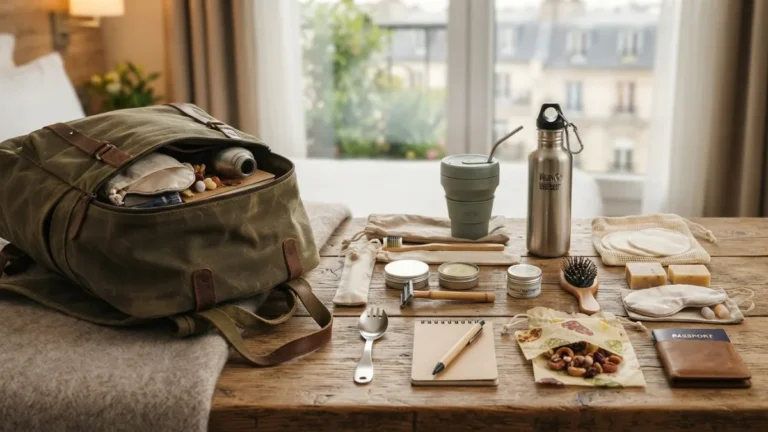
Zero Waste Office Desk: 7 Easy Ideas for Empty Bins
Look under almost any office desk and you will find the same sad scene: a small bin stuffed with coffee cups, snack wrappers, sticky notes and a dead pen or two. Building a zero waste office desk is not about guilt or perfection — it is about noticing how much throwaway stuff passes through one square metre of workspace every single week. Most of it is avoidable. A cup you already own, a pen you can refill, snacks that arrive in a jar instead of foil: these are small, boring swaps that quietly empty your bin. The best part? They usually save money too. If your desk currently generates more rubbish than paperwork, the seven ideas below will change that within a month, without turning your job into a full-time sustainability project.
Why Your Desk Produces So Much Rubbish
Offices are designed around convenience, and convenience usually means single-use. Takeaway cups, plastic-wrapped biscuits, cheap pens, printed drafts nobody reads — each item is small, so nobody feels responsible for it. Multiply that by five days and a whole floor of colleagues, and the numbers stop being small. The U.S. Environmental Protection Agency’s recycling resources make the point clearly: reducing and reusing come before recycling, because the cleanest waste is the waste you never create. That order matters for a zero waste office desk. Recycling a paper cup is better than binning it, but bringing your own cup beats both. Once you see your desk as a system with inputs and outputs, the fixes become obvious — and surprisingly easy to keep up. If you want to dig deeper, our guide on Zero-Waste Party Planning: Hosting Birthdays and Gatherings Without Single-Use Plastics covers this in more detail.
7 Easy Ideas for a Zero Waste Office Desk
1. Switch to Refillable Pens and Plastic Free Stationery
Start with the drawer. Most people own far more pens than they will ever use, and nearly all of them end up in landfill. Refillable pens — a decent metal or recycled-body pen with replaceable ink cartridges — last for years and write better than the free conference pens you have been hoarding. The same logic applies to the rest of your kit: a mechanical pencil instead of disposables, a metal ruler, a stapler you maintain, and paper clips instead of plastic sleeves. Plenty of plastic free stationery options now exist, from wooden pencils and paper tape to notebooks with recycled pages and no plastic covers. Buy once, buy well. A zero waste office desk is less about shopping and more about stopping the endless cycle of cheap replacements.
2. Rethink Paper Before You Print
Paper is still the loudest waste stream in most offices. Before printing, ask whether anyone will actually read it on paper — usually the answer is no. When you do print, set double-sided as your default, shrink margins, and skip the cover page. Keep a “scrap tray” for pages printed on one side and use them for notes, lists and rough sketches instead of buying notepads. Digital habits help too: shared documents, comments instead of printed mark-ups, and a simple naming system so you stop printing the same draft three times. Sticky notes are another quiet offender; a small reusable whiteboard or a notebook does the same job for years. None of this is dramatic, but paper discipline is the fastest route to a genuinely zero waste office desk.
3. Build a Reusable Coffee Kit You Actually Carry
Coffee is where most desks lose the battle. A reusable coffee cup only works if it is with you, so keep it at your desk rather than at home, and rinse it as soon as you finish. Add a small spoon, a cloth napkin and — if your office has a machine — a proper mug for in-house refills. Many cafés will happily fill a clean cup you hand over, and some offer a small discount for it. If you brew at your desk, choose loose-leaf tea or ground coffee over single-use pods and sachets. Then compost or bin the grounds properly; used coffee grounds are a classic candidate for the office plant pot. One cup, used daily, removes hundreds of throwaway containers a year from your bin. This connects closely with another common issue — see Zero-Waste Moving Day: Packing, Unpacking, and Decluttering Without Trash Bags for more on that.
4. Keep Zero Waste Snacks Within Reach
Hunger is the enemy of good intentions. If your drawer is empty at 3pm, you will buy something wrapped in plastic — every time. The fix is to stock zero waste snacks in advance: nuts, dried fruit, seeds, oatcakes or homemade energy balls stored in a glass jar or a reusable tin. Buy them loose or in bulk where you can, and decant at home. Fresh fruit needs no packaging at all, and it composts. Keep a second small container for anything you bring from lunch leftovers. This is the swap colleagues notice most, because it looks appealing rather than preachy. It also tends to be cheaper per gram than vending machine snacks, which is a useful argument when someone calls your zero waste office desk an expensive hobby.
5. Store a Lunch and Cutlery Set in Your Drawer
Takeaway lunches generate the heaviest waste of the working day: container, lid, bag, cutlery, sauce sachet, napkin. Break the chain with a small, permanent kit — a stainless steel or glass lunch box, a fork, a knife, a spoon and a cloth napkin, all kept at work so you cannot forget them. When you buy food out, ask the counter to fill your own container; many places agree if you ask politely and hand it over clean. Add a foldable shopping bag for those unplanned errands. The EPA’s guidance on sustainable food management highlights how much of our food waste is tied to how we buy and store food, and a drawer kit quietly solves several of those problems at once.
6. Replace One Bin With a Small Sorting Station
A single bin under the desk guarantees mixed rubbish. Replace it with two or three labelled containers: one for clean paper, one for genuine landfill waste, and — if your building allows it — one small sealed tub for food scraps and coffee grounds. Keep them visible. Clarity is everything, because most contamination happens when people guess. Check your local council or facilities team’s rules rather than assuming, since accepted materials vary hugely between cities. As the overview of zero waste principles explains, the goal is to design waste out of the system rather than simply move it around. When your sorting station stays nearly empty for a week, you know your zero waste office desk is working. You might also find our article on Zero-Waste Morning Routine: 12 Everyday Swaps Before 9 a.m. helpful here.
7. Repair, Refill and Buy Less
The last idea is the one that lasts. Before replacing anything — a cable, a lamp, a chair, a notebook — ask whether it can be repaired, refilled or shared. Ink cartridges can often be refilled or returned through manufacturer take-back programmes. Old electronics belong at an e-waste point, never in a desk bin. Office supply cupboards are usually full of forgotten items, so “shop” there first. Set a rule for yourself: one new item only when an old one truly dies. This mindset removes the shopping trap that catches a lot of people who start out enthusiastic about office waste reduction tips and end up with a drawer full of eco-branded products they never needed. Less stuff, used longer, is the whole idea.
Choosing a Reusable Cup: A Quick Comparison
Not all reusable cups suit every routine, and the “best” one is simply the one you will carry daily. Weight, insulation and how easy it is to clean matter far more than the marketing on the box. Here is a straightforward comparison to help you choose.
| Cup type | Keeps drinks hot | Weight | Best for |
|---|---|---|---|
| Stainless steel insulated | Excellent | Medium | Commuters and long meetings |
| Ceramic mug | Poor | Heavy | Staying at your desk all day |
| Glass with silicone sleeve | Moderate | Medium | Pure taste, no flavour transfer |
| Collapsible silicone | Moderate | Very light | Small bags and travel |
Getting Your Colleagues On Board (Without Lecturing)
Habits spread by example, not by email. Keep your setup tidy and attractive, answer questions when people ask, and resist the urge to comment on anyone else’s takeaway cup. If you want wider change, aim at the shared spaces instead: suggest real mugs in the kitchen, a proper recycling point, a bulk tea and coffee supply, or a repair box for broken stationery. Small proposals with clear cost savings tend to get approved faster than big sustainability plans. Offer to run a one-hour “desk clear-out” where everyone redistributes unused supplies. Many of the most effective office waste reduction tips cost nothing at all — they simply move existing items to the people who need them. A single visible zero waste office desk often convinces more colleagues than any policy document. For a related walkthrough, check out 10 Things I Wish I Knew Before Going Zero-Waste.
Start With One Swap This Week
You do not need to fix everything on Monday morning. Pick the swap that matches your biggest source of rubbish — for most people that is coffee, snacks or printing — and run it for two weeks until it feels automatic. Then add the next one. Track it loosely by noticing how often you empty your bin; going from daily to weekly is a real, measurable win. Keep your standards realistic, too. There will be days with a wrapped sandwich and a paper cup, and that is fine. A functioning zero waste office desk is a direction, not a test you pass or fail. Over a year, the small choices add up to hundreds of items that never entered the waste stream, which is exactly the point.
Frequently Asked Questions
How much does it cost to set up a zero waste office desk?
Usually less than people expect, and often nothing at first. Start with items you already own — a mug from home, an existing lunch box, a jar for snacks. If you do buy, prioritise a good refillable pen and a solid reusable coffee cup, since those replace the most single-use items. The savings on daily takeaway coffee and vending snacks typically cover the cost within a couple of months.
What are the easiest plastic free stationery swaps?
Wooden pencils, a metal mechanical pencil, refillable pens with replaceable ink, paper tape instead of plastic tape, metal paper clips instead of plastic sleeves, and notebooks with recycled paper and card covers. Also consider a reusable whiteboard or notebook to replace sticky notes, which are hard to recycle because of the adhesive strip.
Can I bring my own container to a café or canteen?
Often yes, though policies differ by venue and by local food safety rules. Hand over a clean, dry container and ask politely — many places accept it for drinks and hot food. If a specific café refuses, respect the rule and try a different one. Reusable cups are accepted far more widely than food containers.
What should I do with coffee grounds and food scraps at work?
Keep a small sealed tub at your desk and empty it daily into an office compost bin, a council food waste collection, or take it home. Coffee grounds also work as a soil additive for office plants. Never leave food waste in an open desk bin — that is how most people end up abandoning the system.
Does a zero waste desk really make a difference if the whole office still wastes?
One desk will not fix a building, but it does two useful things. It removes hundreds of single-use items from the waste stream each year, and it shows colleagues and managers that the alternative is practical rather than theoretical. Most workplace changes — shared mugs, better recycling points, bulk supplies — start with a few people quietly proving it works.