Plastic-Free Pet Care: Low-Waste Ideas for Cats and Dogs
Every time you scoop kibble from a plastic bag or toss a worn-out squeaky toy in the trash, you’re adding to a mountain of waste that most pet owners never stop to think about. Plastic-free pet care is starting to catch on as more cat and dog owners realize just how much plastic their furry companions go through in a single year. From food pouches to poop bags to bargain-bin toys that fall apart in a week, the pet industry has a serious plastic problem. The good news is that switching to a lower-waste routine doesn’t require a complete lifestyle overhaul or a bigger budget. With a few smart swaps and a little planning, you can cut down on plastic significantly while still keeping your pet happy, healthy, and well cared for.
Most people don’t realize how much plastic waste comes from an average pet household until they actually count it up. Kibble bags, treat pouches, litter containers, poop bags, toy packaging, and even the little plastic scoops that come with cat litter all add up fast. A lot of this material isn’t recyclable through curbside programs because it’s multi-layered or contaminated with food residue. That means most of it ends up in landfills or, worse, in waterways and oceans. Pets themselves don’t care about packaging, obviously, but the choices we make on their behalf have a real environmental footprint. Recognizing where the waste comes from is the first step toward making better decisions at the pet store and online. If you want to dig deeper, our guide on Zero-Waste Party Planning: Hosting Birthdays and Gatherings Without Single-Use Plastics covers this in more detail.
Why Reducing Plastic Pet Waste Matters
Plastic doesn’t just disappear once it leaves your trash can. It breaks down into smaller and smaller pieces called microplastics, which have been found in soil, rivers, and even inside animals far removed from where the plastic was originally used. Pets that chew on cheap plastic toys can ingest tiny fragments, which isn’t great for their digestive health either. Choosing to reduce plastic pet waste isn’t just about the planet; it’s also about giving your cat or dog safer things to chew, play with, and eat from. Many pet owners who switch to more natural materials notice their pets seem just as content, if not more so, with simpler and sturdier products. It’s a shift that benefits everyone in the household, humans and animals alike.
Rethinking Food and Treat Packaging
Food packaging is probably the biggest source of plastic in most pet households, since bags of kibble and cans of wet food get bought over and over again. One easy fix is buying in bulk when possible, since larger bags mean less packaging per pound of food compared to a stack of small ones. Some pet stores, especially local and independent shops, let you refill your own containers with kibble straight from a bin, which cuts packaging waste to almost nothing. Treats are trickier because they often come in small foil-lined pouches, but look for brands that use paper-based or compostable packaging instead. Making simple treats at home, like baked sweet potato chews or frozen pumpkin bites, is another way to skip the packaging problem entirely while giving your pet something wholesome.
Smart Storage Without Plastic
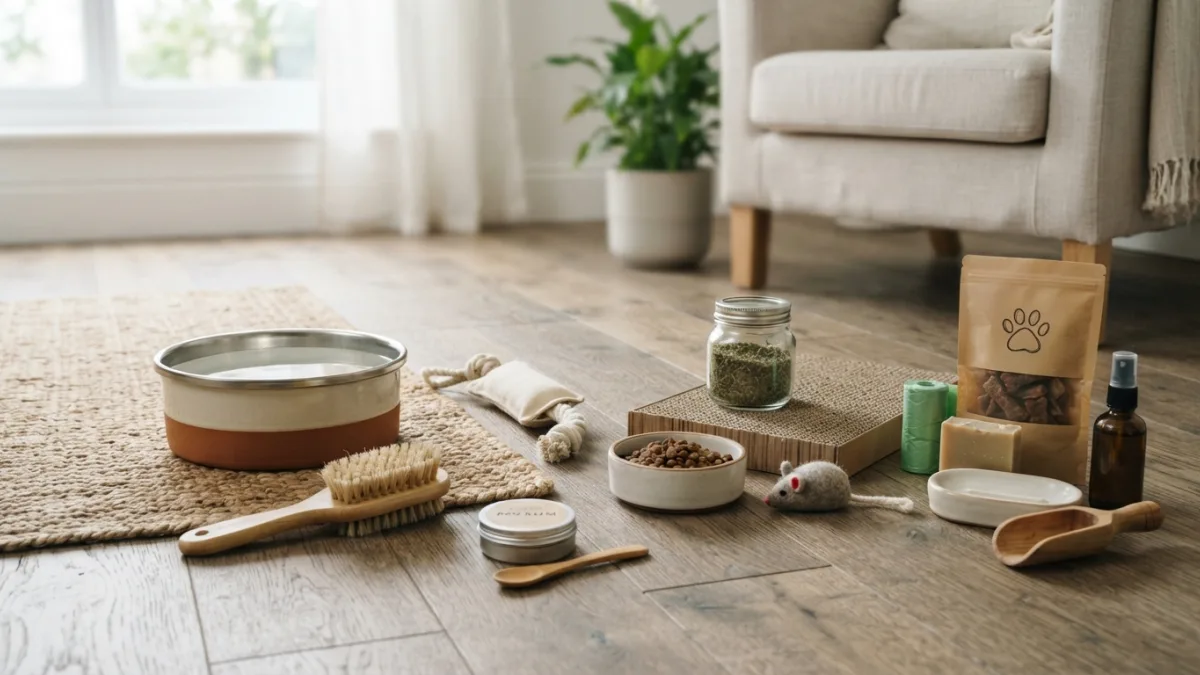
Once you get food home, how you store it matters too. A lot of people transfer kibble into big plastic bins, which works but doesn’t solve the plastic problem, it just moves it. Stainless steel or ceramic containers with tight-fitting lids do the same job without introducing more plastic into your kitchen or pantry. For wet food, glass containers with silicone lids keep leftovers fresh in the fridge and can be reused indefinitely. If you’re worried about breakage around excited pets, look for stainless steel bowls and containers, which are nearly indestructible and easy to clean. Small changes like these make a noticeable dent in the plastic that flows through a typical pet-owning household.
Choosing Biodegradable Pet Toys
Walk into any pet store and you’ll see aisles packed with brightly colored plastic toys, many of which end up broken or ignored within weeks. Biodegradable pet toys made from materials like natural rubber, hemp, jute, or untreated wood are becoming easier to find and often last longer than their plastic counterparts. Natural rubber balls and chew toys, for instance, hold up well against enthusiastic chewers while breaking down naturally if they’re eventually discarded. Rope toys made from organic cotton or hemp are great for dogs who like to tug and chew, and they can usually be tossed in the compost once they’re too worn out to use. Cats tend to enjoy simple options too, like toys stuffed with dried catnip inside cotton pouches, rather than elaborate plastic gadgets. Sometimes the simplest toys turn out to be the ones pets love most. This connects closely with another common issue — see Zero-Waste Moving Day: Packing, Unpacking, and Decluttering Without Trash Bags for more on that.
DIY Toy Ideas
You don’t always need to buy new toys to keep your pet entertained. Cats are famously obsessed with cardboard boxes, paper bags, and crumpled balls of paper, all of which cost nothing and produce zero plastic waste. Dogs often love a knotted old t-shirt or towel just as much as a store-bought rope toy, and it’s a great way to reuse fabric that would otherwise be thrown away. A few household items can be repurposed easily:
- Cardboard tubes stuffed with treats for a homemade puzzle feeder
- Old socks knotted together for a simple tug toy
- Wine corks (supervised) for cats who like to chase and bat things around
- Wooden spoons or sticks, checked for splinters, for outdoor fetch
These options cost little to nothing and keep usable materials out of the landfill for a bit longer.
Sustainable Pet Supplies for Everyday Use
Beyond food and toys, plenty of everyday pet supplies have more sustainable alternatives available now than they did even five years ago. Collars and leashes made from hemp or recycled materials perform just as well as nylon versions and tend to be quite durable. Beds stuffed with natural fibers like cotton or wool are a nice swap for the polyester-and-foam combinations that dominate the market, and many are machine washable, which extends their lifespan. Brushes and grooming tools made from bamboo with natural bristles work just as well as plastic versions for most coat types. When shopping for sustainable pet supplies, it helps to check materials lists rather than relying on vague marketing terms like “eco-friendly,” since that phrase isn’t regulated and doesn’t always mean much on its own.
Tackling the Poop Bag Problem
Dog waste bags are one of the trickiest parts of plastic-free pet care because hygiene and convenience matter so much here. Standard plastic bags are cheap and widely available, but they can take decades to break down and often end up in landfills wrapped around waste that could otherwise decompose naturally in different conditions. Compostable bags made from cornstarch or other plant materials are a solid alternative, though it’s worth checking whether your local composting facility actually accepts pet waste, since many home compost systems and municipal programs don’t. Some cities do offer specific programs for pet waste disposal, so it’s worth a quick search to see what’s available where you live. For litter box waste, biodegradable litter made from materials like walnut shells, corn, or wood pellets is widely available and tends to clump just as well as traditional clay litter, minus the plastic packaging that clay often comes in. You might also find our article on How to Start a Low-Waste Lifestyle When You Rent and Can’t Renovate helpful here.
Building a Zero Waste Pet Care Routine
Getting to true zero waste pet care is a stretch goal for most households, but even getting halfway there makes a real difference over time. Start by auditing what you actually throw away related to your pet over the course of a month, since that gives you a clear picture of where the biggest waste sources are. Maybe it’s the litter, maybe it’s treat wrappers, maybe it’s toys that keep breaking. Once you know your biggest culprits, tackle them one at a time instead of trying to fix everything at once, which tends to feel overwhelming and doesn’t stick. Buying secondhand pet gear, like beds, crates, and carriers, from local listings or thrift stores is another underrated way to reduce demand for new plastic products altogether. Small, steady changes usually last longer than a dramatic overhaul that fizzles out after a few weeks.
Supporting Brands That Actually Follow Through
A lot of companies slap the word “sustainable” on their packaging without changing much about how the product is actually made. It helps to look past the marketing and check for real details, like whether the packaging is recyclable in your area, whether the materials are genuinely biodegradable, and whether the company shares specifics about sourcing rather than vague claims. Reading ingredient and material lists takes a bit more time upfront, but it saves you from falling for greenwashing down the road. Supporting smaller, transparent brands, even if it costs a little more, tends to push the wider industry toward better standards over time. Your pet won’t know the difference between a trendy eco-label and a plain, honest one, but the planet notices which companies are actually walking the walk.
Making Peace With Imperfect Progress
Nobody switches to a fully plastic-free pet care routine overnight, and honestly, nobody needs to. Some products, like flea and tick medications or certain prescription foods, just don’t have plastic-free alternatives yet, and that’s fine. The goal isn’t perfection; it’s steady reduction paired with better choices where they’re realistically available. Even swapping one or two items, like moving to a biodegradable litter or switching to a bamboo brush, adds up when millions of pet owners make similar small changes. Give yourself credit for progress rather than getting discouraged by what still feels out of reach. Your dog or cat just wants love, food, and a comfy place to nap, and none of that actually requires much plastic at all.
Frequently Asked Questions
What is plastic-free pet care exactly?
It refers to choosing pet food, toys, and supplies made from natural or biodegradable materials instead of plastic, along with reducing single-use plastic packaging wherever possible. It’s less about perfection and more about consistently choosing lower-waste options. For a related walkthrough, check out Zero-Waste Morning Routine: 12 Everyday Swaps Before 9 a.m..
Are biodegradable pet toys as durable as plastic ones?
Many natural rubber, hemp, or wood toys hold up surprisingly well, sometimes outlasting cheaper plastic toys. Durability still depends on your pet’s chewing habits, so it’s smart to supervise new toys at first regardless of material.
Is compostable dog waste packaging actually better for the environment?
Compostable bags break down much faster than traditional plastic, but only under the right conditions, usually in industrial composting facilities rather than backyard compost piles. Check with your local waste management program to see what’s accepted in your area.
Can I switch my cat’s litter to a biodegradable option without issues?
Most cats adjust fine to biodegradable litters like walnut, corn, or wood-based options, though a gradual transition mixed with the old litter usually helps. Some cats are picky about texture, so it may take a bit of trial and error to find one they accept.
Does plastic-free pet care cost more money?
Some sustainable pet supplies cost a bit more upfront, but many, like durable natural toys or bulk food buying, actually save money over time since they last longer or reduce packaging costs. Starting with one or two swaps is an easy, budget-friendly way to begin.