
Zero-Waste Morning Routine: 12 Everyday Swaps Before 9 a.m.
The average person makes dozens of small decisions before 9 a.m., and most of them involve some kind of packaging headed straight for a landfill. A zero waste morning routine doesn’t require a total lifestyle overhaul or a Pinterest-perfect bathroom shelf. It just means swapping a few disposable habits for reusable ones, one cup of coffee and one toothbrush at a time. If you’ve ever felt guilty tossing another plastic razor or coffee pod into the trash, this guide walks you through twelve simple, budget-friendly changes that fit into even the busiest mornings. None of these require special skills or a huge upfront investment, and most pay for themselves within a few months.
Why Mornings Are the Best Place to Start
Mornings are repetitive by nature. You brush your teeth, make coffee, get dressed, and pack a lunch or grab breakfast, often on autopilot. That repetition is actually an advantage when you’re trying to build sustainable morning habits, because you only need to change a routine once and it sticks. Unlike special occasions or once-a-year purchases, morning habits repeat 365 days a year, which means small swaps add up fast. Replacing one disposable item with a reusable version might feel minor, but multiplied over a year, it can keep hundreds of pieces of plastic and paper out of the trash. Think of your morning as a trial run for the rest of your zero waste living tips throughout the day. If you want to dig deeper, our guide on Zero-Waste Swaps for Beginners: Where to Start covers this in more detail.
1. Swap Paper Coffee Filters for a Reusable One
If you brew coffee at home, disposable paper filters are an easy first target. A stainless steel or organic cotton filter can be rinsed and reused for years, cutting down on both plastic packaging and paper waste. Many coffee lovers also notice a fuller flavor since metal filters let more natural oils through. The upfront cost is usually under fifteen dollars, and it typically pays for itself within a couple of months once you stop buying filter boxes. If you use a pod-based machine, consider a reusable pod insert instead, which lets you fill it with your own ground coffee and avoid single-use capsules altogether.
2. Trade Your Plastic Toothbrush for Bamboo
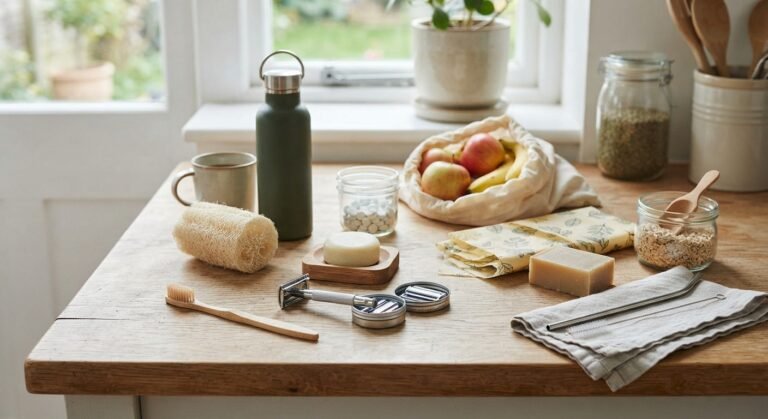
Dentists recommend replacing toothbrushes every three months, which means the average person throws away roughly sixteen plastic toothbrushes in their lifetime. Bamboo toothbrushes work exactly the same way but break down naturally instead of sitting in a landfill for centuries. Look for ones with charcoal-infused or plant-based bristles, since some bamboo brushes still use nylon bristles that aren’t fully compostable. This is one of the simplest ways to reduce plastic waste without changing your actual brushing habits at all. Pair it with toothpaste tablets or a toothpaste sold in a glass jar, and your bathroom counter starts looking a lot less like a plastics aisle.
3. Choose a Solid Shampoo Bar Over Bottled Shampoo
Bottled shampoo and conditioner create an enormous amount of plastic waste, especially in households where everyone uses a different brand. Shampoo bars last two to three times longer than a standard bottle, and they skip the water-heavy formula that adds shipping weight and cost. Many are now sold completely plastic-free, wrapped only in paper or cardboard. It might take a wash or two to get used to the texture, but most people adjust quickly. If you’re worried about hard water affecting how the bar lathers, look for bars specifically formulated for your water type, since some brands now label this clearly on the packaging.
4. Use a Safety Razor Instead of Disposables
Disposable razors are one of the worst offenders in a bathroom trash can because the plastic handle and metal blade can’t be separated for recycling. A safety razor has a metal handle that lasts decades, and you only replace the small blade, which is fully recyclable in most areas. The initial cost is higher, usually between twenty and forty dollars, but replacement blades cost just a few cents each. It does take a little practice to get a smooth shave without nicks, so go slowly the first few times. Once you get the hang of it, many people say they actually get a closer shave than with a multi-blade plastic cartridge. This connects closely with another common issue — see 10 Things I Wish I Knew Before Going Zero-Waste for more on that.
Kitchen and Breakfast Swaps
5. Ditch Single-Use Coffee Cups for a Travel Mug
If your morning includes a stop at a coffee shop, bringing your own reusable cup is one of the easiest eco-friendly swaps you can make. Many cafes offer a small discount for customers who bring their own mug, and it keeps a waxed paper or plastic-lined cup out of the trash. Keep one in your bag or car so you’re never caught without it. Some people keep a smaller collapsible cup specifically for this purpose, since it takes up less space than a standard mug. Over a year of daily coffee runs, this single habit can eliminate hundreds of disposable cups from your personal waste footprint.
6. Pack Breakfast or Snacks in Reusable Containers
Instead of grabbing a granola bar wrapped in plastic or pouring cereal into a disposable bowl on the go, prep breakfast the night before in a reusable container. Glass containers with silicone lids work well because they don’t stain or hold onto smells the way plastic sometimes does. Overnight oats, chia pudding, or a simple fruit and yogurt parfait all travel well in these containers and taste better than a processed bar anyway. Beeswax wraps are another great option for sandwiches or toast, since they can be washed and reused hundreds of times before needing replacement. This is one of the easier zero waste living tips to adopt because it often improves the quality of your breakfast too.
7. Switch to Loose Leaf Tea or a Reusable Tea Infuser
Most tea bags contain a small amount of plastic used to seal them shut, which means they don’t fully break down even if the box says “biodegradable.” A stainless steel infuser or a reusable cotton tea bag lets you use loose leaf tea, which is often fresher and cheaper per cup once you buy it in bulk. It also means no more little paper tags and staples ending up in your compost bin by mistake. If you drink tea daily, this swap alone can eliminate over 300 disposable tea bags a year. Buying loose leaf tea from a bulk bin or a shop that refills your own container takes this a step further and cuts out packaging entirely.
Personal Care and Getting Dressed
8. Try a Reusable Cotton Round Instead of Disposable Pads
Whether you’re removing makeup or applying toner, disposable cotton rounds are a small but steady source of bathroom waste. Reusable cotton or bamboo rounds can be tossed in a mesh laundry bag and washed with your regular load, then air dried and used again. A set of ten to fifteen rounds usually covers a week’s worth of use without needing daily washing. They’re gentler on skin than some synthetic disposable versions, and they store neatly in a small jar instead of a bulky plastic bag. This swap is inexpensive, often under twenty dollars for a reusable set that lasts years with proper care. You might also find our article on How to Build a Zero-Waste Kitchen helpful here.
9. Choose Bar Soap Over Bottled Body Wash
Bar soap has made a comeback partly because of its lower environmental footprint compared to bottled body wash, which requires more water, more packaging, and more energy to produce and ship. A good bar soap wrapped only in paper lasts about as long as a full bottle of body wash and skips the plastic pump entirely. Store it on a wooden or bamboo soap dish so it doesn’t turn to mush between uses. If you have sensitive skin, look for fragrance-free, moisturizing bar options rather than assuming all bar soaps are drying. This is one of the more straightforward eco-friendly swaps because the change in your actual shower routine is barely noticeable.
10. Air Dry Your Hair or Skip One Disposable Product
Blow dryers and styling tools aren’t waste in the traditional sense, but the disposable products that often go with them are, think dryer sheets used for frizz control, single-use heat protectant packets, or cotton pads for applying products. Letting your hair air dry a few mornings a week, even partially, cuts down on both energy use and product waste. If you do use styling products, look for refillable versions sold in glass or aluminum rather than plastic squeeze bottles. Small changes like this fit naturally into an eco-friendly morning routine without asking you to give up on personal style or grooming habits you actually enjoy.
Out the Door: Final Swaps
11. Bring a Reusable Water Bottle and Bag
Before leaving the house, grab a reusable water bottle instead of buying bottled water later in the day, and toss a foldable tote bag into your work bag or backpack in case you stop at a store. These two items are small enough to be easy to forget, so keeping them by your keys or in your bag permanently helps build the habit. A stainless steel or glass bottle also keeps drinks colder or warmer for longer than a disposable plastic bottle would. This is one of those zero waste living tips that feels almost too simple, but it’s often the swap people forget most easily during a rushed morning.
12. Choose Digital Over Paper Where You Can
Printed receipts, paper planners, and sticky notes add up quickly, especially for people commuting to work or school. Where possible, switch to a digital calendar, a notes app, or ask for an email receipt instead of a printed one at checkout. This isn’t about giving up paper entirely, since some people genuinely think better with a pen in hand, but reducing unnecessary printing is an easy way to trim daily waste. Combined with the other eleven swaps, this rounds out a morning that produces noticeably less trash without asking for a dramatic change in how you actually live or get ready for the day. For a related walkthrough, check out How to Reduce Food Waste at Home (Practical Guide).
Making the Zero Waste Morning Routine Stick
Nobody adopts twelve new habits overnight, and trying to do so usually backfires. Pick two or three swaps from this list that feel the most doable given your current routine, and give yourself a few weeks to get comfortable before adding more. Keep reusable items visible and within reach, since anything tucked away in a drawer tends to get forgotten during a rushed morning. It also helps to tell a friend or partner what you’re trying, since a little accountability goes a long way. A true zero waste morning routine isn’t about perfection; it’s about consistently choosing the reusable option when you have one, and forgiving yourself on the mornings when you don’t.
Frequently Asked Questions
What is a zero waste morning routine exactly?
It’s a morning routine built around reusable, refillable, or long-lasting products instead of disposable, single-use ones, with the goal of sending less trash to the landfill each day.
Is switching to a zero waste morning routine expensive?
Many swaps, like a safety razor or reusable coffee filter, cost more upfront but save money over time since you’re not constantly repurchasing disposable versions. Others, like air drying hair or bringing your own bag, cost nothing at all.
Do I need to make all twelve swaps at once?
No. Starting with two or three changes and building from there is more sustainable, both for the planet and for your patience. Trying to overhaul everything overnight often leads to burnout.
Are bamboo toothbrushes actually better for the environment than plastic ones?
Bamboo handles break down naturally, unlike plastic, which can take centuries to decompose. Just check that the bristles are plant-based too, since some bamboo brushes still use standard nylon bristles.
Will a zero waste morning routine actually make a difference?
Individually, small swaps seem minor, but repeated daily over a year, they meaningfully reduce the plastic and paper waste one person generates. It also tends to influence other habits throughout the day, not just the morning.